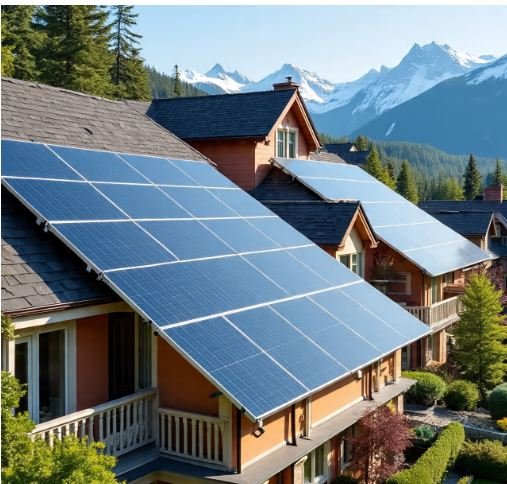
The True Post (Web News) Rising energy prices, environmental pollution, and climate change around the world have multiplied the importance of solar energy.
This is no longer limited to large solar projects or rooftop solar systems, but the trend of “Plug-in Balcony Solar Panels” is spreading rapidly. This technology is becoming common for home users in many European countries, such as Germany, Austria, and Italy, but the question is whether Canada will also adopt this technology and join the cheap electricity revolution or not?
What are balcony solar panels?
Balcony solar panels are small-sized solar units that can be installed on the balcony of any apartment, house or building. They are typically capable of generating 300 to 800 watts of electricity. Their biggest advantage is that they can be plugged directly into the home’s electrical system. This means there is no need for any complicated wiring or large infrastructure.
Examples of success in Europe
Millions of apartments in Europe have already installed these systems. Germany in particular has rapidly popularized this technology since 2022. Ordinary citizens living in Berlin are now significantly reducing their monthly electricity bills by installing two small solar panels on their balconies. Not only this, but European governments have also given subsidies and tax relief to consumers to encourage them to adopt this system more quickly.
Canada’s situation
Canada is one of the countries in the world where electricity prices vary by region. Provinces like Ontario and British Columbia have higher electricity prices, while Quebec has a strong hydroelectric system, so electricity is cheaper. But overall, environmental concerns and growing energy demand have pushed for new solutions here too.
Why hasn’t Canada approved balcony solar panels yet?
Obstacles
1. Laws and regulations
Energy policy in Canada is largely set at the provincial level. Many provinces have strict laws to allow such systems.
2. Security concerns
Authorities fear that the risk of accidents could increase if ordinary people connect panels to the electrical system without any training.
3. Energy companies
Electricity companies want to keep the power system under their control, so they are reluctant to offer consumers simple solutions for generating their own electricity.
Benefits
* Reduction in electricity bills for domestic consumers.
* Carbon emission reduction and environmental improvement.
* Promotion of alternative energy sources in urban areas.
* A sense of energy autonomy among the public.
Canada should look to Europe, where these small panels have now become part of a larger energy policy. Just two panels on a balcony can generate 3 to 5 kilowatt-hours of electricity per day, enough to power common household appliances like refrigerators, fans, and LED lights.
The ongoing energy crisis between Russia and Europe has forced European countries to rapidly adopt alternative energy sources. Canada is also a cold country and must include the aspect of self-sufficiency in its energy policy. If ever the global energy supply is affected, Canada has this local and low-cost alternative. There is a growing debate in Canadian civic circles about why ordinary people should be given the right to install these panels on their balconies or small yards. If the government provides subsidies and relaxes the rules, this system could bring revolution to ordinary citizens.
Expert opinion
Energy experts say that if Canada were to make this system widespread, these panels could be installed in millions of apartments and homes within the next five years, which could result in billions of dollars in energy savings nationally.
Imagine if every balcony in a high-rise building in a major Canadian city like Toronto, Vancouver, or Montreal had two small solar panels installed. This scenario would not only increase energy self-sufficiency but also significantly reduce environmental pollution.
 Ishtiq Ahmed Send an email August 31, 2025