The True Post (Web News) Canadian Prime Minister Mark Carney has announced seven major development projects under the title of “Nation Building”, making it clear that the country is now entering a new economic era.
These projects are not just infrastructure projects, but a comprehensive national strategy aimed at providing a strong foundation for the economy, promoting modern industries, and achieving self-sufficiency in energy and mineral resources. The total value of these projects reaches $116 billion, which is a large example of development spending in recent Canadian history. Included in these projects, the Saison Mine (New Brunswick) has the potential to meet the needs of defense, industrial and high-strength steel through the production of tungsten. Similarly, the Crawford Nickel Project in Ontario will produce approximately 2.4 million tonnes of ore per day for battery and steelmaking, which is crucial for the future of electric vehicles and advanced technology. Both projects will play a fundamental role in giving Canada a strong position in the global market for important minerals.
The $30 billion Case Lesmes LNG project in British Columbia will produce 12 million tonnes of liquefied natural gas annually, with much of it exported to Asian countries. The project will not only expand Canada’s energy capabilities but also enhance the country’s geographical and commercial importance. The Iqaluit Hydro Project in Nunavut will open a new chapter in clean energy production in the northern territories, which have long lacked reliable sources of electricity.
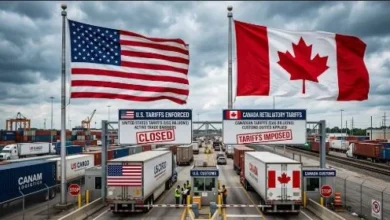
The Nouveau Monde Graphite Phase-II project in Quebec will provide essential graphite for the defense industry and battery manufacturing sector, without which modern defense technology and electric vehicles are not possible. On the other hand, the North Conservation Idea in BC and Yukon holds great potential for obtaining important minerals and transmitting clean electricity. While the North Coast Transmission Line in northern BC not only delivers low-cost and clean electricity to the West Coast, but also strengthens the possibility of providing modern telecom facilities and the BC–Yukon connection. All these projects make it clear that Canada does not want to be left behind in the global race for energy and minerals in the future. Prime Minister Carney rightly pointed out that these projects are essential for reducing dependence on the United States, diversifying trade routes, and Canada’s long-term economic independence.
However, it cannot be ignored that the success of such large-scale projects will require a solid government strategy, environmental caution, the consent of local communities and the cooperation of industry. Development work, especially in the northern regions, must proceed with the protection of local culture, the environment and natural resources. Nevertheless, these seven projects are putting Canada on a path that will enable it to play a central role in the economy of the future. If the government ensures transparency, rapid implementation and community involvement, the next decade could truly make a new history of Canadian economic strength, energy self-sufficiency and global influence.
 Ishtiq Ahmed Send an email November 14, 2025