The True Post (Web News) Police take a tough stance on pro-Palestinian protests in Britain
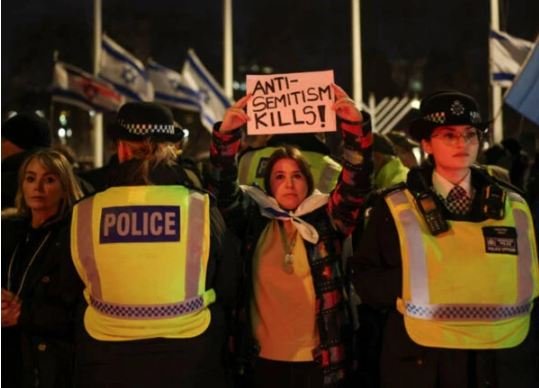
It has hardened its stance and warned that legal action, including arrest, may be taken against those who chant slogans like ‘global intifada’ in public places. According to British media, London’s Metropolitan Police and Greater Manchester Police have said in a joint statement that the meaning of certain slogans and their potential effects are being viewed in a new perspective after recent violent incidents worldwide. Police officials say that security concerns have increased after the recent attack in Bondi Beach, Australia, as a result of which slogans that may incite violence or be categorized as hate speech cannot be ignored.
The joint statement said that the police are aware of public concerns and are monitoring the use of placards or slogans that could undermine social harmony. According to the authorities, “words have their own effects and can have consequences, which is why decisive measures will be taken.” The announcement has been met with strong reactions from human rights and pro-Palestinian circles. Some leaders of organizations active in favor of Palestine have called the police decision political pressure and a violation of the fundamental right to protest. Ben Jamal, a prominent leader of the pro-Palestinian campaign, criticized the police stance and said that this decision is tantamount to restricting freedom of expression and the right to peaceful protest. According to him, no consultation was held in this regard and the Arabic word ‘intifada’ means a struggle against injustice or a popular uprising, not an incitement to violence.
On the other hand, some extremist Jewish groups active in Britain have welcomed the police announcement. Britain’s chief Jewish leader, Rabbi Ephraim Mervis, called it an important and timely step against hateful narratives. Political observers say that law enforcement agencies in Britain are trying to strike a balance regarding protests related to Palestine and Israel, but the decision has further intensified the debate between freedom of expression and security.