Muhammad Amanullah | August 14, 2026
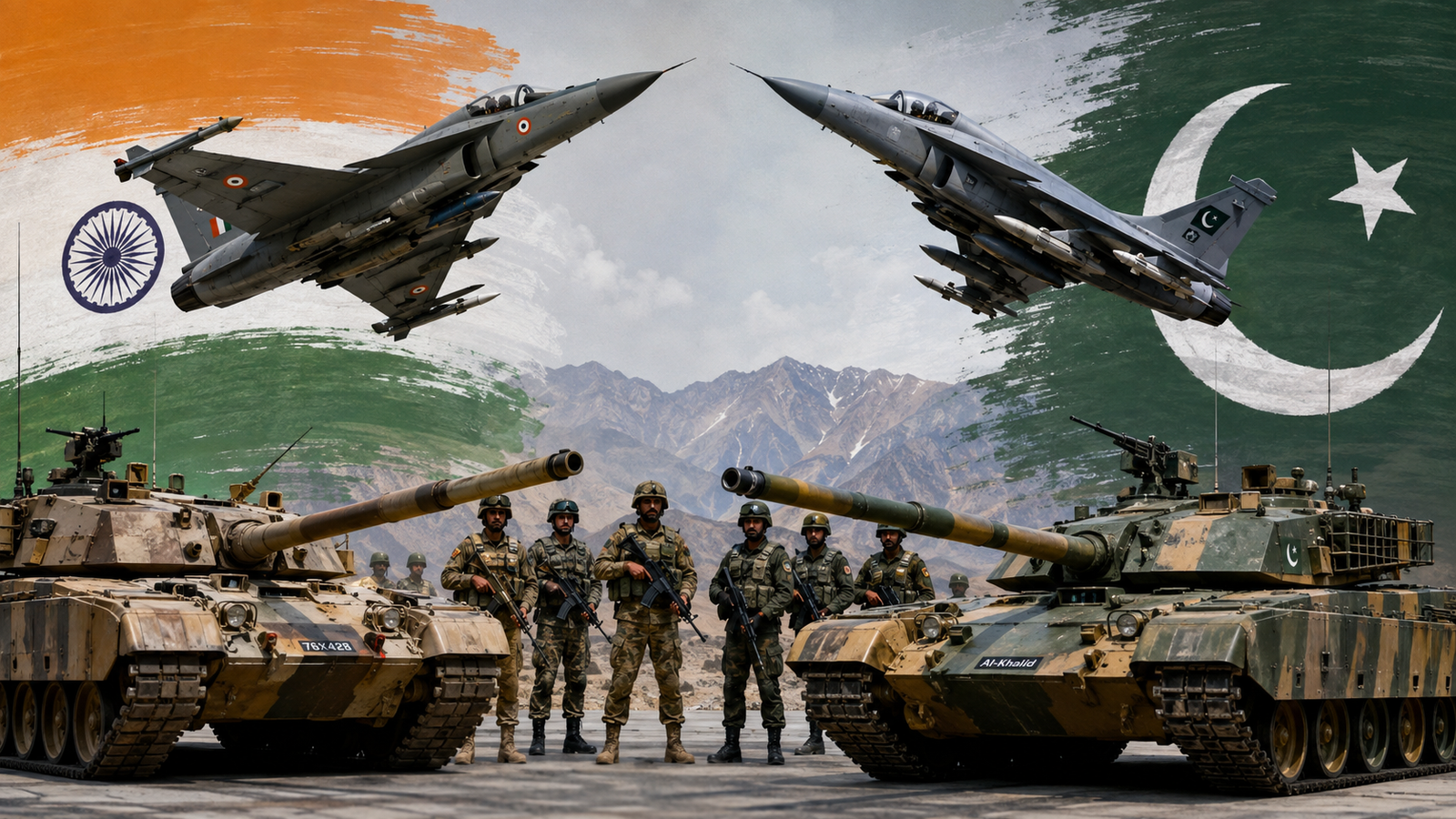
The True Post (Web News) — The race for nuclear weapons and other military equipment continues to intensify around the world, while Pakistan and India have long remained embroiled in a dispute that has repeatedly led to tensions between the two nuclear-armed neighbours.
Tensions between India and Pakistan increased following the deadly attack on tourists in Pahalgam, Kashmir. After the Pahalgam attack, India took several measures, including suspending the Indus Waters Treaty, closing border crossings and cancelling visas for Pakistani citizens.
In response, Pakistan also took measures including closing its airspace to India and taking diplomatic steps against Indian diplomatic institutions.
Despite these measures, the risk of war between the two countries continued to raise concerns. Pakistan and India have fought three major wars in the past. The last major war took place in 1971, resulting in the separation of East Pakistan and the creation of Bangladesh.
A limited conflict was fought in Kargil in 1999. It was the first time that the possibility of a nuclear conflict between the two neighbouring countries became a major international concern.
According to Global Firepower, a website that tracks military strength and weapons around the world, India was ranked among the world’s most powerful military forces in 2025.
Pakistan, meanwhile, was ranked 12th among 145 countries in the Global Firepower ranking.
The organization says its ranking is based on 55 different factors, including geography, economic strength, domestic industry, natural resources, military performance and a country’s relationships with other nations.
According to a report by the Stockholm International Peace Research Institute (SIPRI), India spent approximately nine times more on defence than Pakistan in 2024.
The report said India planned to spend approximately $86 billion on defence in 2025, while Pakistan allocated more than $10 billion for its armed forces for the 2024-25 fiscal year.
According to Global Firepower figures, India has approximately 2.2 million ground personnel, 310,000 air force personnel and 142,000 naval personnel.
Air Force
The Indian Air Force is considered one of the world’s largest air forces and operates a large fleet of fighter, transport, training and support aircraft.
According to Global Firepower figures, India has approximately 2,229 aircraft, compared with around 1,399 aircraft operated by Pakistan.
In terms of combat aircraft, India has approximately 643, including fighters and bombers, while Pakistan has around 418 combat aircraft.
The most important fighter aircraft operated by the Pakistan Air Force include the American-made F-16 and the JF-17 Thunder, which was developed with Chinese assistance.
The JF-17 was developed with the cooperation of the Pakistan Aeronautical Complex in Kamra and China’s Chengdu Aircraft Industry Corporation. The aim was to produce a relatively lightweight, cost-effective multirole fighter capable of operating during day and night and in different weather conditions.
One of the most significant recent additions to the Indian Air Force has been the French-made Rafale fighter aircraft.
The Rafale is a modern multirole fighter capable of carrying out both air-to-air and air-to-ground missions. India also operates the Mirage 2000, another important fighter aircraft in its fleet.
Transport Aircraft and Helicopters
According to Global Firepower figures, Pakistan has approximately 64 transport aircraft, 565 trainer aircraft, four tanker aircraft and 430 helicopters, including around 57 attack helicopters.
In comparison, India has approximately 270 transport aircraft, 351 trainer aircraft, six tanker aircraft and 979 helicopters, including around 80 attack helicopters.
India also has a larger number of operational airfields. Available figures put the number of operational airports and airfields in India at approximately 311, compared with around 116 in Pakistan.
Tanks
Tanks remain an important component of ground warfare and armoured military capabilities.
According to Global Firepower, Pakistan has approximately 2,672 tanks, while India has around 4,201 tanks.
Pakistan’s Al-Khalid is one of its major main battle tanks. The tank was developed with cooperation from China and Ukraine and is produced in Pakistan.
The Al-Khalid is a relatively lightweight main battle tank. It uses a powerful diesel engine and has a reported top speed of approximately 70 kilometres per hour.
Pakistan has also developed and operated other armoured platforms as part of its ground forces.
India’s Arjun Tank
India’s Arjun is one of its indigenous main battle tanks. The Arjun Mk 1A is an upgraded version of the original Arjun tank, with improvements to its protection, fire-control systems and other capabilities.
The Arjun is equipped with a modern fire-control system and a 120mm rifled gun, designed to engage armoured targets.
The tank uses an engine producing approximately 1,400 horsepower and has a reported top speed of around 70 kilometres per hour.
Overall Comparison
The available figures show that India has a significant numerical advantage over Pakistan in defence spending, overall aircraft numbers, helicopters, tanks, military infrastructure and manpower.
However, the number of weapons and military personnel alone does not determine a country’s actual combat capability. Military training, technology, combat experience, intelligence, logistics, command and control, domestic defence production and military strategy also play important roles.
Pakistan and India are both nuclear-armed states. As a result, any major military confrontation between the two countries could have consequences extending beyond their borders and could pose a serious challenge to peace and stability across South Asia.
Note: Military equipment and personnel figures can change over time and may vary between sources. The figures above should therefore be considered estimates rather than exact current inventories.