

Muhammad Amanullah
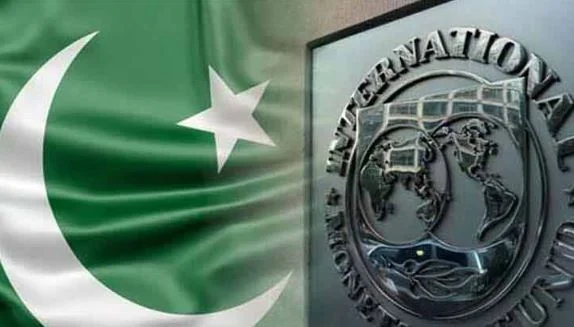
Date: October 2, 2026 The True Post (Web News) —Negotiations with an International Monetary Fund (IMF) delegation during the economic review have failed to produce full agreement on Pakistan’s new Auto Policy 2026–31. The international financial institution has subsequently requested additional data and details regarding the draft policy.
Before seeking approval from the federal cabinet, the proposed auto policy will undergo further consultations with the IMF, followed by additional discussions on the final draft.
Taxation Issues
During the economic review discussions, the IMF delegation was briefed on proposals concerning taxes imposed on vehicles under the new auto policy.
According to sources, a sales tax rate of one per cent has been proposed for fully electric vehicles, while an increase in the sales tax rate on hybrid vehicles to 18 per cent is under consideration.
Export Targets
Detailed discussions were also held on plans to increase exports from Pakistan’s automotive sector.
A proposal has emerged to set targets for a substantial increase in vehicle and auto-parts exports, with the overall value of automotive exports expected to exceed approximately $3 billion.
IMF Approval Still Pending
According to sources, the IMF has not yet given its full approval to the current draft of the auto policy.
Further explanations and data will be provided on various aspects of the proposed policy, and additional negotiations on the draft are expected.
Although efforts were made during the economic review discussions to complete consultations with the IMF on the final draft, agreement could not be reached on all matters.
Consumer Protection
The draft of the new auto policy also includes important proposals aimed at protecting vehicle buyers.
Under one proposal, if a vehicle’s price increases after a customer has booked it, the manufacturing company would be responsible for the additional cost. Manufacturers would also be required to inform customers of the expected delivery date when accepting a booking.
Target to Reduce Vehicle Prices
The Ministry of Industries and Production has prepared the final draft of the Automotive and Auto Parts Manufacturing Policy 2026–31. Its objectives include reducing vehicle prices, improving manufacturing standards and connecting Pakistani products with international markets.
The policy also emphasises creating a competitive environment within the industry to encourage new technologies, innovation and the introduction of modern vehicle features.
Six Fundamental Principles
According to the document, six fundamental principles have been established for the new auto policy, with the industry expected to comply with them.
These principles include reducing vehicle prices, improving quality, increasing exports, promoting electric vehicles, introducing new technologies and integrating auto-parts manufacturers into global supply chains.
Auto Parts Exports
The policy proposes integrating the auto-parts manufacturing industry into global supply chains to increase exports and generate additional foreign exchange for the country.
To achieve this objective, clear performance targets will be established for companies. The proposals also include a system of penalties for companies that fail to meet their targets and incentives for those that achieve the required goals.
Promotion of Electric Vehicles
The new policy proposes measures to promote electric vehicles. It also emphasises increasing competition among manufacturers to encourage innovation, the adoption of advanced technologies and the introduction of new vehicle features.
Reduction in Customs Duties
The proposal calls for customs duties on conventional vehicles to be reduced by up to 80 per cent over the next five years.
The policy also proposes granting plug-in hybrid electric vehicles and range-extended electric vehicles equal status under the relevant provisions.
Taxes on Electric Vehicles
To encourage the adoption of electric vehicles, the policy proposes eliminating federal excise duty, capital value tax and withholding tax on these vehicles.
It also recommends setting customs duties at just one per cent on equipment used at electric vehicle charging stations.
Easier Financing
The policy recommends expanding access to financing for electric vehicle buyers.
Under the proposal, the maximum loan limit would be increased to Rs10 million, while the repayment period would be extended from three years to five years.
Export Targets
The auto policy sets phased export targets for vehicles and auto parts.
For 2026–27, a four per cent export target has been proposed for car production or sales, with the figure expected to increase to 20 per cent by 2030–31.
For auto-parts manufacturers, the proposed export target would rise from five per cent to 15 per cent.
Plan to Improve Quality Standards
The document also proposes adopting international standards to bring locally manufactured vehicles in line with global quality requirements.
The proposals include adopting 62 international standards in 2025 and introducing an additional 45 standards by 2029.
$17 Billion in Foreign Exchange Savings
According to the document, the new auto policy aims to save approximately $17 billion in foreign exchange between 2026 and 2031.
The proposed measures include increasing local production, reducing dependence on imports, expanding exports and developing the electric vehicle sector.
However, further consultations with the IMF and the provision of the requested data will be necessary before the policy can be implemented in its final form, as full agreement has not yet been reached on all aspects of the current draft.
