Muhammad Amanullah
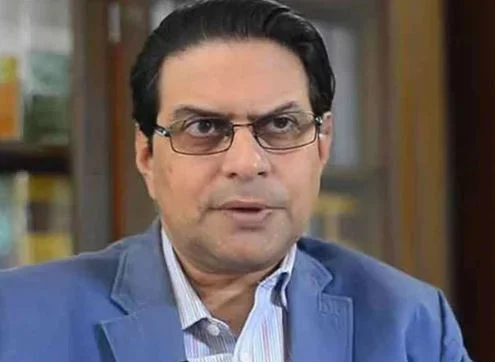
Date: October 5, 2026 The True Post (Web News) —Pakistan Tehreek-e-Insaf (PTI) leader Salman Akram Raja has explained what he described as the main reason behind the failure of talks between the government and the negotiating team associated with PTI, saying that the core disagreement was over the method of carrying out counterterrorism measures in Khyber Pakhtunkhwa.
Core Disagreement
In a statement posted on the social media platform X, Salman Akram Raja said that if the other issues and noise surrounding the negotiations were set aside, the fundamental reason for the failure of the talks was the disagreement between the two sides over measures against terrorism.
He said the PTI-affiliated negotiating team remained firm on its principled position that any major counterterrorism operation in Khyber Pakhtunkhwa should be undertaken with the mutual agreement of the federal and provincial governments.
Political Consultation
According to Salman Akram Raja, PTI’s position was that all political parties represented in the Khyber Pakhtunkhwa Assembly should also be consulted on counterterrorism measures and their consent should be obtained.
He said decisions concerning law and order in the province should not simply be imposed by one side, but should be made through political consensus while taking local conditions into account.
Federal Government’s Position
According to the PTI leader, the government’s negotiating team did not agree with this position. The government insisted that the Khyber Pakhtunkhwa provincial government would have to accept responsibility for all measures initiated by the federal government.
Salman Akram Raja said this issue became the central point of disagreement during the negotiations, with neither side willing to retreat from its position.
Commitment Against Terrorism
Salman Akram Raja said the PTI-affiliated negotiating team had maintained a clear position against terrorism. According to him, the team made it clear that there should be a policy of zero tolerance toward terrorism and that every possible effort should be made to eliminate it.
However, he said the loss of innocent civilian lives and large-scale displacement of local populations during counterterrorism operations should not be considered acceptable.
Civilian Harm
The PTI leader said protecting ordinary citizens should be given fundamental importance in measures taken to eliminate terrorism. According to him, if an operation forces civilians to leave their homes and areas, the consequences of such displacement must also be taken into consideration while formulating policy.
He opposed describing such losses as so-called collateral damage and said that without protecting civilians, counterterrorism policies cannot achieve their desired results.
Local Support Is Necessary
Salman Akram Raja said counterterrorism policies and practical measures should have the support of local communities.
According to him, before carrying out an operation in any area, it is necessary to understand local conditions, people’s concerns and realities on the ground. He stressed that counterterrorism operations should be based on ground information and accurate intelligence so that the intended targets can be identified while avoiding harm to ordinary civilians.
Tribal Jirgas
The PTI leader further said that, alongside political forces represented in the Khyber Pakhtunkhwa Assembly, the views of political and tribal elders in the province should also be given importance.
He specifically emphasized the need to incorporate the knowledge and experience of tribal elders and jirgas from the merged districts into counterterrorism policy.
According to Salman Akram Raja, local tribes and elders have a deep understanding of conditions, problems and the security situation in their respective areas, and therefore their views should not be ignored.
Why Did the Talks Fail?
According to Salman Akram Raja’s statement, several issues were discussed during the negotiations between the government and PTI. However, the main deadlock emerged over the authority, procedure and responsibility for counterterrorism measures.
On one side, the PTI negotiating team was emphasizing consensus between the federal and provincial governments, political consultation, local support and operations based on ground intelligence. On the other side, the government team insisted that the provincial government should accept responsibility for measures initiated at the federal level.
Difference in Positions
Salman Akram Raja made it clear that it would not be accurate to attribute the failure of the talks solely to other political issues. According to him, the fundamental disagreement over the counterterrorism strategy and the method of its implementation was the key issue on which the two sides could not reach a common position.
He also made clear in his statement that there was no disagreement over the objective of eliminating terrorism. Rather, the disagreement was over how measures to achieve that objective should be carried out in Khyber Pakhtunkhwa and to what extent the provincial government, political parties, local communities and tribal elders should be involved in those decisions.