Muhammad Amanullah
Date: October 5, 2026 The True Post (Web News) —Concerns are growing over whether information obtained through artificial intelligence is accurate or inaccurate ahead of the October 19 referendum on Alberta’s separation from Canada. Experts say chatbots and search engines can provide different answers to the same question at different times, potentially making it more difficult for voters to access reliable information.
Answers Can Change
Angus Bridgman, director of the Media Ecosystem Observatory, said that if someone asks an artificial intelligence system on one day whether taxes would be higher in an independent Alberta, the answer might be yes, but asking the same question several hours later could produce a different response.
According to him, the change does not necessarily mean that the underlying reality has changed. Rather, the data used by artificial intelligence systems to generate responses is continuously changing.
Research on Alberta
In a report released last month, the Media Ecosystem Observatory examined different artificial intelligence responses concerning the possibility of Alberta becoming independent.
The research sought to determine what impact Alberta’s separation from Canada could have on the lives of ordinary residents.
During the research, artificial intelligence systems were asked whether taxes would increase, whether pensions would rise and whether Alberta’s separation would be financially beneficial for residents.
Referendum Is a Significant Stage
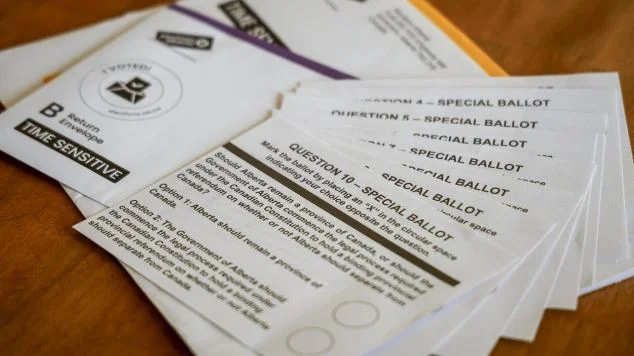
The October 19 referendum in Alberta contains a total of 10 questions. One of the key questions asks whether Alberta should remain part of Canada or whether another binding referendum should be held in the future on separating from the country.
Experts say the vote is also becoming an important example of how artificial intelligence and social media could influence public opinion in future elections and referendums.
Impact of Social Media
According to the report, online influencers and social media personalities have increased their popularity and public reach in recent years, while the influence of traditional media and elected representatives has declined relatively in some segments.
Bridgman said social media and artificial intelligence have significantly expanded the debate surrounding Alberta’s separation. In his view, this can be a positive aspect of democratic debate, but it has also made the process of monitoring and verifying information more complicated.
Risk of Misinformation
Elections Alberta has also warned that AI-powered chatbots and search engines are increasingly being used to find and summarize information available online. However, they cannot be considered official sources of election-related information.
According to the organization, such systems can sometimes provide misinformation or refer to inaccurate sources. In this situation, voters need to verify important political information through multiple reliable sources.
Increase in Foreign-Produced Content
The research also identified an increase in online content related to Alberta’s separation that is being produced outside Canada, particularly in the United States.
However, according to Bridgman, there is currently no evidence on which to conclude that organized foreign interference is behind this content. He said some individuals outside Canada are producing separation-related content for financial gain, earning revenue from videos and posts that receive millions of views.
Greater Online Visibility for Separatists
The report states that supporters of separation appear to have greater visibility among influential voices in online discussions, even though various surveys indicate that a large number of Albertans favour remaining part of Canada.
According to Bridgman, one possible reason for this difference is that some supporters of separation feel they are not adequately represented in traditional media and have therefore made greater use of social media to express their views.
AI-Generated Content
According to the research, several social media influencers are also using artificial intelligence to produce content themselves.
This trend has further increased concerns among experts because AI-generated material can appear highly realistic, making it difficult for ordinary users to identify.
Experts Raise Concerns
Blair Ettard Frost, a political science professor at the University of Alberta, said it is important to pay attention to the growing use of artificial intelligence in the debate over Alberta’s separation.
According to her, the spread of artificial intelligence has created a new need for media literacy. She said technology companies present search engines and artificial intelligence systems as highly intelligent and reliable tools, even though the information they provide is not always complete or accurate.
Voters’ Decisions
According to Ettard Frost, the concern is that residents could make voting decisions based on incomplete, incorrect or misleading information about the potential economic and political consequences of Alberta’s separation.
She said the effects of current technology will not be limited to the October 19 referendum but could also influence Alberta’s future political movement concerning separation.
Danielle Smith’s Position
When Alberta Premier Danielle Smith was asked about misinformation being spread through artificial intelligence and its potential impact on votes, she said her government is also relying on traditional methods to provide information to the public.
The government has launched an advertising campaign explaining the 10 referendum questions and has also distributed informational booklets to households.
Naheed Nenshi’s Criticism
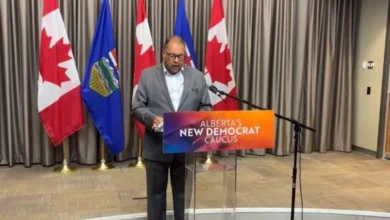
Alberta NDP Leader Naheed Nenshi strongly criticized the government booklets, saying that if someone wants to find an example of misinformation, government-provided material could also be examined.
According to Nenshi, the booklets present certain figures and information to shape public opinion in favour of the first nine questions, while the government has remained silent on the tenth question concerning separation.
Referring to the example of $1 billion in annual health and education costs associated with temporary residents, he said the source of that figure was not clearly identified in the booklet.
According to Nenshi, such material appears more like promotion of the government’s position than direct democratic guidance.
Ahead of Alberta’s referendum, artificial intelligence, social media, government information and attempts to influence political opinion have made the issue of providing accurate information to the public increasingly important. Experts say it has become more important than ever for voters to independently verify every claim.