Muhammad Amanullah
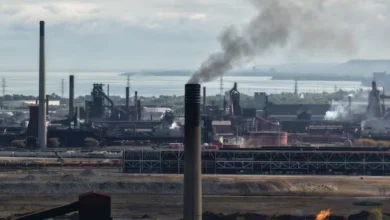
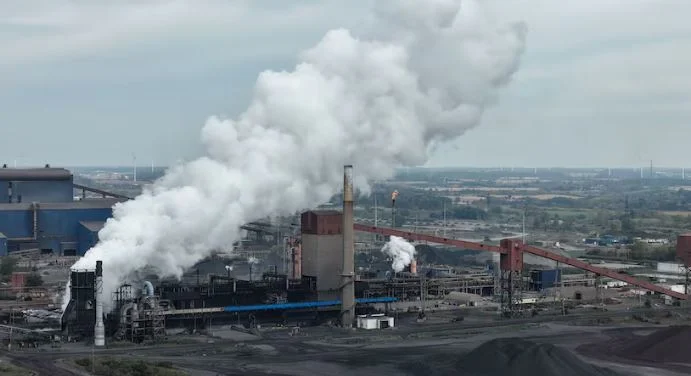
Date: October 9, 2026 The True Post (Web News) —Hundreds of jobs in Canada’s steel industry are at risk after steelmaker Stelco announced plans to shut down parts of its production operations in Hamilton, Ontario.
The decision could result in the loss of up to 500 jobs across different departments of the company, while the union says layoffs have already begun. The federal government has instructed the company to submit a plan to protect jobs within five business days, warning that legal action could follow if it fails to do so.
Five-Day Deadline
Canadian Industry Minister Mélanie Joly wrote to Stelco President Paul Simon on Monday, demanding a clear plan to protect employees’ jobs.
The government’s position is that commitments made by the company when Stelco was purchased do not disappear simply because its business strategy or market conditions have changed.
The industry minister warned that the federal government could pursue legal action if the company failed to submit an acceptable plan within the specified period.
The dispute has once again brought attention to the conditions imposed on foreign investors in Canada and the mechanisms used to enforce those commitments.
US Tariffs and Trade Disputes
Stelco’s owner, the American company Cleveland-Cliffs, has linked its decision to reduce employment and suspend production to the trade conflict between Canada and the United States.
Cleveland-Cliffs Chief Executive Officer Lourenco Goncalves has argued that the company is being forced to take these measures because Canadian steel sales in the US market have been affected.
However, Mélanie Joly criticised Goncalves for supporting tariffs on American steel. She said the company could not now portray those tariffs as an unexpected development that exempted it from its obligations.
For the government, the central question is whether the company can withdraw from commitments made when it acquired Stelco, particularly those concerning the preservation of jobs in Canada.
Government Has Taken Steelmaker to Court Before
The dispute between Stelco and the Canadian government over employment and investment commitments is not new. The federal government has previously pursued legal action against the American steel company over its failure to fulfil commitments concerning the future of its Canadian operations.
In 2007, US Steel, a company based in Pennsylvania, agreed to acquire Stelco for approximately US$1 billion. Following the acquisition, the company was renamed US Steel Canada.
Under Canadian law, major foreign investments must provide a net benefit to the Canadian economy. For this purpose, foreign buyers are required to make written, legally enforceable commitments to the government, commonly known as undertakings.
US Steel also promised at the time of its acquisition that it would maintain its Canadian workforce for three years and increase steel production in Canada by at least 10 per cent.
Financial Crisis and Layoffs
When the global financial crisis of 2008 reduced steel demand around the world, US Steel shut down most of its Canadian production facilities and laid off more than 1,500 employees.
In response, Canada’s attorney general filed a lawsuit against the company in July 2009. The case was significant because it involved the government seeking court enforcement of commitments made under the foreign investment review process.
At the time, Stelco’s position was that its commitments were not required to be fulfilled until the end of the three-year period, rather than before that deadline.
The company also argued that circumstances such as the global financial crisis were beyond its control and that it should not be held responsible for those conditions.
Settlement Reached in 2011
The Canadian government withdrew its lawsuit towards the end of 2011 after reaching an out-of-court settlement with the company.
Under the agreement, US Steel committed to continuing steel production in Hamilton and Lake Erie. It also agreed to make a new investment of US$50 million to modernise its production system by the end of 2015.
The company made additional commitments to the government, although these did not include a requirement to maintain a minimum number of employees.
Later, in 2014, US Steel Canada sought protection from its creditors, and the American parent company ended its involvement with the Canadian business.
In 2016, a US private equity firm acquired the steelmaking business. The following year, the company returned to the Toronto Stock Exchange and restored the Stelco name.
Following the dispute, Canada amended its investment legislation in 2009 and 2012 to simplify settlement procedures and strengthen the government’s powers to address breaches of commitments. The maximum daily penalty for non-compliance was subsequently increased to $25,000.
Cleveland-Cliffs Acquisition
The current dispute stems from the 2024 acquisition, when the Canadian government approved Cleveland-Cliffs’ purchase of Stelco under a deal valued at approximately $3.4 billion in cash and shares.
The approval came with conditions. The company promised to maintain, for five years, at least the same number of unionised employees in Canada as were employed at the time of the acquisition.
It also committed to retaining the large majority of its non-union workforce.
The planned production reductions and potential layoffs affecting up to 500 employees have now raised questions about whether these commitments are being honoured.
According to the union, individual layoff notices have begun arriving, increasing uncertainty among workers.
Hamilton plant employee Jordan Williams expressed concern after receiving a layoff notice. Union representative Ron Wells said the layoff process was expected to unfold over approximately three weeks.
Could the Dispute Return to Court?
Legal experts say the dispute between Stelco and the Canadian government could once again end up in court.
Business law expert Naseera Al-Hadri said the industry minister’s letter indicates that the government continues to regard the company’s commitments as enforceable. In her view, changing business conditions do not necessarily provide sufficient grounds for abandoning those obligations.
However, legal action is not the only possible outcome. The parties could agree to a new settlement or revised commitments, as happened following the 2009 dispute.
The courts have broad powers, and in certain circumstances, an order affecting the sale of a business could also be considered.
Legal expert Sandy Walker said government pressure might persuade the company to reconsider its layoff plans. However, she suggested that the company could benefit from legal guidance concerning circumstances beyond its control.
Mark Carney’s Investment Drive
Another important aspect of the dispute is Prime Minister Mark Carney’s economic strategy.
The government is seeking to attract $1 trillion in investment across Canada over the next five years while reducing the country’s economic dependence on the United States.
Last month, an investment summit was held in Toronto, bringing together hundreds of people with the capacity to make major investments.
The government wants to encourage new businesses, industrial projects and employment opportunities across Canada.
At such a time, threatening legal action against a major foreign investor creates a difficult balancing act for the government.
On one hand, attracting foreign investment is essential. On the other, the government wants to demonstrate that companies operating in Canada must comply with domestic laws and the terms of their investment agreements.
According to Naseera Al-Hadri, the government wants to send a message internationally that investors in Canada must respect the country’s rules.
Sandy Walker said it is also important for the government not to appear weak when enforcing commitments made by investors.
The next few days will be crucial for Stelco. The plan submitted by the company could help determine the future of its employees and the federal government’s next legal steps.
The dispute, however, has grown beyond layoffs at a single steel plant. It has triggered a broader debate about foreign investment in Canada, employment protection and the enforcement of government-backed investment commitments.