Muhammad Amanullah
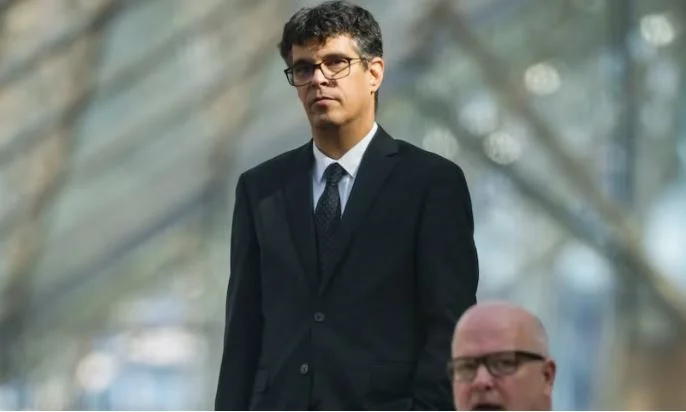
Date: October 9, 2026 The True Post (Web News) —Steven Galloway, a former creative writing professor at the University of British Columbia (UBC) and a well-known author, became emotional while giving testimony in court. He said allegations of sexual assault, which have yet to be resolved through a final court ruling, severely damaged his literary career and left him unable to write as he once did.
Testifying in court, Galloway said he could no longer write, despite desperately wanting to return to it. He described writing as the most important and beautiful part of his life, adding that the allegations had transformed both his professional and personal life.
The case is being heard by the Supreme Court of British Columbia. Galloway has filed a defamation lawsuit against a former student, identified only as AB for legal reasons, and other individuals. The former student had accused him of sexual assault, while other people had also discussed the matter on social media.
Stepping Away from Writing
Answering questions from his lawyer in court on Thursday, Galloway said he had been working on a humorous novel before the allegations emerged. The book was part of a three-book agreement with a major publisher. A paperback edition of his novel The Confabulist was also in preparation, but his plans were disrupted after the allegations surfaced in November 2015.
He told the court that his annual book royalties had since fallen to approximately $5,000 to $10,000. He also said he had not received invitations to speak at events since the allegations emerged.
A Profound Impact on His Career
Galloway told the court that writers routinely face criticism and negative comments, but such experiences are generally temporary. He said, however, that what he had endured in this case had deeply affected his sense of identity and personal dignity.
He said the experience had broken him in a way he had never experienced before.
According to his testimony, he not only lost his teaching position but also became isolated within the literary community. Some friends, including people who believed he was innocent, began avoiding conversations with him. He said some feared that associating with him could damage their own careers.
The UBC Accountable Letter
Steven Galloway told the court that a letter published in November 2016 brought wider attention to the controversy. Known as the “UBC Accountable” letter, it was signed by numerous people, including prominent literary figures and author Margaret Atwood.
The letter criticised the university’s handling of the allegations of misconduct and mistreatment involving Galloway. According to Galloway, its publication triggered a strong reaction on social media, and some signatories later withdrew their names following online criticism.
He claimed that the controversy affected people’s employment, ended friendships and caused divisions within families. He recounted that one female signatory called him in tears and said her daughter would no longer speak to her.
A Social Media Campaign
Galloway said the name “UBC Accountable” became a hashtag on social media and eventually became associated with him personally. He said he faced thousands of messages and comments containing harsh language.
Also Read: Canadian Government Introduces Major Change to Defence Procurement System, Tables Bill to Make Defence Investment Agency a Crown Corporation
He said journalists repeatedly contacted him for interviews. At one point, he agreed to an interview with Gary Mason, a columnist at The Globe and Mail, hoping that the media attention would subside afterwards.
However, according to Galloway, the interview made the situation worse rather than improving it.
He told the court that when a crowd turns against someone, it becomes difficult for that person to know what to do.
Objections at a Literary Event
Galloway also described an event held during a literary festival in October 2016. He said he attended a hospitality gathering against his better judgment. Some people spoke to him, while others left when they saw him.
He also challenged a report published in The Walrus magazine that said he had received a standing ovation at the event. Galloway denied that this had happened and said he had contacted the publication’s editor about the report.
Forced to Take Up a New Job
The former professor said that even after achieving a financial or legal resolution through mediation with UBC, he did not get his former job back. He told the court that he would not have wanted to return to the institution at any salary.
Galloway later worked cleaning and repairing swimming pools, wrote promotional copy for online advertising and is now involved in the boat sales business.
A significant development in the case also emerged when the former student’s lawyer told the court on Wednesday that the defence was no longer advancing the position that Galloway had sexually assaulted her. Instead, the position being maintained is that she had reported such assaults.
Steven Galloway’s testimony comes as the court continues to consider the parties’ positions and the legal status of the allegations in the defamation case. His account highlights the reported effects on his career, income and personal life. However, the court has yet to determine the ultimate outcome of the proceedings.