Muhammad Amanullah Calgary, Canada | October 19, 2026
(The True Post) Email fraud is posing a growing financial risk to individuals and businesses across Canada. According to figures attributed to the Canadian Anti-Fraud Centre (CAFC), approximately $57.7 million in reported losses from spear phishing scams was recorded during the first six months of 2026. In comparison, reported losses from this type of fraud exceeded $68 million throughout 2025.
Spear phishing scams involve fraudsters impersonating businesses, suppliers, contractors, or other trusted contacts to persuade victims to change payment details. Victims may receive emails claiming that a company’s bank account information has changed and that future payments should be sent to a new account.
If the recipient transfers money without independently verifying the request, the funds may end up in a fraudster’s account rather than reaching the intended business or supplier.
Indigenous Businesses in Northern Ontario Also Targeted
Indigenous businesses and organizations in Northern Ontario have also reportedly experienced similar fraud incidents. According to available reports, four cases resulted in combined losses exceeding $800,000.
These incidents have highlighted the importance of strengthening payment verification procedures. Fraudsters sometimes gain access to legitimate business email accounts and use them to send fraudulent payment instructions. In other cases, they create email addresses that closely resemble those of genuine businesses, making the messages appear legitimate.
Police and fraud prevention authorities advise businesses to independently verify any request to change banking or payment information before transferring funds.
Construction Companies and Homeowners Also at Risk
Email payment fraud is not limited to large corporations. Construction companies, contractors, suppliers, and homeowners arranging renovation work can also become targets.
For example, a homeowner may receive an invoice from a contractor after renovation work has been completed. The homeowner may later receive an email claiming that the contractor’s banking details have changed.
If the homeowner sends the payment to the new account without confirming the change directly with the contractor, the money could be transferred to fraudsters.
Businesses may also be targeted through fake invoices or emails sent by criminals impersonating legitimate suppliers. Experts recommend never accepting changes to payment instructions based solely on an email.
Actual Fraud Losses Could Be Higher
According to figures attributed to the Canadian Anti-Fraud Centre, approximately $351 million in losses from all types of fraud was reported during the first six months of 2026.
Fraud prevention authorities have repeatedly warned that many incidents go unreported. Reasons may include a lack of awareness, uncertainty about how to report fraud, or victims’ reluctance to disclose what happened.
As a result, reported figures may not reflect the full financial impact of fraud across Canada.
In spear phishing schemes, criminals often research a particular individual or business before launching an attack. They may gather information about business relationships, payment arrangements, and regular contacts before sending a message designed to appear like a routine business communication.
How to Protect Yourself from Email Payment Fraud
Individuals and businesses can take several precautions to reduce the risk of becoming victims of email fraud.
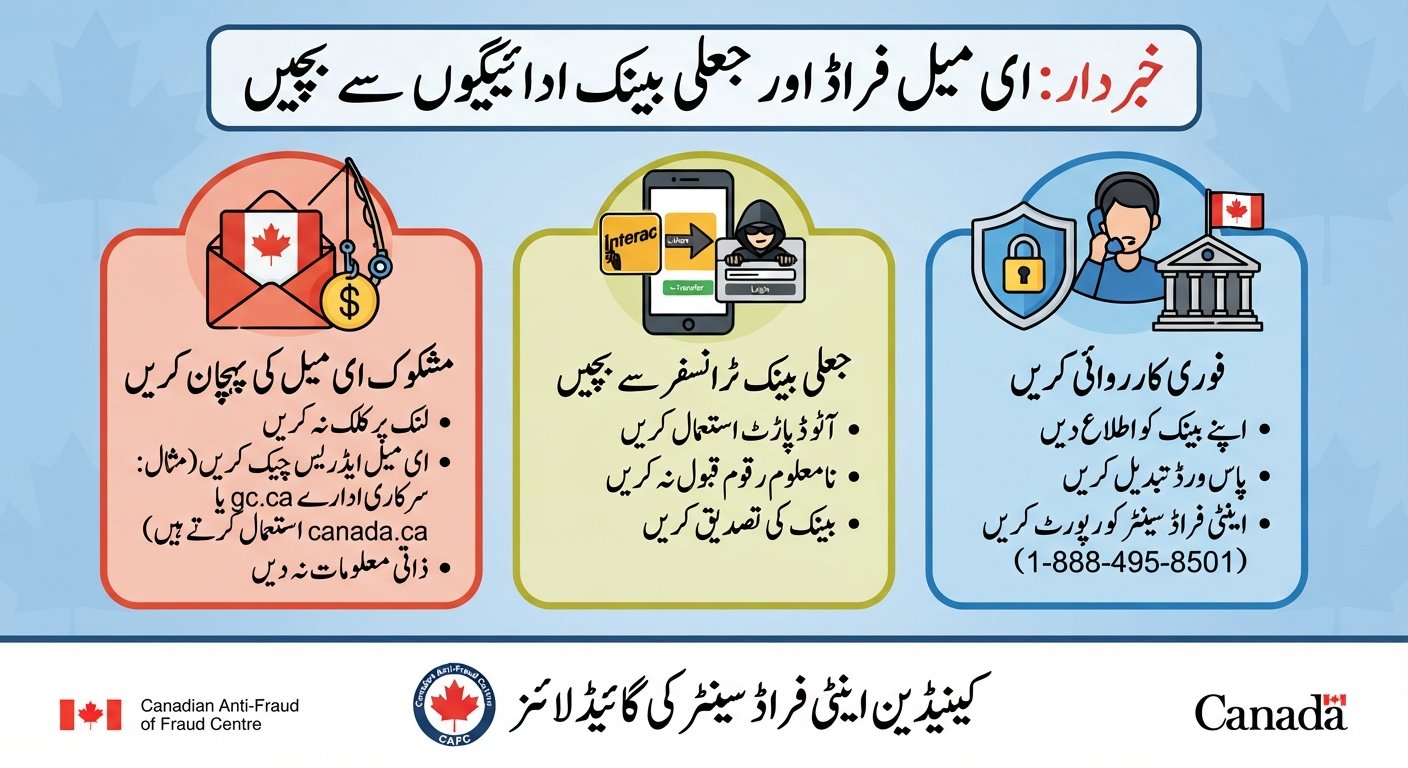
1. Verify Changes to Banking Details
If a company, supplier, or contractor emails you to announce a change in banking information, contact them using a previously verified phone number before making the payment.
2. Check Email Addresses Carefully
Fraudsters may create email addresses that differ from legitimate addresses by only one letter or symbol. Do not rely solely on the sender’s displayed name.
3. Be Cautious of Urgent Payment Requests
Treat emails that demand immediate payment or ask you to bypass normal verification procedures with suspicion.
4. Secure Business Email Accounts
Businesses should enable multi-factor authentication (MFA), use strong and unique passwords, and train employees to recognize phishing attempts.
5. Introduce Additional Approval Procedures
Companies should consider requiring approval from two authorized employees for significant payments or changes to supplier banking information.
What to Do If You Suspect Email Fraud
Anyone who suspects they have been targeted by email fraud should immediately contact their bank or financial institution.
If money has already been transferred, notifying the bank as quickly as possible may help initiate efforts to stop the transaction or recover the funds, depending on the circumstances.
Victims should also report the incident to local police and the Canadian Anti-Fraud Centre. Keeping copies of emails, invoices, payment receipts, and other relevant records can assist with investigations.
As email payment fraud continues to pose a financial risk to Canadians, the most important precaution is to independently verify any change in banking details or payment instructions before transferring money.
A few minutes of verification could help individuals and businesses avoid losses worth thousands or even hundreds of thousands of dollars.
Source: Canadian Anti-Fraud Centre and available reports concerning police investigations in Northern Ontario. The reported statistics and regional case details should be independently verified before publication.