Muhammad Amanullah
Date: October 21, 2026
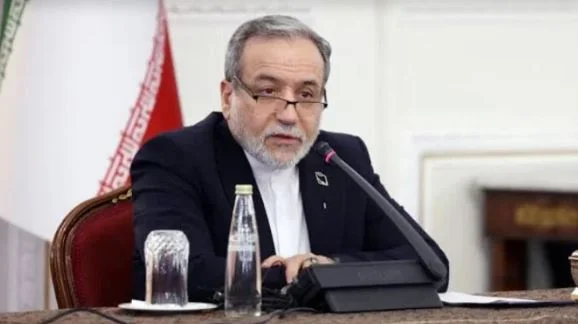
The True Post (Web News) — Iranian Foreign Minister Abbas Araghchi has said that Tehran is maintaining contacts with the United States through Qatar and Pakistan as diplomatic efforts continue to ease military tensions. He also claimed that Iran and Oman have reached an understanding on maritime navigation through the strategically important Strait of Hormuz, including the preparation of designated shipping routes.
In an interview with the Iraqi television network Al Ekhbariya, Araghchi discussed ongoing diplomatic contacts with Washington, arrangements for maritime traffic through the Strait of Hormuz, and Iran’s offer to help resolve the conflict between Saudi Arabia and Yemen’s Houthi movement.
Iran and Oman Agree on Proposed Shipping Routes
Addressing maritime navigation through the Strait of Hormuz, Araghchi argued that the waterway should not be considered an international waterway, claiming instead that it lies within the territorial waters of Iran and Oman.
The Iranian foreign minister said the two countries had reached an understanding on maritime traffic through the strait and had prepared a map identifying specific shipping routes.
According to Araghchi, if the Strait of Hormuz reopens, vessels will be expected to use the route agreed upon by Iran and Oman.
The strait is a strategically significant maritime passage for global energy transportation. Any changes to shipping arrangements in the area could have implications for commercial vessels and regional trade.
However, Araghchi’s statements reflect Tehran’s position on the waterway and the reported bilateral understanding. The supplied report does not include confirmation from Oman or independent verification of the proposed arrangements.
Tehran Maintains Contacts With Washington Through Qatar and Pakistan
Araghchi also confirmed that Iran is continuing to communicate with the United States through Qatar and Pakistan in an effort to bring military tensions to an end.
His remarks indicate that diplomatic channels remain active as Tehran and Washington seek ways to address their confrontation.
The foreign minister did not disclose details of the discussions, identify specific proposals under consideration, or provide information about a possible agreement.
The role of Qatar and Pakistan as intermediaries could be significant in efforts to reduce tensions, although the precise nature and progress of the contacts remain unclear based on the reported interview.
No details were provided about a potential timetable for negotiations or whether the two sides had made progress toward a formal settlement.
Iran Offers to Mediate Between Saudi Arabia and the Houthis
The Iranian foreign minister also discussed Tehran’s offer to help end the conflict between Saudi Arabia and Yemen’s Houthi movement.
According to Araghchi, Iran has offered to facilitate dialogue between the two sides, but neither Saudi Arabia nor the Houthis had responded to the proposal at the time of his remarks.
He said Iran was prepared to assist negotiations and wanted to play a role in reducing tensions across the region.
The reported offer comes amid broader diplomatic efforts to address conflicts and rivalries affecting the Middle East. However, the interview, as described in the supplied report, did not establish whether either party was prepared to accept Iran’s proposed mediation.
Iran Warns Against External Military Intervention in Yemen
Araghchi was also asked about the possibility of Egyptian military involvement in Yemen’s conflict.
In response, he warned that intervention by an outside power could make the situation more complicated.
He further claimed that Egypt had previously informed Tehran that it would not intervene directly in the Yemeni conflict.
The report did not provide an independent confirmation of the alleged communication between Egypt and Iran. The Egyptian government’s position would need to be established through an official statement or other reliable reporting.
Regional Diplomacy Remains in Focus
Araghchi’s comments come as maritime security in the Strait of Hormuz, efforts to ease tensions between Iran and the United States, and diplomatic initiatives concerning Yemen remain important regional issues.
The reported contacts through Qatar and Pakistan suggest that communication between Tehran and Washington is continuing, while the proposed shipping arrangements with Oman point to an additional area requiring clarification between the relevant parties.
Nevertheless, several key questions remain unresolved, including the precise status of US-Iran negotiations, the details of the Iran-Oman maritime understanding, and whether Saudi Arabia and the Houthis will respond to Tehran’s mediation offer.
Official statements from the governments involved will be important in determining whether these reported initiatives lead to concrete agreements or further progress toward regional de-escalation.