Muhammad Amanullah | The True Post
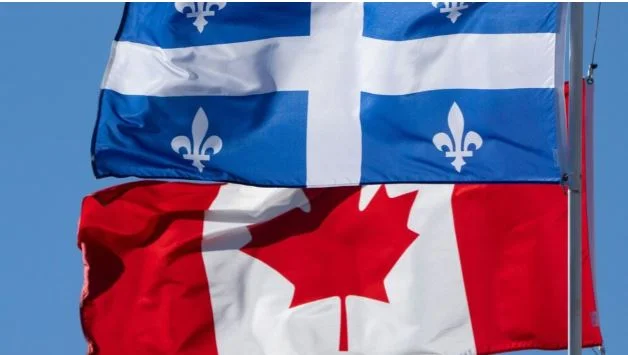
The debate over Quebec’s potential separation from Canada has returned to the political spotlight, reviving questions about the province’s future and the possibility of another independence referendum. Nearly three decades after the historic 1995 vote, discussions about Quebec sovereignty are gaining renewed attention amid changing political dynamics, generational differences, and uncertainty over economic and legal issues.
The Parti Québécois’s return to government has renewed speculation about whether Quebecers could once again be asked to decide whether the province should remain part of Canada. However, a new referendum is far from certain, and the political, economic, and constitutional circumstances differ significantly from those of 1995.
The Narrow Result of the 1995 Referendum
Quebec’s October 30, 1995, referendum remains one of the most consequential political events in modern Canadian history.
According to the figures cited in the supplied report, voters who supported keeping Quebec within Canada received 50.58 percent of the vote, while those favouring separation secured 49.42 percent. The difference was just 54,288 votes, illustrating how deeply divided the province was over its constitutional future.
The narrow outcome left a lasting mark on Canadian politics and ensured that the question of Quebec sovereignty would remain part of the country’s political debate.
A New Generation, Different Opinions
Conversations with residents in Montreal reveal a range of opinions about the prospect of another referendum.
Some residents believe Quebecers should have another opportunity to vote on independence, while others strongly oppose separating the province from Canada.
Pierre-Alexandre Landry reportedly said his parents voted in favour of separation in 1995 and that he might support the same position if another referendum were held. However, he also acknowledged that the timing of such a vote would be an important consideration for the younger generation.
Other residents expressed a clear preference for keeping Quebec within Canada, highlighting the continuing divisions over sovereignty.
These differing views suggest that the independence debate is not simply a matter of repeating the arguments of 1995. Questions about the province’s economic future, identity, and relationship with the rest of Canada remain central to the discussion.
Is Another Referendum Likely?
Daniel Béland, director of the McGill Institute for the Study of Canada, reportedly believes Quebec’s political landscape has changed considerably since the 1995 referendum.
According to the supplied report, Béland considers a third referendum in the near future unlikely, although he does not rule out the possibility entirely.
Quebec Premier Paul St-Pierre Plamondon reportedly pledged during his election campaign to hold another referendum. However, he has also indicated that such a vote would not take place while Donald Trump remains in the White House.
This position places the referendum debate within a broader discussion about political timing, economic uncertainty, and Quebec’s relationship with the United States.
Changing Relations With the United States
The economic relationship between Quebec and the United States is another factor shaping the current debate.
Béland reportedly noted that, in 1995, some Quebecers viewed the United States as a strong and dependable trading partner. The current trade environment, however, has made that confidence more difficult to maintain.
Uncertainty surrounding cross-border trade and relations with Washington could influence how voters assess the potential benefits and risks of independence.
Support for greater sovereignty can change quickly, and internal political developments may also affect public opinion. Any future referendum campaign would therefore take place in a different economic and geopolitical environment from the one that shaped the 1995 vote.
Bill 21 and Quebec’s Identity Debate
Quebec’s secularism legislation, known as Bill 21, has also become part of the broader political discussion.
The law restricts certain public-sector employees from wearing religious symbols while performing specified roles. Its legal challenges have generated debate about religious freedom, state secularism, individual rights, and Quebec’s distinctive cultural identity.
According to the supplied report, Béland suggested that a Supreme Court ruling perceived as unfavourable to Bill 21 could be used by the Parti Québécois and sovereignty supporters to reinforce their political arguments.
Supporters of independence could portray such a decision as a challenge to Quebec’s values and autonomy. However, the wider political impact would depend on the court’s actual ruling and how political parties and voters respond to it.
What Does Canadian Constitutional Law Say?
Quebec cannot legally separate from Canada simply by declaring independence unilaterally.
In its 1998 Reference re Secession of Quebec, the Supreme Court of Canada established that a clear majority voting in favour of secession on a clear question would create a constitutional obligation for the parties involved to negotiate. The ruling did not establish an automatic right to independence.
Lawyer Julius Grey reportedly explained that Quebec has no unilateral legal right to declare independence, although a constitutional process for negotiations could arise if the required conditions were met.
This distinction is crucial: even if another referendum were held and produced a result favouring separation, independence would not automatically follow. The constitutional and political consequences would depend on the referendum question, the clarity of the result, and subsequent negotiations.
Memories of 1995 Still Influence Voters
For some Quebecers, the 1995 referendum remains a vivid personal memory.
Montreal resident Marc Laforest reportedly recalled being eight years old when he accompanied his parents to a school gymnasium where they cast their ballots. He later watched the results unfold on television at home.
Laforest said that, if another referendum took place, the wording of the question, the explanations provided to voters, and the legal process would all influence his decision.
His recollection highlights how the historic vote continues to shape public understanding of Quebec’s constitutional future, even among people who experienced it as children.
Supporters of a United Canada
Opponents of separation argue that Quebec’s French-language heritage, cultural identity, and distinctive social traditions can be preserved without leaving Canada.
One resident, who reportedly spent six years living in Vancouver, said they did not want to see Quebec separate from the country. They described Canada as a beautiful country and emphasised the importance of national unity and peace.
This perspective reflects the belief that Quebec can maintain its unique identity while continuing to benefit from its place within the Canadian federation.
What Comes Next for Quebec?
The renewed discussion over Quebec sovereignty demonstrates that the 1995 referendum remains more than a historical event. It continues to influence debates about provincial autonomy, cultural identity, constitutional law, trade, and Canada’s long-term political future.
Although the possibility of another referendum has returned to public discussion, there is no confirmed referendum date in the supplied report. Whether the issue advances will depend on political decisions, public opinion, economic conditions, and the wider constitutional debate.
For now, Quebec’s future within Canada remains an open political question rather than an imminent change in the country’s borders.