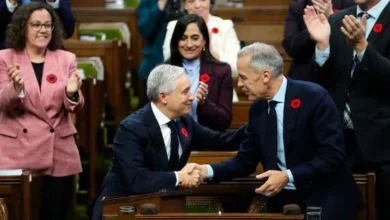
Canada’s federal government has introduced its 2026 budget in Parliament, proposing $142.1 billion in new spending and tax incentives aimed at strengthening the economy, encouraging business investment, providing relief to households struggling with inflation, and protecting the country against global economic pressures.
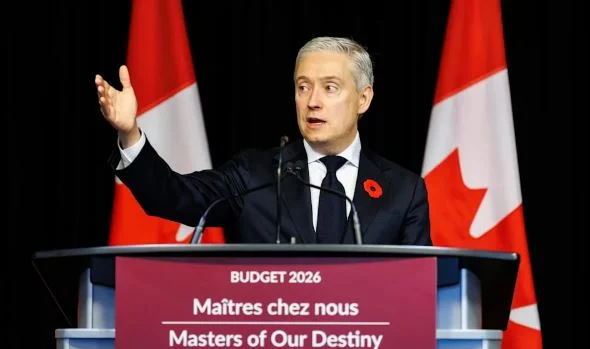
Prime Minister Mark Carney’s government has titled the budget “Masters of Our Destiny.” Its central objective is to strengthen Canada’s economic independence and improve its ability to withstand international economic uncertainty. The 511-page budget places particular emphasis on economic sovereignty, investment, public services, and long-term national development.
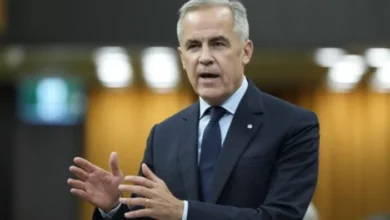
Upon arriving at Parliament, Prime Minister Carney said the budget addresses Canadians’ key priorities, including affordability, economic growth, and national independence. He emphasized that Canada is moving towards greater control over its economic future.
New Measures to Ease the Cost of Living
The federal budget proposes extending existing relief measures to help Canadians cope with rising inflation and everyday expenses.
Under the Canada Groceries and Essentials Benefit, eligible individuals will receive an additional one-time payment equivalent to half of their annual benefit. The payment is expected to be issued in early 2027.
The government is also proposing changes to simplify the tax system. Beginning in 2028, the deadline for filing tax returns for all taxpayers is proposed to be May 15, making tax-related procedures more convenient for Canadians.
Federal Budget Deficit Estimated at $62.3 Billion
The government projects a budget deficit of $62.3 billion for the 2026–27 fiscal year, approximately $3 billion lower than the estimate provided in its economic update released in April.
Finance Minister François-Philippe Champagne said nearly two-thirds of the measures included in the budget are designed to stimulate economic growth and encourage investment, while the remaining measures focus on supporting Canadians facing inflation and rising living costs.
He said Canada has significant opportunities for economic growth, but the government must also address the financial challenges facing households.
Major Investments in Electricity, Energy and Electric Vehicles
The budget includes a $50 billion investment to expand Canada’s electricity infrastructure and national power grid.
The initiative aims to modernize electricity transmission systems, meet growing energy requirements, and prepare the country for increasing demand in the coming years.
The federal government has also set a target of establishing an additional 55,000 electric vehicle charging stations across Canada by 2032 to encourage the adoption of electric vehicles.
In addition, the budget proposes various measures to increase investment in small businesses, expand commercial activities, and help Canadian companies become more competitive in international markets.
Immigration Targets Included in the Budget
Canada’s immigration policy is another important component of the federal budget, with targets outlined for the next three years.
According to the government’s plan, Canada aims to welcome 380,000 permanent residents annually in 2027, 2028, and 2029.
The annual target for new temporary residents has been set at 370,000 during the same period. The government also plans to provide permanent residency to approximately 200,000 temporary residents already living in Canada by the end of 2027.
Additional Funding for CBC and Canadian Culture
The federal budget also includes significant financial support for Canada’s cultural and media industries.
The government has proposed an additional $300 million in funding for the Canadian Broadcasting Corporation (CBC) and Radio-Canada.
A further $600 million has been allocated to provide immediate support for Canadian content and the domestic production industry.
The government says strengthening local cultural industries, supporting creative talent, and encouraging the production of Canadian content are essential to protecting national identity and promoting economic independence.
Additionally, the federal government plans to spend $1.2 billion through agreements with provinces and territories to expand mental health services, addiction treatment, and healthcare support at the housing and community levels.
Opposition Criticizes Spending Plans and Rising Debt
Prime Minister Mark Carney’s budget has faced criticism from opposition parties, which argue that the government has announced substantial spending commitments without doing enough to address the financial difficulties experienced by ordinary Canadians.
Conservative Party Leader Pierre Poilievre strongly criticized the projected deficit and the increase in government borrowing.
He warned that the government’s borrowing pace could place additional pressure on Canadians who are already struggling financially.
Poilievre announced that he would not support the budget and would introduce a motion to reject it. He argued that the government should focus on reducing household expenses rather than relying on expensive borrowing.
Prime Minister Carney responded to the criticism by saying that Conservative leaders were not interpreting the budget correctly. He maintained that the government’s fiscal strategy considers the overall level of debt in relation to the size of the Canadian economy and is designed to move the country towards sustainable growth.
Economists Raise Concerns About Government Projections
Economists have also questioned some of the government’s fiscal targets and revenue projections included in the budget.
Randall Bartlett, Deputy Chief Economist at Desjardins, said Canada is relatively well-positioned compared with some other heavily indebted countries when it comes to rising bond yields and global borrowing pressures.
However, he cautioned that Canada is not entirely protected from increasing fiscal challenges.
According to Bartlett, the government has adopted relatively optimistic assumptions about future revenues, which form part of its expectations for reducing the deficit and meeting fiscal targets. If those projections fail to materialize, the federal deficit could exceed current estimates.
The government has also set a target of balancing its operating budget by 2027–28 and steadily reducing the budget deficit as a share of the economy by 2029–30.
Concerns Over Trade Tensions with the United States
The budget also examines the potential economic consequences of ongoing trade tensions with the United States and broader global uncertainty.
According to the government, the trade dispute with the United States could weigh on Canada’s economic growth towards the end of this year and into early 2027.
Federal projections estimate that Canada’s real gross domestic product (GDP) will grow by 1 per cent in 2026, 1.7 per cent in 2027, and 2 per cent in 2028.
The budget also highlights concerns that rising borrowing costs in major economies, including the United States, are putting pressure on international financial markets and could increase the cost of government debt worldwide.
The government maintains that Canada will preserve its independence in economic policymaking and ensure that international financial pressures do not override national priorities.
Key Figures from Canada’s 2026 Budget
- $142.1 billion: Proposed new spending and tax incentives.
- $62.3 billion: Projected federal budget deficit for 2026–27.
- $3 billion: Reduction in the deficit compared with the April estimate.
- 380,000: Annual permanent resident target for 2027, 2028, and 2029.
- 370,000: Annual target for new temporary residents.
- 200,000: Temporary residents targeted for permanent residency by the end of 2027.
- $50 billion: Investment in expanding Canada’s national electricity system.
- 55,000: Additional electric vehicle charging stations targeted by 2032.
- $1.2 billion: Funding for mental health and community healthcare services.
- $300 million: Additional funding for CBC and Radio-Canada.
- $600 million: Support for Canadian cultural content and production industries.
Canada’s 2026 federal budget represents a major part of the Carney government’s long-term strategy to strengthen economic independence, attract investment, and protect the country against international trade and financial pressures.
However, the budget’s overall impact and the extent of relief delivered to Canadians will ultimately depend on government revenues, spending decisions, and the successful achievement of its economic targets in the coming years.