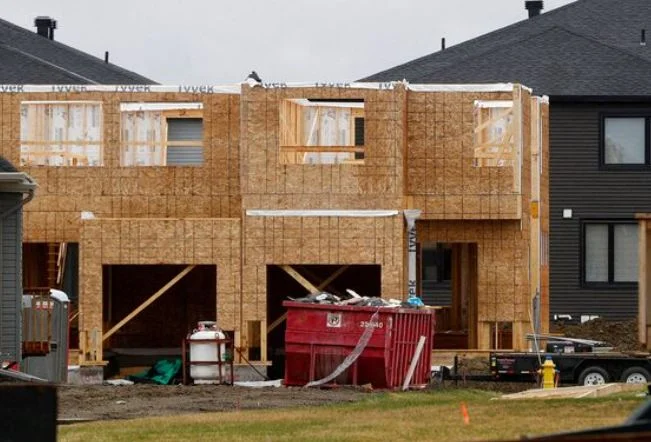
Canada’s worsening housing affordability crisis is creating fresh challenges for the country’s economy, as rising home prices and rental costs continue to put pressure on households. In response, the federal government has announced new policies and billions of dollars in housing investments through its 2026 budget, aiming to support renters, increase housing construction and make homes more affordable.
For many middle- and lower-income Canadians, finding an affordable place to live has become increasingly difficult. Buying a home is no longer the only challenge, as renting has also become financially demanding, particularly in major cities.
Rising housing costs are consuming a growing share of household incomes, leaving families with less money for savings, children’s education, healthcare and everyday expenses.
In October, Bank of Canada Deputy Governor Carolyn Rogers highlighted the economic consequences of the housing crisis. She explained that when families spend a significant portion of their income on rent or mortgage payments, they have less money available for other essential needs, savings and unexpected expenses.
According to Rogers, housing affordability is no longer simply a residential issue. It has become increasingly connected to Canada’s economic growth, financial stability and banking sector.
Federal Budget Introduces a Ten-Year Support Plan for Renters
Under Budget 2026, the federal government has decided to extend the Canada Housing Benefit program for another 10 years to help eligible low-income individuals and families manage their rental expenses.
The program provides direct financial assistance to qualifying households to help cover housing costs and reduce the financial pressure caused by rising rents.
The government has also announced expanded financing measures for new residential developments and initiatives aimed at reducing construction costs.
One of the major proposals in the budget is a $45 billion investment plan focused on modern construction methods, factory-produced building components and increasing productivity across the construction industry.
Additional measures include modernizing building codes, introducing digital systems for construction permits at the municipal level and using artificial intelligence to speed up approval processes.
New Financing Opportunities for Smaller Housing Developments
The federal government is also seeking to encourage greater participation by small and medium-sized developers in Canada’s housing construction sector.
Beginning in 2027, private insurance companies are expected to be permitted to provide mortgage insurance for multi-unit residential buildings containing between five and 50 units.
The initiative aims to create alternative financing opportunities for smaller housing developments and reduce reliance on a single government-backed institution.
Policymakers expect the measure to encourage the construction of additional rental housing by making financing more accessible to developers.
However, access to capital and the conditions attached to construction loans could remain significant obstacles for smaller builders.
How the Housing Crisis Is Affecting Canada’s Economy
The impact of high housing costs extends far beyond people trying to purchase their first homes.
Families paying increasingly expensive rents are spending a larger proportion of their earnings on accommodation, leaving less money for shopping, services and other consumer activities.
This reduction in disposable income can affect businesses and slow economic activity across several sectors.
At the same time, falling property prices do not necessarily represent an entirely positive development for the Canadian economy.
According to the Bank of Canada, declining property values can reduce household wealth, weaken consumer confidence and discourage new construction activity.
This creates a difficult balancing act for policymakers: making housing more affordable for ordinary Canadians while maintaining investment and construction activity across the housing sector.
Turning Billions in Housing Announcements Into Real Results
The latest changes to Canada’s housing strategy suggest that the federal government is adopting a broader approach to tackling the affordability crisis.
Rather than focusing exclusively on building new homes, the government is also emphasizing direct financial assistance for renters, lower construction costs, private-sector investment and the removal of administrative barriers.
However, the real test will be whether these announcements translate into measurable improvements for Canadians.
Important questions remain about how many additional homes will actually be built, whether rental prices will stabilize and when lower-income households will begin experiencing meaningful financial relief.
If construction costs, municipal approval delays and financing challenges remain unresolved, the housing crisis could continue despite billions of dollars in planned investments.
For the federal government, the challenge is to make housing accessible not simply as an investment opportunity or property market, but as a basic necessity that ordinary Canadians can realistically afford.