Muhammad Amanullah | August 17, 2026
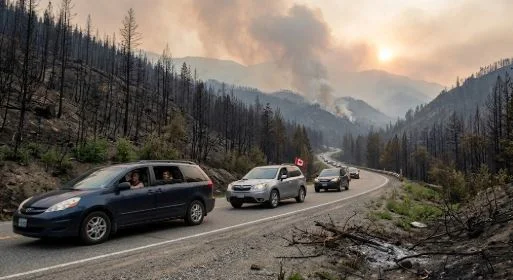
British Columbia is gradually easing evacuation orders in several areas affected by severe wildfires, allowing thousands of residents to return home. However, authorities continue to warn that the danger has not completely passed. In Summerland, hundreds more families have been allowed to return, while thick wildfire smoke is expected to remain across parts of southern British Columbia for the next several days.
Officials are also concerned about unstable weather, with thunderstorms and lightning potentially sparking additional wildfires. More than 120 wildfires are currently active across the province, many of which were started by lightning.
More Summerland Residents Allowed to Return
The District of Summerland has partially downgraded evacuation orders in several areas, replacing them with evacuation alerts. Residents east of Highway 97 and in the Trout Creek neighbourhood on the west side of the highway can now return home, but they have been warned to remain prepared to evacuate again if conditions deteriorate.
Summerland Mayor Doug Holmes said approximately 800 additional properties were moved from evacuation orders to alerts on Sunday. Around 1,200 properties remain under evacuation alerts.
When the Bald Range wildfire threatened the community, approximately 5,500 properties in the district were placed under evacuation orders. Authorities have completed damage assessments in affected areas, although the mayor said it is not yet clear how many homes were completely destroyed.
Officials say the process of allowing more residents to return will continue gradually as conditions improve and assessments are completed.
Highway 97 Fully Reopens
The section of Highway 97 passing through Summerland, which had been closed because of the wildfire situation, was fully reopened to traffic on Sunday. Authorities said the highway could be affected again depending on fire conditions and the needs of firefighting crews.
The reopening is expected to make transportation easier for residents and emergency teams working in the area. Drivers have nevertheless been urged to exercise caution because firefighting operations and changing conditions may continue.
Near Cache Creek, Highway 97 was also partially reopened on Saturday after remaining closed for weeks. The closure was largely linked to the Pearl Lake wildfire, which remains the largest active wildfire in the province.
Heavy Smoke Expected to Continue
The British Columbia Wildfire Service says smoke covering southern parts of the province could remain for several more days. Fire information officer Rick van Kastieren said the smoke could lower temperatures near the ground, potentially providing some benefit to firefighting operations. However, reduced visibility could make aerial monitoring and the use of firefighting aircraft more difficult.
Officials are also warning residents about the potential health effects of wildfire smoke. Smoke can cause breathing problems, and people in affected areas are being urged to follow official air-quality guidance.
Lightning Raises Concern Over New Fires
One of the biggest concerns for firefighters is unstable weather. Forecasts indicate that more lightning could occur across southern British Columbia, potentially triggering additional fires in areas already dealing with a severe wildfire season.
Van Kastieren said fire crews will closely monitor lightning activity, particularly in central and southern parts of the province. Some fires can start immediately after a lightning strike, while sparks in trees or dry areas can smoulder and develop into larger fires later when hot and dry conditions return.
Fire officials are also preparing to position personnel and resources in potentially vulnerable areas so crews can respond quickly if new fires are detected.
More Than 120 Wildfires and 1,800 Firefighters
More than 120 wildfires are currently active across British Columbia, with firefighting crews working at numerous locations. Authorities say many of the fires were sparked by lightning.
Approximately 1,800 firefighters have been deployed across the province. British Columbia is also receiving assistance from other provinces, with firefighters from New Brunswick and Quebec being sent to help with the wildfire response.
The additional personnel are arriving as British Columbia continues to deal with multiple major fires and faces the possibility of new wildfire activity due to changing weather conditions.
Pearl Lake Fire Remains the Largest
The Pearl Lake wildfire near Clinton remains the largest wildfire in British Columbia so far this year. As of Saturday evening, the fire had spread across approximately 1,593 square kilometres.
Some Clinton residents were allowed to return home on Saturday after evacuation restrictions were eased. However, evacuation orders remain in effect for some properties in the western part of the area.
Local business owners say returning residents are seeing a dramatically different landscape. Some homes and other structures have been destroyed by the fire, meaning the return home has been an emotional and traumatic experience for many families.
Fire Risk Still Remains
The gradual lifting of evacuation orders in parts of British Columbia is offering hope that conditions are improving in some communities. However, authorities continue to stress that the wildfire threat has not disappeared.
Unstable weather, lightning, dry conditions and persistent smoke are expected to remain major challenges for firefighting crews in the coming days. Residents in affected areas are being urged to remain alert, monitor official evacuation alerts and be prepared to leave again if conditions change.