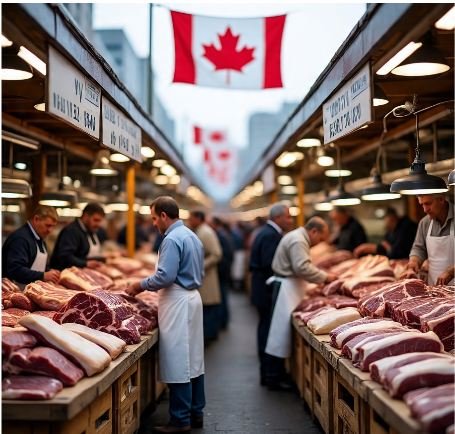
The True Post(Web News) Beef prices in Canada are consistently reaching record highs and are predicted to increase further in 2026.
On the surface, it may seem like a game of inflation or supply and demand, but the real problem is much more complex, profound, and far-reaching. Beef is not just a food, it is also a reflection of Canadian culture, rural economy, agriculture, land tenure, environmental conditions, and global trade fluctuations. When one link in this chain breaks, the entire supply chain is shaken. This is the situation facing Canada’s beef sector today. The
biggest crisis is the historic decline in cattle numbers. Severe droughts have devastated pastures in western Canada, fodder prices have skyrocketed, and farmers have been forced to reduce their herds. The number of cattle in Canada has fallen to its lowest level since the 1980s, while the situation is even worse in the United States, where herds have reached their lowest levels since the 1960s. When supply continues to decline and demand remains strong, prices are unlikely to fall.
On the other hand, Canadian consumers are lovers of beef. Whether the economy is under pressure, inflation is rising or purchasing power is declining , beef is deeply rooted in Canada’s food tradition. That’s why people are moving away from expensive cuts and toward relatively inexpensive cuts, but they’re not giving up beef. Rising demand for protein has also played a role in keeping prices high.
Meanwhile, farmers are at another critical juncture. On one hand, there’s the opportunity to make quick profits by selling cows at record prices, and on the other, there’s the path to improving long-term supply by expanding the herd—but that path is fraught with risk, uncertainty and heavy investment. The rising costs of feed, fertilizer, labor, energy and land have made the decision to expand the herd extremely difficult. The threat of drought complicates it even further.
Another important aspect is global trade. Open borders with the United States, tariffs imposed and removed by the Trump administration on various countries, closures of meatpacking plants, and disease concerns — all of these factors directly affect Canada’s beef sector. On the one hand, Canadian beef is selling at a high price in many countries, including South Korea, while on the other hand, cheaper Australian or Mexican beef enters the Canadian market. This balance is never constant.
The future is bleak, too. Beef prices are set to remain high through 2027, according to agricultural experts. The process of rebuilding herds is long, dangerous and expensive. The average age of farmers is rising, young people are leaving the agricultural sector, and high land prices are becoming a barrier to a new generation. All of these factors are pushing the beef sector towards a major structural crisis. Beef is not just a food price — it is a test of Canada’s food tradition, the economic survival of farmers, and the country’s agricultural policy. If the government, agricultural institutions, and the market do not adopt a common strategy for this crisis, beef could become a food for the rich and a loss-making commodity for farmers in the future. Demand is strong, supply is low, farmers are under pressure, and climate change is constantly sounding the alarm. This is not just a price issue — it is a warning that if decisions are not made today, tomorrow will be too late.