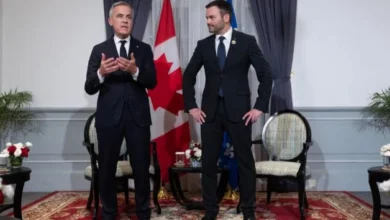
Canada and China have agreed to expand tariff relief covering about $400 million in Canadian exports, Prime Minister Mark Carney’s office announced on Tuesday, after Mr. Carney met Chinese President Xi Jinping in Shenzhen ahead of the Asia-Pacific Economic Cooperation (APEC) summit.
The agreement extends and expands the two countries’ Preliminary Joint Arrangement on Addressing Bilateral Economic and Trade Issues until December 2028, improving Canadian farmers’ and seafood harvesters’ access to the Chinese market.
What the deal covers
The additional relief covers most frozen pork cuts, worth about $116 million, along with certain frozen cold-water shrimp and prawns, including Pacific spot prawn, worth $87.5 million; certain molluscs, including geoduck, worth $61.4 million; sea cucumber, worth $39.4 million; and Greenland halibut, worth $96 million.
The expansion builds on a two-year extension of tariff relief for Canadian canola meal, peas, lobster and crab announced earlier this month at a bilateral trade meeting in Beijing.
China has also agreed to suspend its anti-discrimination tariffs from January 1, 2027, to December 31, 2028.
What Canada offered in return
In exchange, Canada will extend existing remission measures for certain Chinese steel and aluminium products until December 31, 2028. The measures currently apply to goods imported on or before December 31, 2026.
Canada will also expand the remission coverage to 32 tariff items — 23 steel items and nine aluminium items — where Canadian supply is insufficient or unavailable.
A relationship being rebuilt
The deal is the latest step in a rapid repair of Canada-China relations. In January, Mr. Carney and Mr. Xi launched a new strategic partnership during the first visit to Beijing by a Canadian prime minister since 2017, aiming to stabilise trade, build clean energy industries and reconnect the two countries.
Since then, the two sides have reduced tariffs on Canadian exports of canola seed and meal, peas, crab and lobster. Ottawa says Canada has now restored market access for more than 90 per cent of the trade that had previously been subject to tariff action.
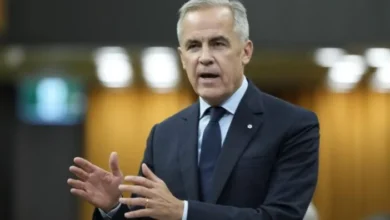
Mr. Carney said Canada was well ahead of schedule in its goal of boosting exports to China by 50 per cent by the end of the decade, and hailed “greater predictability and stability” in the relationship. Canadian crude oil shipments to China have risen about 37 per cent in 2026, according to a Reuters calculation based on shipping data.
Why it matters
The agreement fits Mr. Carney’s push to diversify Canada’s trade away from its heavy reliance on the United States, a strategy that has gained urgency amid tariff disputes with Washington. China is the world’s second-largest economy and a major buyer of Canadian farm and seafood products.
Mr. Carney was joined in Shenzhen by Foreign Affairs Minister Anita Anand and Parliamentary Secretary to the Prime Minister Kody Blois. He will represent Canada at the APEC Economic Leaders’ Meeting in the city.
The expanded arrangement gives exporters a clear timetable, with the relief and the tariff suspensions now running to the end of 2028.
Sources: Prime Minister’s Office; Reuters.