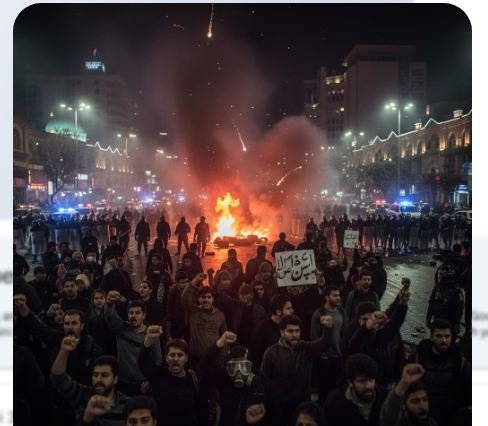
The True Post(Web News) Protests in Iran against rising inflation, economic downturn, and exorbitant increase in daily expenses
The protests have taken a dangerous turn. At least six people, including a security officer, have been killed in clashes between security forces and protesters in various cities, including one security officer. This is the first time during the recent wave of protests that the situation has become so serious.
According to foreign news agencies, clashes between protesters and law enforcement agencies have occurred in several cities in western Iran. Semi-official Iranian media say that two citizens died during clashes with security forces in the city of Lordagan in Chaharmahal and Bakhtiari province, while several others were injured. According to officials, the protesters tried to damage government property, after which the security forces took action.
According to state media reports, a 21-year-old Basij force officer was killed in the city of Kohdasht in Lorestan province, who the authorities have declared dead after being stoned by protesters. The government maintains that the security forces were trying to maintain peace and order, but the situation got out of control.
On the other hand, the Iranian human rights organization Hengao has challenged the official position and claimed that several civilians were killed and injured as a result of security forces’ firing in Lordagan, while the person who died in Kohdasht was a young protester. According to human rights organizations, the ground realities may differ from the official narrative, but these claims could not be independently verified.
The protests began on Sunday with a traders’ strike in the capital Tehran, where shopkeepers raised their voices against inflation, economic stagnation and the continuously falling value of the currency. Within a few days, the demonstrations spread to other major cities in the country, while students from at least ten universities also joined the protest, which further increased the pressure on the government.
Iran is currently suffering from a severe economic crisis. Western sanctions, a decline in oil exports and an uncertain political situation have badly affected the economy. Over the past year, the Iranian rial has lost more than a third of its value against the US dollar, making essential goods increasingly inaccessible to the public. According to official data, the inflation rate reached 52 percent in December, which is considered a major cause of public unrest.
Iranian President Masoud Peshmerga has acknowledged that economic problems are real and causing public hardship, responding to the protests. He has directed government agencies to focus on economic reforms and provide relief to the public. However, security officials have made it clear that strict action will be taken if peace and order are disrupted during the protests. According to experts, if the economic situation does not improve immediately, the protest wave in Iran could intensify further, which could become a major political and social challenge for the government.