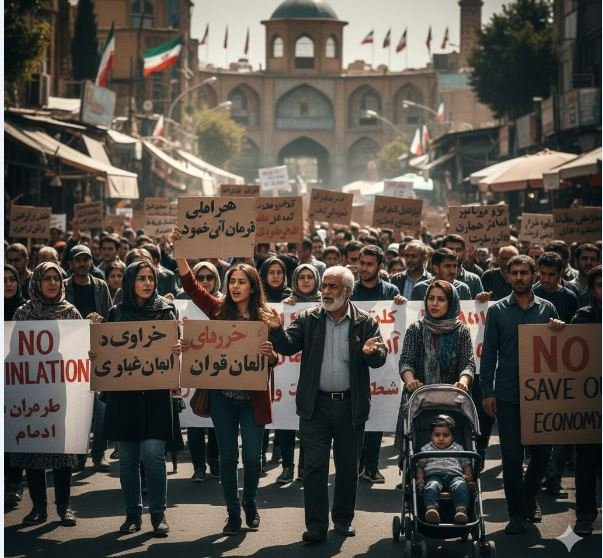
The True Post (Web News) Public protests in Iran against the sharp decline in the value of the currency and rising inflation have entered their sixth day.
Meanwhile, the situation across the country is becoming increasingly tense. Protests continue in various cities, including the capital Tehran, and in many areas, the situation has deteriorated to the point that the government has had to close educational institutions and government offices. A large number of people have come out on the streets and are shouting slogans against the government’s economic policies.
The protests were initially sparked by shopkeepers and traders, who were expressing their anger over the sharp decline in the value of the Iranian currency, the rial, against the dollar. Within days, the demonstrations spread and have now been joined by students, workers, government employees and ordinary citizens in large numbers. Protesters say inflation has made life unbearable for the common man and everyday necessities have become unaffordable.
There have also been reports of clashes between protesters and security forces in various cities. According to foreign media reports, at least six protesters and one police officer have been killed in these clashes so far, while dozens of police officers have been injured as a result of stone-pelting by protesters. In addition to Tehran, intense protests have also been recorded in Fars, Marv Dasht and Lordagan provinces, however, the most serious clashes have been reported from the city of Azna in Lorestan province, which is located about 300 kilometers southwest of the capital Tehran.
In view of the gravity of the situation, schools, colleges, universities and government offices have been closed in several provinces, severely affecting normal life. The suspension of educational activities has affected millions of students, while the closure of government institutions has also limited public services. Complaints of disruptions in internet and communication facilities are also emerging in some areas, which critics are calling an attempt to block the flow of information.
According to international broadcasters, the recent demonstrations are the largest public protests since the alleged death in custody of Mahasa Amini in 2022. According to experts, although the basis of the protests at that time was linked to human rights and social freedoms, the current demonstrations are primarily the result of economic problems, unemployment, inflation and a currency crisis, which are affecting every class.
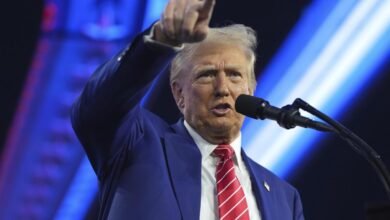
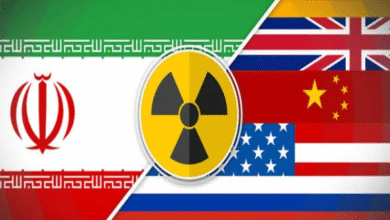
The deteriorating situation in Iran is also drawing international attention. US President Donald Trump has warned that the US may intervene to protect peaceful protesters if the Iranian government uses violence against them. His statement has further increased political tensions in the region and relations between Iran and the US have once again become strained.
In response to the US threat, Ali Larijani, an advisor to Iranian Supreme Leader Ayatollah Ali Khamenei, has reacted strongly. He said that US intervention in Iran’s protest issue would be tantamount to spreading chaos in the region. He warned that any interventionist hand moving towards Iran’s security would be cut off and Iran will not allow any external power to interfere in its internal affairs.
According to political analysts, Iran is currently going through a very critical phase where the economic crisis, public unrest and global pressure are intertwined. If the government does not immediately take effective economic measures to provide relief to the people, the protests could intensify further. Experts say that suppressing the protests through force may be a temporary solution, but until the inflation and currency crisis are controlled, it will be difficult to completely eliminate public anger.
Overall, the ongoing demonstrations in Iran are not just a protest, but a reflection of a deeper economic and social crisis. The coming days will determine whether the Iranian government can manage the situation through dialogue and reform, or whether this crisis will spread further and have profound implications for the country’s political and economic future.