Muhammad Amanullah — September 12, 2026
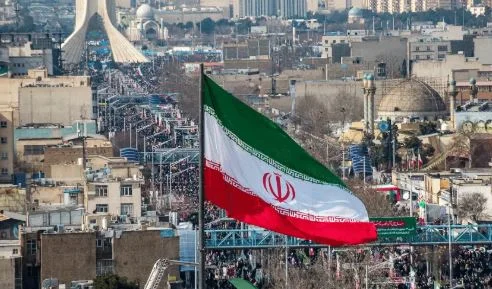
Iranian President Masoud Pezeshkian has said Iran is prepared to reopen the Strait of Hormuz if the United States ends its blockade and aggressive actions against Iran.
The Iranian president made it clear that Tehran would not be intimidated by US pressure or military actions, saying Washington was mistaken if it believed that restricting the vital maritime route could force Iran to surrender.
Iranian President Takes Firm Position
Speaking to Indian media, President Masoud Pezeshkian said that after failing to achieve its objectives through war, the United States had turned to a naval blockade.
He said Iran would not be frightened by US aggressive measures and that attempts to pressure Tehran would not produce the desired results.
Condition for Reopening the Strait of Hormuz
Pezeshkian said Iran could reopen the Strait of Hormuz, but Washington would first have to end its blockade and aggression against Iran.
According to the Iranian president, if the United States changes its approach and ends the ongoing pressure against Iran, a solution could be found regarding the reopening of the strategic waterway.
Warning to the United States
The Iranian president also warned Washington against assuming that a naval blockade could force Iran to lay down its arms.
He said Iran does not depend on a single maritime route for its needs and survival. According to Pezeshkian, the United States was mistaken if it believed that putting pressure on Iran through a naval blockade could force Tehran to surrender.
Naval Blockade Not Enough to Pressure Iran
Pezeshkian said maritime access was not Iran’s only lifeline. He rejected the impression that Iran’s economy or population could be completely pressured simply by restricting access to a maritime route.
His remarks indicate that Tehran views the Strait of Hormuz not merely as a military issue but as part of the broader tensions between Iran and the United States.
Arab Foreign Ministers’ Meeting
Pezeshkian said Arab countries’ foreign ministers would hold an important meeting in Oman on Monday.
According to the Iranian president, an agreement concerning a joint maritime route between Iran and Oman in the Strait of Hormuz would be signed during the meeting.
Iran-Oman Maritime Agreement
Pezeshkian said the agreement between Iran and Oman would concern a joint maritime route in the Strait of Hormuz.
He added that the agreement would also be presented to the International Maritime Organization so that arrangements concerning the waterway could be presented at the international level.
The move would signal Iran’s position that arrangements concerning maritime traffic through the Strait of Hormuz should not be viewed as a unilateral decision, but could instead be discussed with relevant countries and international maritime authorities.
Countries Affected by Attacks Also Invited
The Iranian president further said that countries whose territories had been used for attacks against Iran had also been invited to attend the meeting.
This means the gathering would not be limited to Iran and Oman, but could also include other regional countries directly connected to the current tensions.
Tensions Remain High in the Region
Pezeshkian’s remarks come as tensions between Iran and the United States remain high, with concerns continuing over maritime movement in the region.
Because of the Strait of Hormuz’s strategic geographical importance, any major development in the area attracts international attention. Disruptions to shipping through the waterway could also affect global energy markets because of the volume of energy transported through the route.
Tehran Leaves Door Open for Talks
Pezeshkian’s statement combines a firm position against US pressure with a clear condition for reopening the Strait of Hormuz.
The Iranian president said that if the United States ends its blockade and aggressive actions, Iran could agree to reopen the waterway.
At the same time, the planned Iran-Oman agreement on a joint maritime route points toward a possible new arrangement for maritime traffic in the region.
Strait of Hormuz Back in Global Focus
The Strait of Hormuz already holds major importance for international politics and global energy trade. Pezeshkian’s latest remarks have once again placed the strategic waterway at the centre of international attention.
Iran has made clear that it does not intend to surrender under US pressure, while ending the US blockade and aggression has been identified as a key condition for reopening the Strait of Hormuz.
The Arab foreign ministers’ meeting in Oman on Monday and the expected agreement between Iran and Oman are therefore being viewed as potentially significant developments for maritime movement and regional tensions.