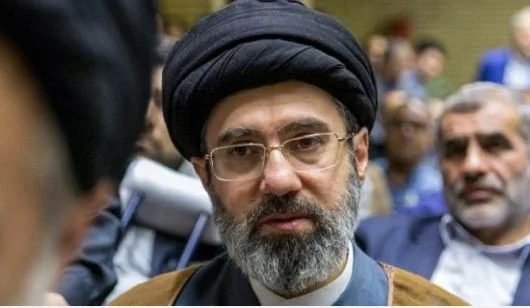
TEHRAN — Iranian Supreme Leader Mojtaba Khamenei has called on the rulers of Gulf countries to identify what he described as their “real enemy” and understand its plans and objectives.
In a written message, Khamenei said that the rulers of the United States and Israel are not only enemies of Iran but also enemies of the wider Muslim world.
He urged Muslim countries to strengthen unity, cooperation and mutual defense in response to what he described as growing threats facing the region.
Call for Unity and Cooperation Among Muslim Countries
Mojtaba Khamenei called on Muslims around the world to strengthen unity and increase cooperation in confronting regional challenges.
He specifically urged the leaders of Gulf countries to carefully assess the threats facing the region and understand what he described as the intentions of their real adversaries.
The message was issued on the occasion of the birth anniversary of Prophet Muhammad (PBUH).
Khamenei said regional countries should seriously assess the current situation and increase cooperation to protect their national and regional interests.
Israel Threatens Further Attack on Iran
Khamenei’s statement comes as tensions between Iran and Israel remain high.
Israeli Energy Minister Eli Cohen has warned that Israel could launch another attack against Iran if Tehran resumes its nuclear or ballistic missile programs.
Cohen claimed that previous U.S. and Israeli strikes had pushed Iran’s nuclear program back by several years.
He also argued that Iran could have obtained nuclear weapons if Israel had not carried out its previous military action.
The Israeli warning has added to concerns over a possible renewed escalation between the two countries.
Iranian President Says Iran Will Resist Aggression
Meanwhile, Iranian President Masoud Pezeshkian has said that Iran did not start the war and does not seek conflict.
However, he said Iran would stand firmly against any aggression.
Pezeshkian emphasized that a nation standing with strength and determination cannot simply be forced to surrender.
His remarks came amid continued tensions surrounding Iran’s security, nuclear activities and relations with Israel and the United States.
Iranian Leadership Calls for Regional Cooperation
Recent statements from Iran’s leadership have increasingly emphasized regional unity and cooperation.
Mojtaba Khamenei has argued that Middle Eastern countries should strengthen cooperation to protect their national and regional interests and jointly address security challenges.
Iran has also continued to emphasize the importance of stronger relations among neighboring countries as tensions in the Middle East remain elevated.
Rising Tensions Across the Middle East
The latest statements come at a sensitive time for the Middle East, where disagreements involving Iran, Israel and the United States continue to raise concerns about further military escalation.
Iran maintains that it does not seek war but has repeatedly warned that it will respond to attacks against the country.
Israel, meanwhile, has continued to express concern over Iran’s nuclear and missile capabilities.
The exchange of warnings and statements has increased uncertainty over the future of regional security.
Gulf Countries Face a Difficult Regional Situation
The statements also place renewed attention on the position of Gulf countries, which maintain important economic, political and security relationships with both the United States and countries in the wider Middle East.
Iranian leaders have repeatedly called on Gulf states to pursue greater regional cooperation rather than becoming directly involved in conflicts between major regional and international powers.
For Gulf governments, balancing security relationships, economic interests and regional stability remains a significant challenge.
What Happens Next?
The future course of tensions between Iran, Israel and the United States will depend on developments surrounding Iran’s nuclear and missile programs, diplomatic negotiations and the possibility of further military action.
Mojtaba Khamenei’s latest message indicates that Tehran wants Muslim and regional countries to strengthen cooperation while preparing to respond to what it considers external threats.
At the same time, Israel’s warnings about possible future military action suggest that tensions remain unresolved.
With diplomatic and security concerns continuing across the region, any new military confrontation could have wider consequences for the Middle East and international stability.