Muhammad Amanullah — September 5, 2026
Federal Interior Minister Mohsin Naqvi has said that the establishment of new administrative units in Pakistan should be decided according to the will of the people, stressing that public opinion must be respected in any such decision.
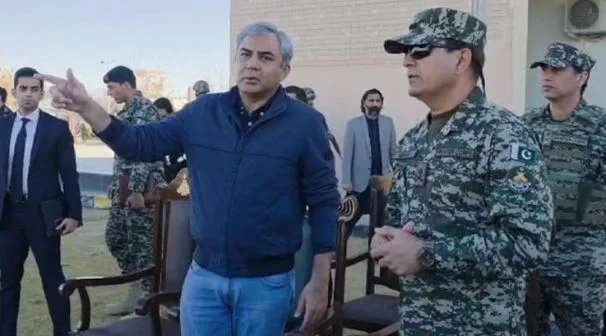
Speaking at the National Policy Dialogue in Lahore, Mohsin Naqvi said no individual or political party should be able to prevent the creation of new administrative units if the people support the idea.
He said the people are the biggest stakeholders in any discussion over the creation of new provinces and that Pakistan needs to improve its administrative structure to bring effective governance and basic services closer to citizens.
System Needs to Be Reset
Mohsin Naqvi said he would not withdraw his position regardless of whether he remained in office.
He recalled that he had spoken about the need to “reset” the system more than a month earlier, but said some people had interpreted his remarks as a reference to the current government or a particular political system.
According to the interior minister, that was not his intention.
He compared the issue to a company that is not functioning properly, saying that people would normally sit together to identify problems and improve its performance.
Similarly, he said, if Pakistan has spent 79 years without achieving the desired results, there is a need to reset and restructure the system.
Naqvi clarified that a reset does not mean dismantling the system but correcting what is not working properly.
Basic Services Must Reach Every Citizen
The interior minister said Pakistan needs to seriously reconsider its administrative structure because providing basic necessities to every citizen is the responsibility of the state.
He pointed to concerns over education and access to essential services, saying millions of children remain out of school and many citizens still lack access to clean drinking water.
Naqvi said the country needs administrative restructuring after 79 years and that any such reforms should be carried out within the framework of the Constitution.
He noted that there is generally less resistance when new tehsils and divisions are created, but objections often emerge when the discussion turns to creating larger administrative units or new provinces.
People Should Decide
Mohsin Naqvi said that if people support the creation of new administrative units, those units should ultimately be established.
He urged political leaders and other stakeholders to leave the decision to the people rather than turning the issue into an emotional political debate.
He also said decisions regarding new provinces should be based on national consensus.
According to Naqvi, political parties should sit together, while the government and Parliament should listen to all relevant stakeholders before moving forward.
Supports Making Islamabad a Province
Naqvi also expressed strong support for the idea of making Islamabad a province.
He argued that residents of the federal capital do not receive a share from the National Finance Commission (NFC) and questioned whether the people of Islamabad should be treated differently from other citizens.
He also criticised the way the capital is financially managed, saying the Capital Development Authority (CDA) relies on selling land to run the city.
Naqvi questioned whether Islamabad’s residents should not receive the same consideration as citizens elsewhere in the country.
He said that if Islamabad were to become a province, the move should be welcomed collectively.
He further argued that stronger local governance could create opportunities for capable political leaders to emerge at the city level, referring to figures such as Zohran Mamdani and Sadiq Khan as examples of leaders who have risen through urban politics.
Nearly Two Million Cases Pending
The interior minister also highlighted administrative and judicial challenges facing Pakistan.
He said that whenever there is discussion about transferring authority to the lower levels of government, objections are raised.
Naqvi pointed to the large number of children who remain outside the education system and concerns over access to clean water.
He also said around two million cases are pending in Pakistani courts, leaving many people waiting for justice.
According to the minister, parents remain concerned about their children’s health and access to treatment, while young people are seeking employment and greater opportunities.
He argued that fundamental reforms are therefore necessary to improve governance and ensure that state services reach citizens more effectively.
Administrative Units Should Not Be Based on Language or Ethnicity
Naqvi said the debate over new provinces or administrative units should not be driven by language, ethnicity or community identity.
Instead, he said, the primary objective should be better governance and improved access to public services.
He argued that whether southern or northern Punjab is created as a separate administrative unit, its residents would remain Punjabi, while Sindhis would continue to retain their identity.
Naqvi stressed that the issue was not one that required an immediate decision within a day or two.
Rather, he said, it required serious discussion among the government, Parliament, political parties and other stakeholders.
The interior minister maintained that the ultimate objective should be to develop an administrative structure that reflects the people’s wishes while providing better services, stronger governance and greater administrative efficiency.