

Muhammad IrfanUllah | July 22, 2026
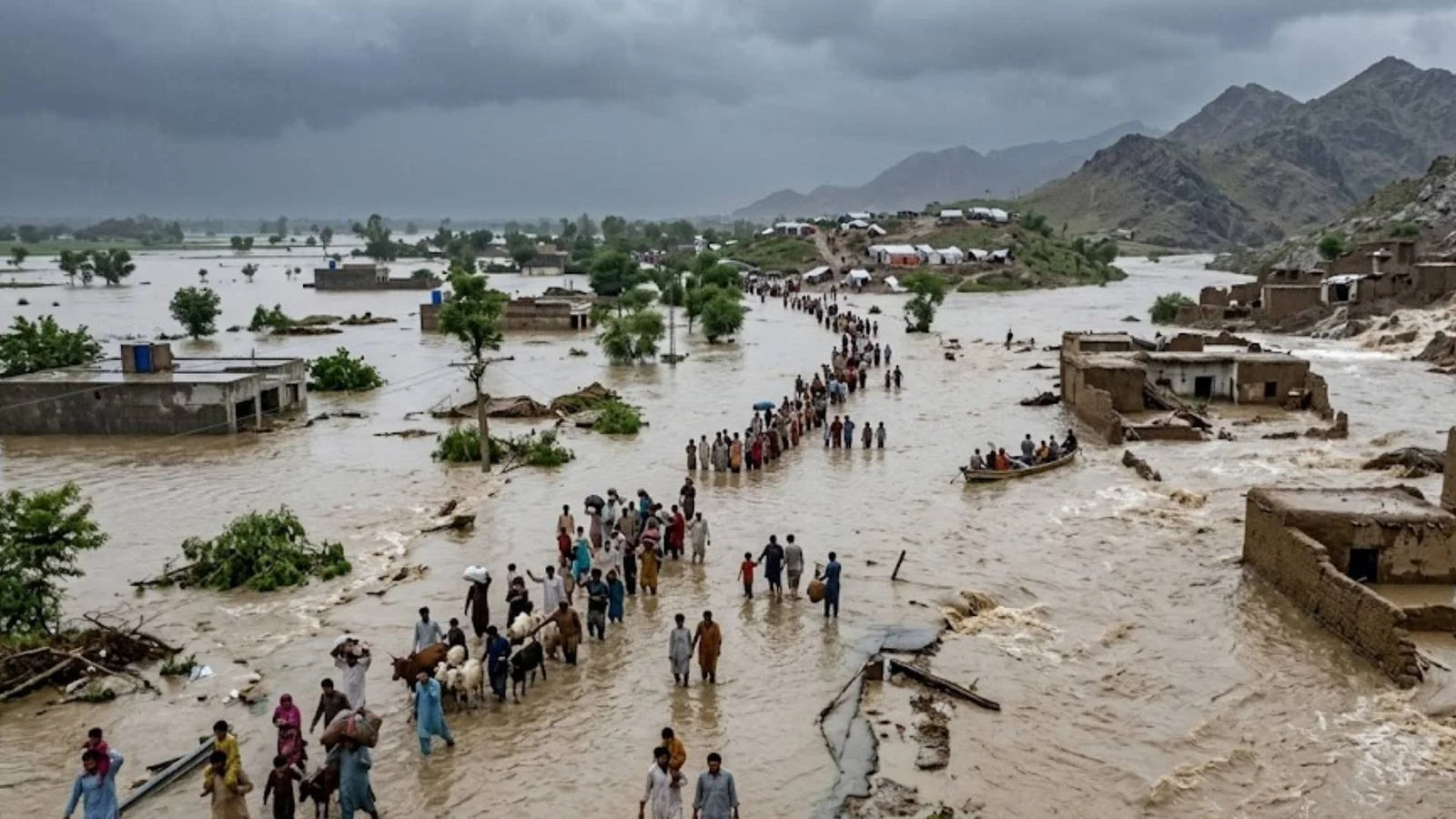
Islamabad (Web News): Torrential monsoon rains have triggered widespread flooding across Pakistan’s provinces of Punjab and Khyber Pakhtunkhwa (KP), forcing evacuations, damaging homes, farmland, and infrastructure, and prompting emergency authorities to issue fresh flood warnings for vulnerable communities.
The Provincial Disaster Management Authority (PDMA) has warned that continued rainfall in northern regions is expected to increase water levels in major rivers, raising the risk of further flooding in low-lying areas.
Chenab River Floodwaters Sweep Away Mosque in Chiniot
One of the hardest-hit districts is Chiniot, where surging floodwaters in the Chenab River swept away a mosque located along the riverbank.
Rescue teams have been deployed to riverside communities, using boats to evacuate residents from flood-prone neighborhoods as water levels continue to rise.
Authorities have urged people living near the river to avoid unnecessary travel and strictly follow evacuation instructions.
Crops Submerged, Residents Told to Leave Homes
In Jalalpur Bhattian of Hafizabad district, severe riverbank erosion has submerged large areas of agricultural land, raising concerns over significant crop losses.
Meanwhile, district officials in Wazirabad have advised residents living close to the Chenab River to evacuate immediately and relocate to safer areas to minimize the risk of casualties.
Seven Hours of Heavy Rain Leaves Narowal Underwater
The city of Narowal experienced more than seven consecutive hours of heavy rainfall, leaving roads, markets, and residential neighborhoods submerged.
Authorities have also instructed residents living near the Ravi River at the Jassar area to relocate after rising river levels increased the threat of flooding.
Local officials say the situation is being monitored around the clock and additional emergency measures will be implemented if conditions worsen.
Heavy Rain Disrupts Daily Life Across Punjab
The impact of the monsoon has extended beyond the worst-hit districts.
Heavy rainfall and urban flooding have affected several cities, including:
- Sialkot
- Gujranwala
- Gujrat
- Hafizabad
- Malkwal
- Jhelum
- Bhakkar
Flooded streets and waterlogged neighborhoods have disrupted transportation, commercial activity, and daily life across the region.
Khyber Pakhtunkhwa Also Faces Severe Weather
In neighboring Khyber Pakhtunkhwa, persistent rainfall has created similar challenges.
Roads and major intersections in Peshawar were inundated, causing traffic disruptions, while heavy rain was also reported in Dera Ismail Khan and Mardan.
Provincial authorities remain on high alert, warning that additional rainfall could worsen conditions in vulnerable districts.
PDMA Issues Fresh Flood Warning
The Punjab Disaster Management Authority (PDMA) has warned that continued rainfall in the country’s northern catchment areas could significantly increase water flows in Punjab’s major rivers.
Officials fear that prolonged rainfall may trigger flooding in low-lying communities, prompting enhanced monitoring and emergency preparedness measures.
Public Advised to Follow Safety Instructions
Disaster management officials have urged residents living along rivers, streams, and flood-prone areas to relocate to safer locations without delay.
The public has also been advised to:
- Avoid unnecessary travel during heavy rainfall.
- Stay away from floodwaters and fast-flowing rivers.
- Keep children away from canals, streams, and drainage channels.
- Contact emergency services immediately in case of flooding or rescue needs.
Emergency response teams remain deployed across affected districts as authorities continue to monitor weather conditions and river levels in an effort to minimize loss of life and property.
Flood Risk Remains High
With additional monsoon rainfall forecast in the coming days, officials warn that flood risks remain elevated across parts of Punjab and Khyber Pakhtunkhwa.
Emergency agencies are continuing rescue operations, monitoring river conditions, and preparing for further evacuations if water levels continue to rise.
