Muhammad Amanullah | September 8, 2026
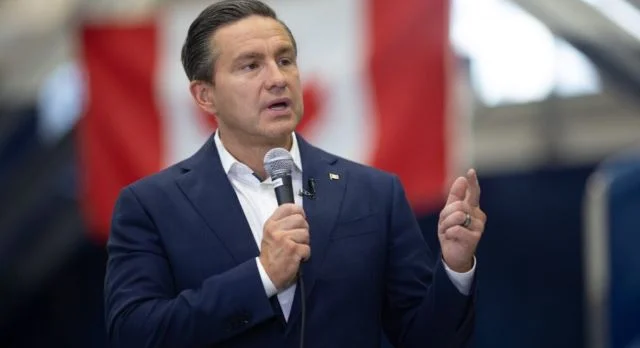
OTTAWA: Conservative Party Leader Pierre Poilievre has called on Prime Minister Mark Carney’s government to provide Canadians and businesses with full information about the potential financial impact of retaliatory tariffs being imposed on US imports.
Poilievre has also demanded that the government explain how it intends to address the additional costs that could be faced by consumers and businesses as a result of the new tariffs.
Retaliatory tariffs take effect
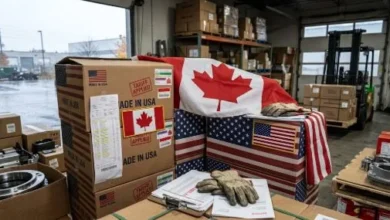
The Canadian government’s retaliatory tariffs on US products are set to take effect on Tuesday, marking another escalation in trade tensions between Canada and the United States.
The administration of US President Donald Trump imposed new tariffs on Canadian goods last month, affecting a range of products including hockey sticks, cement and honey.
The measures came after trade negotiations between the two countries failed to produce an agreement.
US products could become more expensive
Canada’s proposed retaliatory tariffs are expected to increase the cost of a range of products imported from the United States.
Among the affected goods are dairy products, plywood and sunscreen, along with various other US-made products.
The government has described the measures as a response to US tariffs. The opposition, however, says Canadians deserve clearer information about the potential economic consequences of the decision.
Poilievre calls for details on costs
Conservative Leader Pierre Poilievre has asked Prime Minister Mark Carney to disclose how much additional costs Canadian consumers and businesses could ultimately face as a result of the retaliatory tariffs.
He said Canadians have a right to know how government trade decisions could affect their everyday purchases and business activities.
Poilievre has also asked what steps Carney’s government intends to take to reduce the financial burden if tariffs on US products lead to higher prices.
Businesses also concerned
According to the Conservative leader, the impact of the retaliatory tariffs will not be limited to individual consumers.
Businesses that rely on US raw materials or finished products could also face higher costs as a result of increased import duties.
If the additional costs are passed through the supply chain, some companies could be forced to raise their prices for consumers.
Poilievre is calling on the government to explain in advance how it plans to help businesses deal with those potential additional expenses.
Trade agreement also under scrutiny
Poilievre has also repeated his demand that the government release the full text of the trade agreement that was being negotiated with the United States but ultimately failed to materialise.
He said Canadians should be able to see the terms that were being discussed between Ottawa and Washington and understand what agreement Prime Minister Carney ultimately decided not to pursue.
According to Poilievre, releasing the complete text would allow the public to better understand how far negotiations had progressed and what the key areas of disagreement were.
Negotiations stalled
Trade negotiations between Canada and the United States stalled before both countries moved ahead with tariff measures against each other.
Trump’s decision to impose tariffs on Canadian products generated political and business concerns across Canada, while Ottawa responded by announcing retaliatory duties on selected US imports.
The dispute has placed additional pressure on the long-standing economic relationship between the two countries, which are deeply integrated through trade and supply chains.
Carney outlines trade diversification strategy
Prime Minister Mark Carney, speaking on Labour Day, said Canada was working to diversify its trading relationships.
Carney said Canada works best when Canadians look after one another’s interests.
His comments also pointed towards a broader strategy aimed at reducing Canada’s reliance on the US market while expanding trade and economic opportunities with other countries.
Political pressure mounts
Poilievre’s demands for greater transparency could add political pressure on Carney’s government as the trade dispute continues.
The opposition argues that imposing retaliatory tariffs is a major economic decision whose consequences could eventually reach consumers and businesses.
It says the government should provide clear information about the potential costs and benefits of the measures.
The government, meanwhile, maintains that Canada must protect its economic interests in the current trade environment while also seeking opportunities in new international markets.
Consumers watching prices
As the new retaliatory tariffs take effect, Canadian consumers will be watching closely to see how much the prices of US products increase and how much of the additional tariff burden retailers choose to absorb themselves.
Businesses are also waiting for further government measures to determine what support, if any, could be available to importers and other sectors affected by prolonged trade tensions.
The next phase of the Canada-US trade dispute is expected to be shaped by further negotiations, tariff measures and efforts by both countries to strengthen relationships with alternative trading partners.