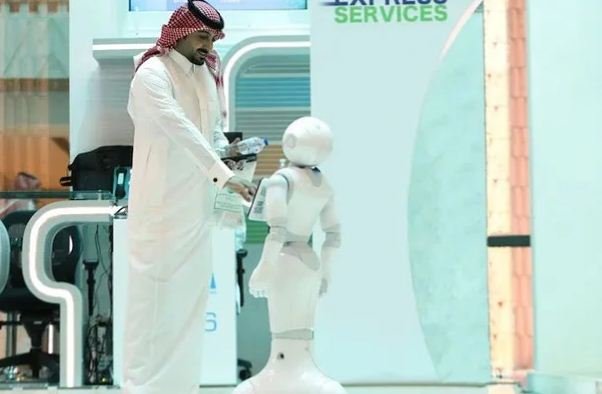
The True Post (Web News) The world is rapidly moving towards an era where robots will not be limited to factories and offices but will also be a part of daily life in homes.
Humanoid robots like Tesla Optimus or Boston Dynamics’ stunt robots are a clear sign that technology has entered a new era. But despite all these advances, there is a fundamental flaw in the design of these robots: a lack of physical intelligence.
Weakness of reliance on the brain
Most current robots are designed on a brain-first design, meaning that every movement and decision is controlled by a central computer or “brain.” This system seems effective, but it does not allow robots to be flexible and autonomous. The result is that they are unable to respond quickly and automatically to an unexpected situation.
The difference between humans and robots
The human body is a masterpiece in its structure. Our bones, muscles, and tendons both smooth out movement and save energy. When we walk, joints and tendons store and reuse energy. In contrast, robots rely on hard metal and motors, which makes them very energy-intensive. For example, a Tesla Optimus uses about 500 watts per second of energy during a typical walk, while a human uses only 310 watts per second. That is, a robot wastes 45 percent more energy, and the battery runs out in a few hours. Why is
physical intelligence necessary?
It seems that robots are intelligent, but in practice their physical intelligence is extremely weak. For example, Optimus can fold a T-shirt, but only when the fabric is pre-arranged. If the fabric is random, it fails because its hands and joints lack the sensitivity and flexibility that make humans successful in unexpected situations.
Expert suggestions
The world’s largest companies have recognized that relying on AI alone is not enough. Sony Robotics and other institutions are now working in this direction to include more flexibility and energy-saving systems in the physical structure of robots.
The joints should be designed to be more natural and flexible.
Technology like tendons should be added that can store energy during movement.
Different parts of the body should be given partial autonomy so that immediate responses are possible.
Sensors and physical design should be made compatible with the complexities of the real world.
To make robots useful in practical life, artificial intelligence alone is not enough, but physical intelligence should also be given essential importance. If their structure is made more flexible, energy-saving and natural, then these robots can become our real daily companions. The secret of the future is not only hidden in AI but also in Artificial Physical Intelligence.