President Donald Trump announced on Thursday that he has posthumously pardoned Pete Rose, baseball’s career hits leader, more than two years after the Cincinnati Reds great died at the age of 83.
“I have just given a Complete and Total Pardon to the Late, Great Pete Rose, a true Baseball SUPERSTAR and LEGEND,” Trump wrote in a social media post as he travelled home from a trip to Asia. The pardon covers the federal tax convictions that followed Rose’s lifetime ban from baseball.
The tax case behind the pardon
Rose pleaded guilty on April 20, 1990, to two counts of filing false federal tax returns, admitting he failed to report 354,968 dollars in income over four years. Judge S. Arthur Spiegel sentenced him on July 19, 1990, to five months in prison, a 50,000 dollar fine and 1,000 hours of community service. Rose served his sentence at a minimum security camp in Marion, Illinois, and was released on January 7, 1991. He later repaid 366,042 dollars to the Internal Revenue Service.
The tax case came about eight months after Rose agreed to a permanent ban from baseball in August 1989. An investigation led by John M. Dowd concluded that Rose bet numerous times on the Cincinnati Reds while he played for and managed his hometown team from 1985 to 1987.
A record that still stands
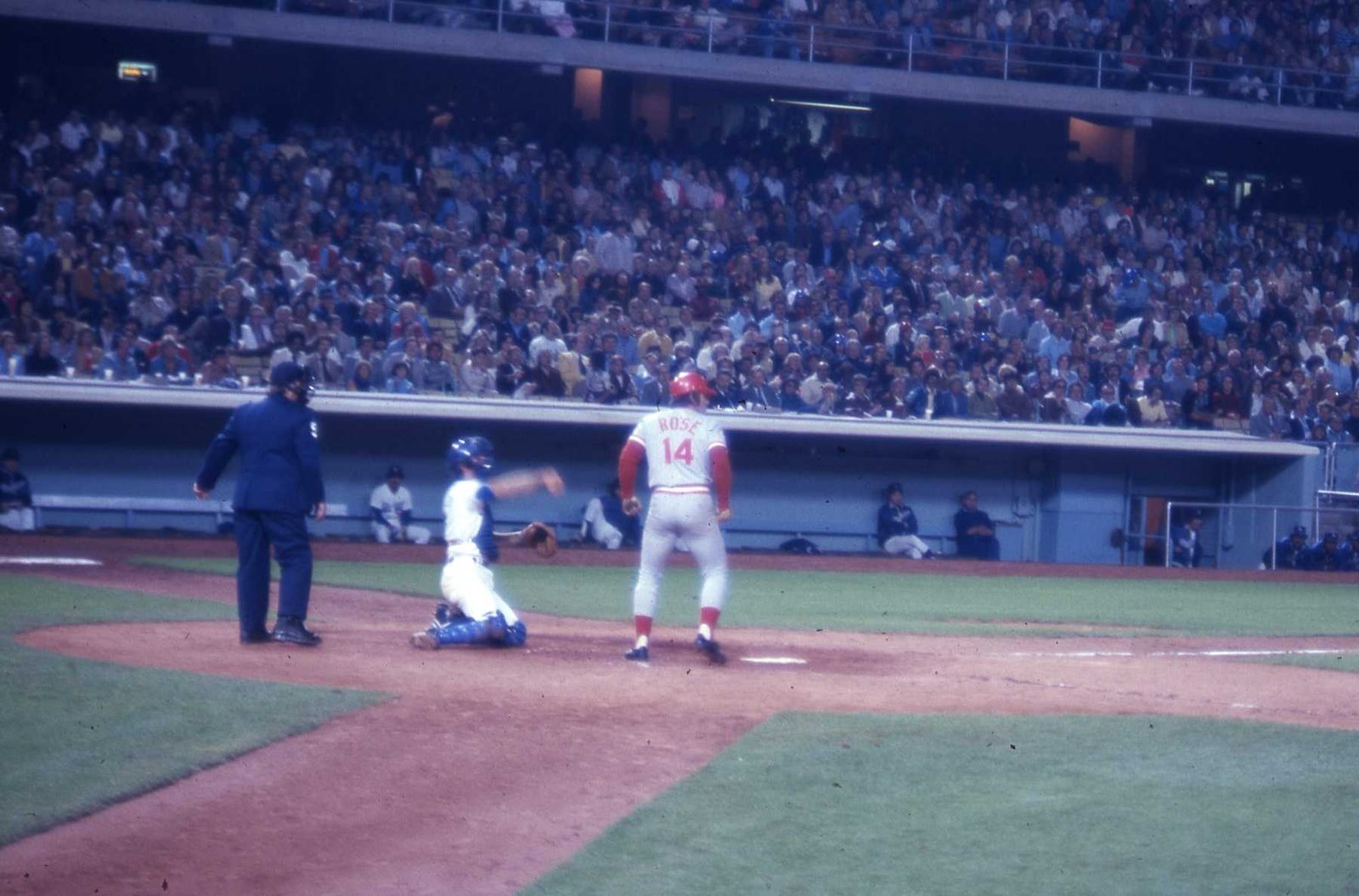
Rose played from 1963 to 1986 and finished with 4,256 career hits, more than any player in the history of the game. He broke the mark of 4,191 hits set by Ty Cobb, a record that had stood for decades. Rose was a 17 time All Star, the 1963 National League Rookie of the Year, the 1973 Most Valuable Player and the 1975 World Series Most Valuable Player. He won three World Series titles and three National League batting titles.
The Hall of Fame question
The pardon does not by itself put Rose in the Hall of Fame, but it is the latest step in a long campaign to restore his standing in the game. In May 2025, Major League Baseball Commissioner Rob Manfred ruled that players on the permanently ineligible list would have their status restored at death, a decision that affected 17 people, most notably Rose and Shoeless Joe Jackson. Under a rule adopted by the Hall of Fame board in 1991, no one on the permanently ineligible list can be considered for election. Rose can now be considered, with the earliest induction possible in 2028 and his next chance for election coming in December 2027.
Trump has pushed for Rose to be enshrined for years. For supporters of Rose, the pardon closes the legal chapter of a career that mixed brilliance on the field with mistakes off it. For the Hall of Fame voters, the harder question remains: whether a player banned for betting on his own team belongs among the game’s immortals.