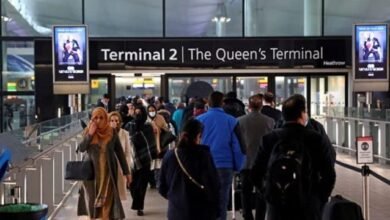
The True Post (Web News) One-third of Britons rarely interact with people from different backgrounds, raising fears of future riots
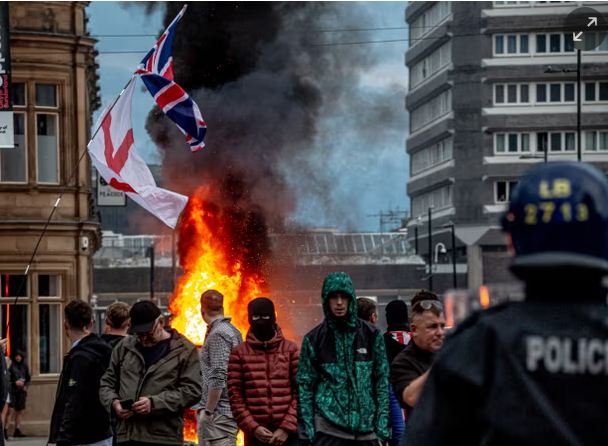
A new report warns that the United Kingdom is at serious risk of renewed civil unrest due to increasing social fragmentation and deep-rooted divisions. The findings come one year after violent riots shook several cities following a knife attack in Southport.
The report — jointly released by the think tank *British Future* and the *Belong Network*, a social cohesion organisation — reveals that nearly 1 in 3 people in the UK say they rarely or never have opportunities to interact with others from different backgrounds. The same proportion reports limited engagement with their broader local community.
Former Chancellor Sajid Javid and Labour MP Jon Cruddas, writing in the foreword, describe Britain’s social fabric as “fragile” and under increasing strain. They warned that unless urgent steps are taken to rebuild civic trust and participation, the foundations of democracy itself could be jeopardised.
The study, titled *The State of Us*, is set to play a key role in shaping the agenda of the newly formed Independent Commission on Community and Cohesion, chaired by Javid and Cruddas. It includes analysis from 177 organisations, over 100 written submissions, and nationwide surveys, including from communities directly impacted by last year’s unrest.
One of the central findings is that economic hardship is a major barrier to social interaction. Many respondents reported not having the financial means to visit community spaces or attend local events — leading to growing isolation.
Online Hate and Disinformation
The report also highlights how online platforms, particularly X (formerly Twitter), continue to fuel social divisions. According to the Centre for Countering Digital Hate (CCDH), more than 4,000 posts in the past year promoted hate speech or incited violence against Muslims and immigrants, often in response to posts by far-right influencers.
Imran Ahmed, CEO of CCDH, said the platform is profiting from the spread of extremist rhetoric and called on the government to intervene if platforms refuse to self-regulate.
Public Concern and Distrust
The research reflects broad public dissatisfaction with public services, the rising cost of living, inequality, and a general mistrust in politicians. Immigration and asylum remain hot-button issues, often framed around fears of poor integration and pressure on local resources.
Despite the warnings, the report also identifies signs of hope: about 69% of people feel their neighbourhoods are generally harmonious, and many recall strong community spirit during the COVID-19 lockdowns.
Kelly Fowler of the Belong Network stressed that while good work is being done in pockets across the UK, efforts are often reactive and underfunded. “We must act with urgency,” she said. “We cannot wait for another summer of riots.”