Muhammad Aman Ullah July 24, 2026
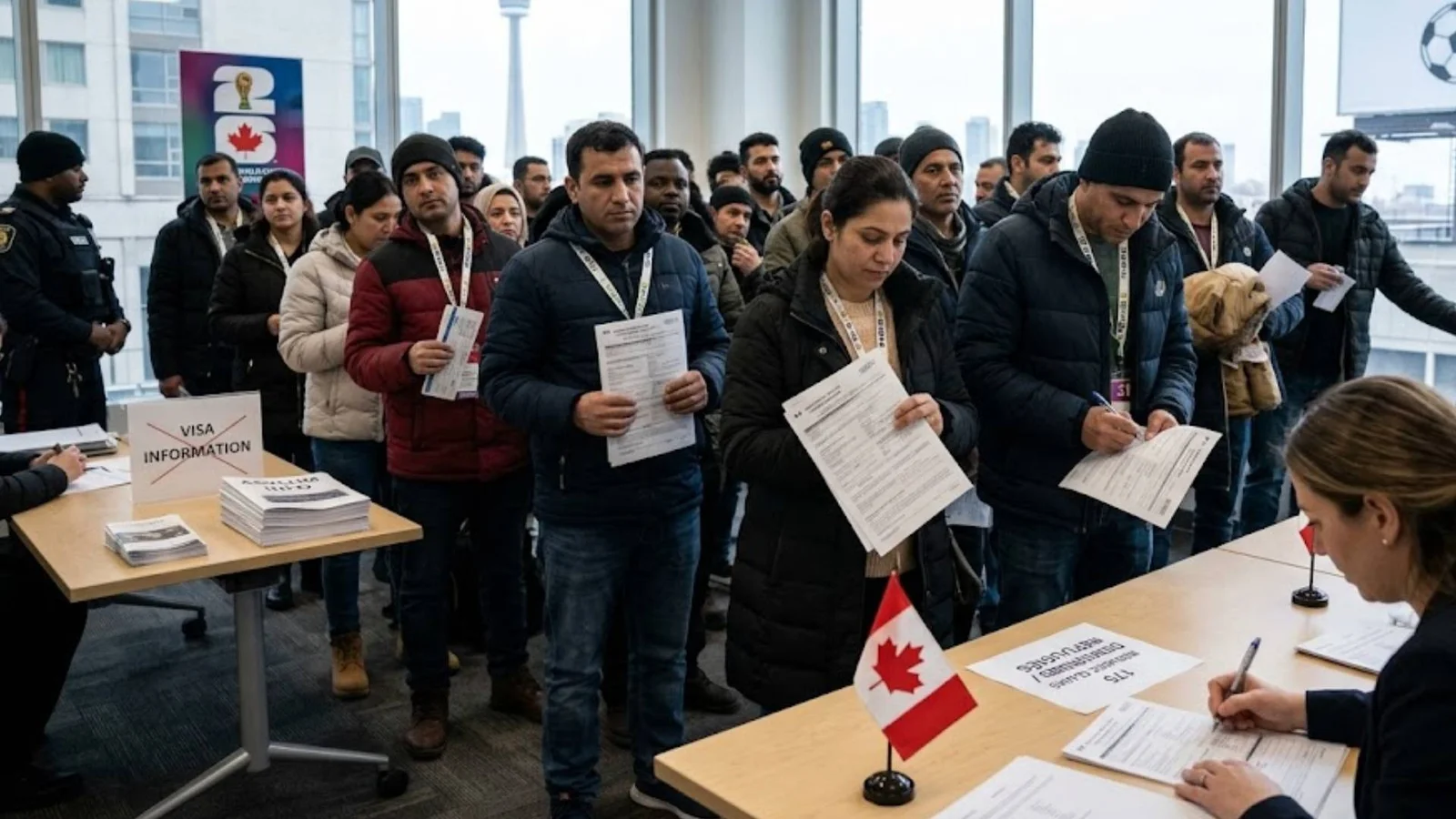
OTTAWA — At least 175 foreign nationals who entered Canada on visitor visas during the 2026 FIFA World Cup have submitted asylum claims, according to Canadian authorities, highlighting renewed attention on the country’s immigration and refugee system.
Officials say some individuals who arrived to watch World Cup matches have sought to remain in Canada by applying for refugee protection after entering the country.
Thousands Received World Cup Visitor Visas
Canada hosted 13 FIFA World Cup matches, and immigration authorities issued approximately 26,000 temporary visitor visas to international travelers attending the tournament.
Officials also confirmed that more than half of all visa applications submitted for the event were refused after applicants were assessed on factors such as travel purpose, financial capacity, and the likelihood of returning to their home countries after the tournament.
175 Asylum Applications Filed
According to Canadian officials, 175 asylum claims have been submitted so far by visitors who entered during the World Cup period.
The claims will be assessed under Canada’s refugee protection laws, with each application evaluated individually based on evidence and legal criteria.
Authorities have not disclosed how many applicants were players, team staff, or spectators.
However, available information indicates that 25 applicants are from Ghana, while 15 each are from Egypt and Colombia. Officials say additional asylum applications could still be filed in the coming weeks.
Why Do People Seek Asylum in Canada?
Canada remains one of the world’s leading destinations for asylum seekers due to its established refugee protection system, political stability, strong legal institutions, and commitment to human rights.
People may apply for asylum if they believe returning to their home country would expose them to persecution, violence, armed conflict, or serious human rights violations based on factors such as political opinion, religion, ethnicity, nationality, or membership in a particular social group.
However, filing an asylum claim does not guarantee approval. Every case is reviewed independently by Canadian immigration authorities, who determine whether the applicant meets the legal definition of a protected refugee.
Why Is Canada an Attractive Destination?
Canada is widely recognized for its high quality of life, economic opportunities, public healthcare, education system, and multicultural society.
Many newcomers also see Canada as a country where long-term legal pathways—including permanent residence and, eventually, citizenship—may be available to those who qualify under Canadian immigration laws.
These factors continue to make Canada one of the most attractive destinations for migrants and refugees worldwide.
Government Warned Against Misusing Visitor Visas
Before the FIFA World Cup, the Canadian government emphasized that visitor visas issued for the tournament were intended solely for tourism and attendance at World Cup events.
Officials warned that a visitor visa does not provide an automatic pathway to permanent residence or refugee status.
Any person seeking asylum after entering Canada must still satisfy all legal requirements under Canada’s refugee determination process.
How Asylum Claims Are Decided
Individuals applying for refugee protection in Canada must demonstrate that they face a genuine risk of persecution, torture, or other serious harm if returned to their country of origin.
Immigration officials examine personal testimony, supporting documentation, and country conditions before making a decision.
Applicants whose claims meet Canada’s legal refugee criteria may receive protection, while claims that lack sufficient evidence or fail to meet the legal threshold may be rejected.
Outlook
Immigration experts say major international sporting events often create opportunities for some visitors to seek long-term protection abroad.
Canadian authorities, however, maintain that immigration and refugee laws apply equally to everyone, and each asylum application submitted after the FIFA World Cup will be decided based on evidence, Canadian law, and the merits of the individual case.
 Muhammad Amanullah Send an email July 24, 2026