Muhammad Amanullah — September 5, 2026
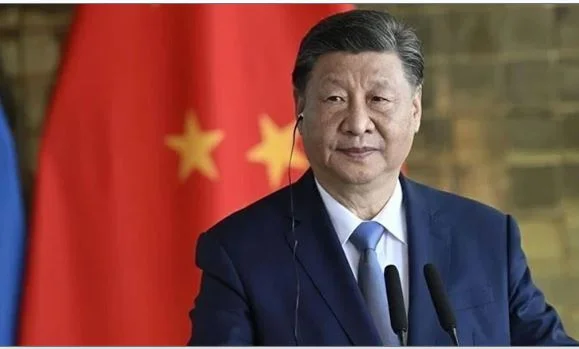
Chinese President Xi Jinping has said that the people of the Middle East should take ownership of their own affairs and that countries in the region should reject external interference while determining their own future.
Xi called for dialogue, regional cooperation and the development of a new regional security framework to help establish lasting peace and stability across the Middle East.
He made the remarks during a meeting with Egyptian President Abdel Fattah el-Sisi in Cairo. Xi’s visit to Egypt came as the two countries marked the 70th anniversary of the establishment of diplomatic relations.
The two leaders discussed bilateral relations as well as the situation in the Middle East, the Palestinian issue, the Gaza ceasefire and regional security.
Call to Reject External Interference
Xi said people in the Middle East should have control over their own affairs and that countries in the region should take responsibility for determining their future.
He supported greater dialogue among regional countries on peace and security issues and called for efforts to explore the establishment of a new regional security framework.
According to the Chinese president, lasting security in the region requires a shared, comprehensive, cooperative and sustainable approach.
He argued that peace in the Middle East cannot be achieved through outside intervention alone and instead requires cooperation and dialogue among regional countries.
Four-Point Strategy for Regional Security
Xi presented a four-point proposal aimed at strengthening a new security framework for the Middle East.
The proposal includes promoting the principles of common and comprehensive security, strengthening dialogue and cooperation among regional countries, ensuring that the people of the region have a central role in determining their future, and working towards the creation of a new regional security architecture.
Xi also stressed that China supports good-neighbourly relations and peaceful coexistence among countries in the Middle East.
Palestine Remains a Central Issue
Xi said the Palestinian issue remains a fundamental question in the Middle East and that a fair and lasting solution must be found.
He said the implementation of the two-state solution is the fundamental path towards resolving the conflict, including the establishment of an independent and sovereign Palestinian state.
China and Egypt also expressed opposition to any plan aimed at forcibly displacing Palestinians from their land.
The two countries called for strengthening the ceasefire in Gaza, ensuring the unimpeded delivery of humanitarian assistance and maintaining the territorial unity of the Palestinian territories.
Push to Strengthen Gaza Ceasefire
Xi said the immediate priority should be maintaining the Gaza ceasefire and preventing the conflict from spreading further across the region.
He called for an end to the fighting as soon as possible and said political and diplomatic channels should be used to resolve differences between the parties.
China has repeatedly advocated a two-state solution to the Palestinian issue and maintains that Palestinians should have a central role in decisions concerning their future and their homeland.
China-Egypt Relations
During the meeting, Xi and el-Sisi also agreed to further expand bilateral cooperation.
China and Egypt have now marked 70 years of diplomatic relations, with cooperation between the two countries growing across economic, trade, industrial and strategic areas.
Xi’s visit comes at a time of continued debate over regional security and the role of major international powers in the Middle East.
China has sought to position itself as a supporter of dialogue, political solutions and multilateral cooperation in the region, while Egypt has also played an important diplomatic role in efforts to address regional conflicts and support a ceasefire in Gaza.
Both leaders stressed that lasting peace in the Middle East requires respect for the sovereignty of regional countries, greater political dialogue and a fair resolution of the Palestinian issue.