Author: Muhammad Aman Ullah
Publication Date: July 27, 2026
The True Post — A U.S. Democratic senator has strongly rejected criticism by President Donald Trump and several Republican lawmakers over Canada’s handling of ongoing wildfires, describing the accusations as “ridiculous” and urging both countries to continue working together against a shared environmental challenge.
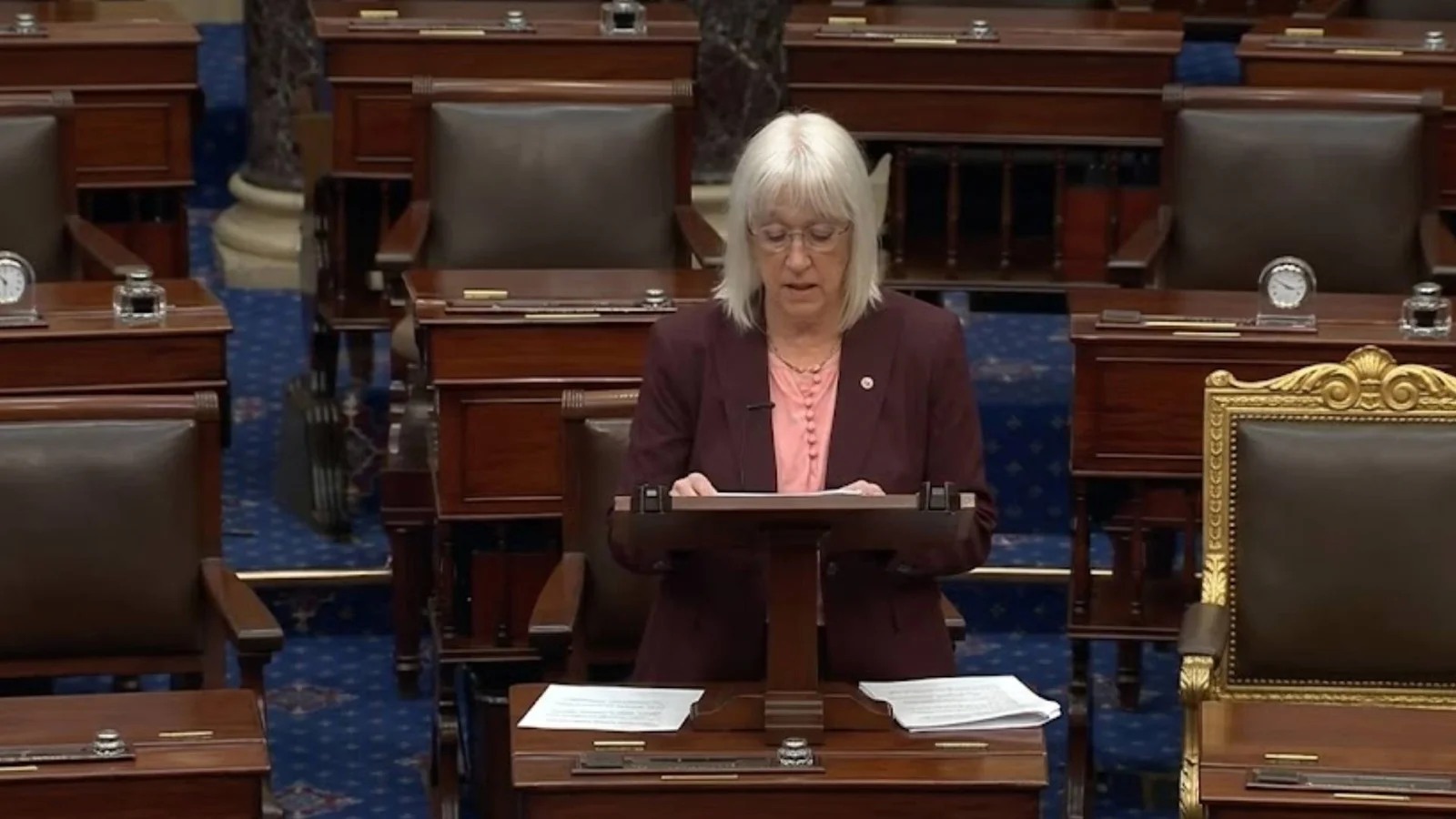
Speaking in the U.S. Senate, Senator Patty Murray of Washington said blaming Canada for wildfire smoke crossing the border ignores the long history of cooperation between the two neighboring countries in combating large-scale forest fires.
Trump Criticizes Canada’s Wildfire Response
President Donald Trump recently urged Canadian Prime Minister Mark Carney to take stronger action to control wildfires, arguing that smoke from Canadian fires has affected air quality across several U.S. states.
Trump has also linked the issue to trade discussions in previous remarks, suggesting that Canada’s wildfire management should be improved while raising the possibility of trade-related measures.
Senator Murray Defends Canada
Responding to the criticism, Senator Murray said Canada should not be blamed for a natural disaster that affects both countries.
She noted that Canadian firefighters have repeatedly crossed the border to assist the United States during severe wildfire seasons.
Murray also highlighted the sacrifice of a British Columbia helicopter pilot who lost his life while helping fight wildfires in the United States, describing it as an example of the close partnership between the two nations.
She argued that cooperation—not political blame—is the most effective way to address increasingly destructive wildfire seasons.
Republican Resolution Raises Concerns
Republican Senator John Hoeven also sought support for a Senate resolution urging Canada to strengthen its wildfire response.
According to Hoeven, more than 100 million Americans have been affected by air quality alerts caused by smoke drifting south from Canadian wildfires.
The proposal has fueled debate in Washington over how both countries should respond to cross-border environmental challenges.
Wildfires Affect Both Sides of the Border
The Senate debate comes as a wildfire that originated in the United States spread into Canadian territory.
Two fires in Washington State—known as Border One and Border Two—merged before crossing into British Columbia, highlighting how wildfires can easily move across international boundaries.
Canadian officials said the fire was likely sparked by lightning and currently poses no immediate threat to nearby communities or critical infrastructure.
Experts Say Wildfires Cannot Be Completely Prevented
Environmental experts say it is unrealistic to expect wildfires to be eliminated entirely because both Canada and the United States contain vast forested regions, many of which are remote and difficult to access.
Scientists also point to climate change, prolonged drought, rising temperatures, and dry vegetation as major factors contributing to increasingly intense and longer-lasting wildfire seasons.
They emphasize that improving emergency response alone is not enough and that addressing the underlying drivers of climate change is equally important.
British Columbia Reaffirms Cross-Border Cooperation
British Columbia’s Minister of Forests, Ravi Parmar, said political disagreements should not interfere with cooperation between emergency crews.
He stressed that wildfires do not recognize international borders and that Canada, the United States, and neighboring jurisdictions must continue working together to protect lives, property, and natural resources.
Parmar added that British Columbia values its long-standing partnership with U.S. wildfire agencies and expects that cooperation to continue during future wildfire seasons.