Muhammad Amanullah | August 5, 2026
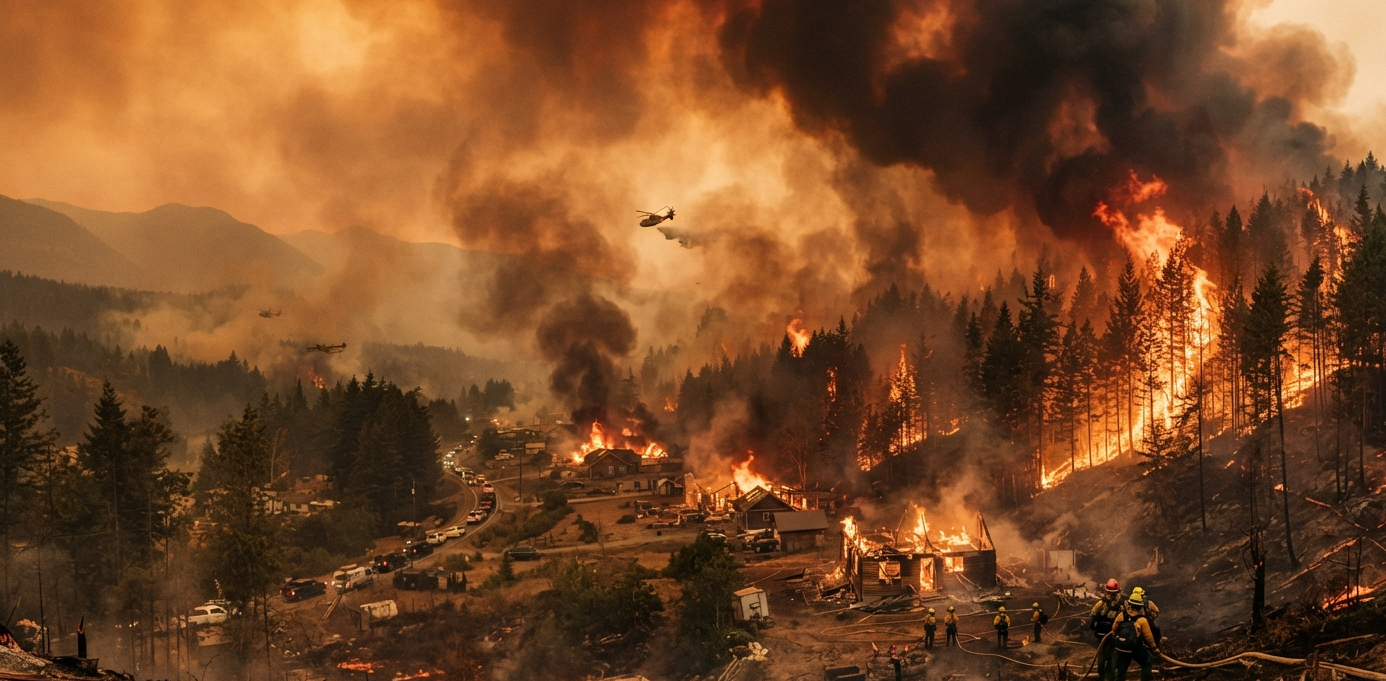
BRITISH COLUMBIA: Devastating wildfires continue to spread across Canada’s western province of British Columbia, destroying hundreds of homes and forcing thousands of residents to flee as emergency crews struggle to contain the fast-moving blazes.
Authorities have issued evacuation orders for nearly 8,000 people, while more than 7,100 additional residents remain on evacuation alert, ready to leave their homes at short notice.
Fire officials have described the situation as “extremely dangerous and explosive,” warning that hot temperatures, dry weather, and lightning could fuel further wildfire activity in the coming days.
Pear Lake Fire Causes Widespread Damage
According to the Thompson-Nicola Regional District (TNRD), the Pear Lake wildfire has damaged approximately 120 properties near Clinton, with most of the affected structures being residential homes.
Several properties contained multiple buildings, including garages, sheds, mobile trailers, and storage structures, resulting in the destruction of hundreds of structures overall.
Officials cautioned that the full extent of the damage remains unknown because emergency crews have not yet been able to safely access all affected areas.
More Destruction Expected
TNRD spokesperson Colton Davies said damage assessments have only been completed in locations that are currently safe to enter.
He warned that the number of destroyed homes and buildings could rise significantly as firefighters gain access to additional wildfire zones.
Authorities are notifying affected homeowners individually, a process officials described as emotionally challenging for families who have lost their properties.
Bradley Creek Fire Also Ravages Communities
In British Columbia’s Okanagan region, the Bradley Creek wildfire, west of Vernon, has also caused extensive destruction.
According to the Okanagan Indian Band, at least 200 homes have been destroyed after strong winds rapidly pushed flames through residential neighborhoods over the weekend.
Despite the widespread damage, officials confirmed that no fatalities have been reported so far.
Dangerous Weather Conditions Continue
The BC Wildfire Service warned that temperatures across southern British Columbia could approach 35°C over the next several days.
Extremely dry conditions, low humidity, and the possibility of dry lightning are expected to increase the risk of new wildfire outbreaks while making existing fires even more difficult to control.
Even light winds could significantly accelerate the spread of the flames.
Air Quality Warnings Issued
Smoke from the wildfires has prompted air quality warnings across several regions of southern British Columbia.
Environment Canada has advised residents, particularly children, seniors, pregnant women, and individuals with heart or lung conditions, to avoid unnecessary outdoor activities until air quality improves.
Officials warned that smoke levels may change rapidly throughout the day.
Emergency Response Continues
The provincial government has urged evacuees to register with Emergency Support Services (ESS) to ensure they receive assistance as quickly as possible.
Meanwhile, opposition parties have criticized the government for not declaring a provincial state of emergency, although officials insist that current emergency resources remain sufficient to manage the crisis.
Firefighters Continue Containment Efforts
As of Wednesday afternoon, 117 active wildfires were burning across British Columbia, with nearly half still classified as out of control.
Fire crews continue building containment lines near Highway 97 while working to protect Clinton and other nearby communities.
Authorities say protecting lives and residential properties remains their highest priority as firefighters battle one of the province’s most destructive wildfire emergencies in recent years.
 Muhammad Amanullah Send an email August 5, 2026