

Muhammad Aman Ullah | The True Post
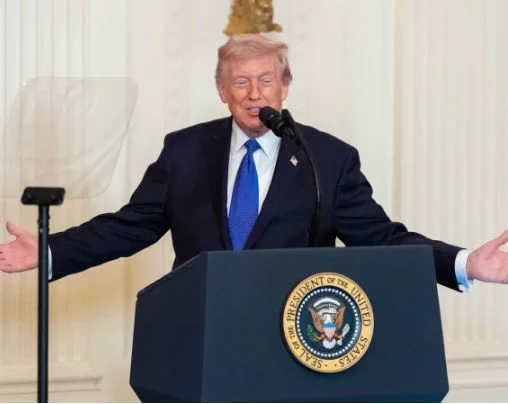
WASHINGTON: U.S. President Donald Trump said he does not believe the ongoing conflict with Iran will continue for long, arguing that Tehran lacks the capacity to sustain a prolonged war. Speaking to reporters in the Oval Office, Trump expressed confidence that the situation would end sooner rather than later, while also acknowledging challenges related to America’s weapons stockpiles.
His remarks have renewed debate over the future of the conflict, raising questions about whether military pressure will eventually lead to diplomacy or a broader regional escalation.
Trump Confident in U.S. Military Strength
Trump maintained that the United States remains in a strong strategic position because of its advanced military technology and defense capabilities. He argued that Iran has limited resources to continue a lengthy conflict.
Defense analysts, however, note that modern warfare is determined by far more than military hardware. Economic resilience, political leadership, international alliances, logistics, and long-term planning all play a crucial role in the outcome of major conflicts. Iran has repeatedly claimed it can withstand prolonged economic and military pressure despite years of international sanctions.
Concerns Over U.S. Weapons Stockpiles
During his remarks, Trump acknowledged that some categories of advanced U.S. weapons are in limited supply.
He said no country’s stockpiles are unlimited and confirmed that the United States is increasing defense production to address future operational needs.
The comments come at a time when Washington is balancing military commitments across multiple regions while assessing its readiness for potential long-term conflicts.
Patriot and Tomahawk Production Increasing
U.S. officials say efforts are underway to expand production of critical defense systems, including Patriot air defense missiles and Tomahawk cruise missiles.
Military experts say modern conflicts increasingly depend on advanced missile systems, drones, air defense networks, and precision-guided weapons rather than troop numbers alone.
Pressure Strategy Against Iran
Washington has maintained economic and political pressure on Iran for years, arguing that Tehran’s regional activities and nuclear program pose security concerns.
Iran rejects those accusations, insisting that its military and missile programs are intended solely for national defense.
The latest tensions have once again highlighted the long-standing rivalry between the two countries and increased uncertainty over the next phase of the conflict.
Can the War End Soon?
Trump’s comments suggest the administration believes sustained pressure could force Iran toward a quicker resolution.
However, international security experts point out that major conflicts rarely end through military pressure alone. Diplomatic negotiations, regional politics, economic costs, and international mediation often determine how and when wars conclude.
Global Markets Watching Closely
Any significant escalation between the United States and Iran could have consequences well beyond the two countries, affecting Middle East stability, global oil prices, shipping routes, and international trade.
For now, governments and investors continue to monitor developments closely while hoping diplomatic efforts can prevent a wider regional conflict.
Although Trump projected confidence in America’s military strength, his acknowledgment of limited weapons stockpiles also underscored a broader reality: modern warfare is not only a test of military power but also of industrial capacity, strategic planning, and long-term sustainability.
