Muhammad Amanullah | August 9, 2026
Iranian President Masoud Pezeshkian’s statement that negotiations and diplomacy have pushed the United States toward reaching an understanding with Iran offers an important insight into Tehran’s current strategy.
His remarks come at a time when direct tensions between Iran and the United States remain high, with disputes continuing over Iran’s nuclear program, regional security and mutual trust. According to Pezeshkian, the current situation represents the best opportunity to reach an agreement. However, Tehran also insists that any understanding must be based on Iran’s dignity and sovereignty.
Pezeshkian Presents Negotiations as a Tool of Pressure
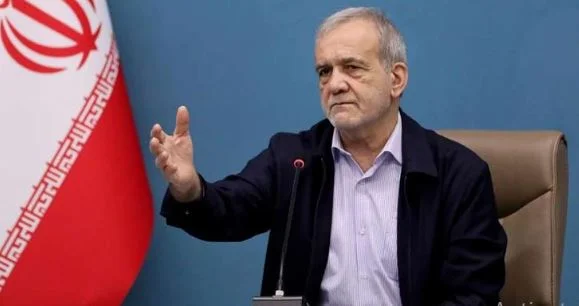
Speaking at a news conference in Tehran, Pezeshkian suggested that Iran has used negotiations not simply as a diplomatic process but as an effective means of protecting its national interests.
According to the Iranian president, diplomacy has forced Washington to change its approach and created an opportunity to move toward an agreement. His comments suggest that the Iranian leadership sees negotiations as an important alternative to war or direct confrontation.
At the same time, Tehran wants to make clear that negotiations do not mean surrendering to pressure. Instead, Iran says any talks should take place on the basis of equality and mutual respect.
Reference to the Islamabad Memorandum of Understanding
Pezeshkian also referred to the Islamabad Memorandum of Understanding, saying that under the understanding, the United States was required to follow guidelines prepared by Iran and Oman. However, he claimed that Washington did not follow those guidelines.
The statement indicates that Iran is likely to place significant importance on written guarantees and clearly established principles in any future negotiations.
For Tehran, past experiences remain particularly important. Iranian officials have repeatedly argued that an agreement can only succeed if all parties fulfill their commitments.
Agreement Violations Remain a Major Concern
Pezeshkian said a specific team would be needed to deal with violations of any agreement. This suggests that Iran may want any future deal to include a clear mechanism for monitoring implementation rather than relying solely on political promises.
The issue also highlights the deep lack of trust between Iran and the United States. Decades of tensions between the two countries have been marked by concerns that commitments and assurances made by one side may not be fully trusted by the other.
Political Path Instead of War
Pezeshkian strongly criticized the United States, describing it as a criminal and colonial government, while simultaneously keeping the door open to negotiations.
The seemingly contradictory position may actually reflect an important part of Iran’s current diplomatic strategy. Tehran appears to be maintaining tough rhetoric against Washington to preserve its resistance-based political position domestically, while also keeping negotiations available as a way to reduce economic and political pressure.
Israel Remains an Important Factor
The Iranian president also referred to both the United States and Israel, arguing that the Iranian people cannot be forced to obey through war.
His comments highlight an important aspect of Iran’s political and defense strategy. Tehran believes that national resistance can continue despite military pressure. As a result, Iranian leaders have increasingly emphasized national unity as a key element of the country’s security.
Pezeshkian Calls for Domestic Unity
Pezeshkian warned that opposing forces could exploit divisions, disagreements and internal disputes within Iran to advance their objectives.
He therefore described national unity and resistance as essential for protecting Iran’s security and defense capabilities.
The message appears to be directed not only at foreign powers but also at the Iranian public and political groups. Tehran wants to convey that internal political stability is essential to withstand external pressure.
What Comes Next?
Pezeshkian’s latest comments indicate that Iran does not want to completely abandon negotiations. Instead, Tehran appears to be linking any potential agreement to the protection of Iran’s interests, sovereignty and national dignity.
If the United States and Iran move toward a new agreement, the biggest challenge may not simply be reaching a deal but making it credible and durable. Both countries would need to build greater confidence in each other’s actions, guarantees and commitments.
The possibility of diplomacy gaining momentum could also be significant for the wider region. A direct confrontation between Iran and the United States could affect not only the two countries but the broader Middle East.
For that reason, Pezeshkian’s description of negotiations as the best opportunity may signal that Tehran is, at least politically, keeping the door open to managing tensions through diplomacy rather than allowing the confrontation to escalate further.