Muhammad Aman Ullah
Published September 3, 2026
The ongoing trade tensions between the United States and Canada are increasingly affecting businesses and industries in Ohio, with rising costs and economic uncertainty putting pressure on companies and consumers.
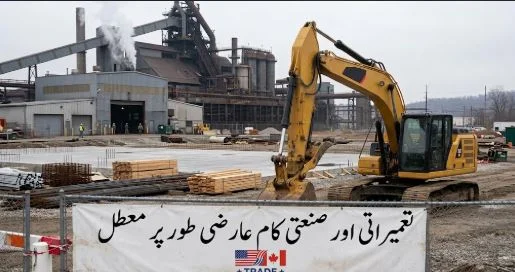
Some construction projects have been delayed or put on hold as higher prices and uncertainty make it more difficult for businesses to plan ahead. Business owners say tariffs and retaliatory measures have increased the cost of construction materials while also creating challenges for supply chains and purchasing decisions.
Construction Projects Under Pressure
Joe Koch, vice president of operations at a family-owned construction company in Ohio, said his team is currently completing the final stages of a two-story home.
He said the company had hoped to have three or four additional homes under construction in the area by now. However, trade tensions involving the United States, Canada and other countries have affected those plans.
According to Koch, rising costs, tariffs and economic uncertainty are causing many potential homebuyers to delay decisions about building new homes.
Buyers Are Waiting
Koch said some prospective buyers believe it may be better to wait rather than begin construction immediately.
Potential buyers are waiting for interest rates to fall, tariffs to be reduced or the political situation to become clearer.
He said the cost of building a home has become more difficult for ordinary consumers to manage, raising concerns about a decline in new construction projects.
Construction Materials Become More Expensive
According to Koch, U.S. tariffs on products from Canada and other countries are having a direct impact on the construction industry.
He said his company previously purchased roofing materials from Canada but has now shifted to a domestic supplier.
However, the trade dispute continues to create uncertainty over both supply and prices, making it difficult for businesses to determine how much materials will cost in the future.
Business Planning Becomes More Difficult
Koch said uncertainty created by the trade dispute has complicated financial planning and purchasing decisions.
Businesses are finding it increasingly difficult to predict what material prices will look like in the coming months or whether tariffs will be increased, reduced or changed.
He said companies now have to operate more cautiously and look for alternative suppliers to manage the uncertainty.
Importance of Strong Trade Partnerships
Koch said strong relationships and agreements between countries are particularly important in the global economy.
He argued that businesses and countries need reliable trading partners they can depend on during difficult periods.
While relying entirely on domestic production may appear attractive, he said it is not always realistic in an interconnected global economy.
Youngstown Faces Additional Economic Pressure
Koch’s business operates in the Youngstown area of Ohio, a region that was once a major center of the U.S. steel industry.
The area has already experienced severe economic difficulties in the past.
In September 1977, the closure of Youngstown Sheet & Tube resulted in approximately 5,000 workers losing their jobs at the same time.
The event became a major symbol of the region’s industrial decline.
Manufacturing Remains Important
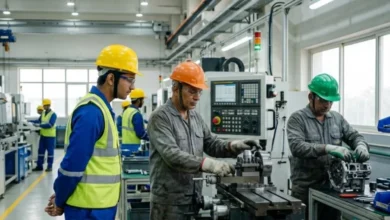
Youngstown has since diversified its economy into other sectors, but manufacturing remains an important source of employment in the region.
More than 20,000 jobs are still connected to manufacturing, including industries producing steel tubes, pipes, plastics, advanced materials and other industrial products.
Business owners are concerned that if trade tensions between the United States and Canada continue for an extended period, companies operating in these sectors could face additional pressure.
Canada Is a Major Trading Partner for Ohio
According to the figures cited in the report, Ohio exported approximately US$17.5 billion worth of products to Canada last year, accounting for roughly one-third of the state’s total exports.
Major Ohio exports to Canada include engines, turbines, vehicle parts, plastics, steel and steel products.
Ohio also imports significant quantities of crude oil, vehicle parts, plastics, steel and aluminum from Canada.
The close trading relationship means that changes in tariffs and cross-border trade policies can have consequences for businesses on both sides of the border.
Regional Economy Faces Risks
Youngstown is part of a broader congressional district with a population of more than 775,000 people.
The region exports more than US$820 million worth of products to Canada each year, including coal, petroleum products, steel, synthetic fibers, aluminum products and plastics.
Although not all of these products are directly subject to additional tariffs, businesses and economic experts remain concerned that prolonged trade tensions could eventually affect demand, investment, employment and supply chains.
Business Community Remains Concerned
Koch compared the current situation to a game of chess, saying businesses are constantly adjusting their decisions as circumstances change.
He said the objective is not necessarily to achieve a complete victory at every stage, but to minimize potential losses and keep businesses operating.
Ohio’s business and industrial sectors have faced economic challenges before, and many companies are attempting to adapt to the latest uncertainty.
However, the longer trade tensions between the United States and Canada continue, the greater the potential economic pressure on businesses, industries and consumers in regions such as Ohio.
Conclusion
The continuing U.S.-Canada trade dispute is creating uncertainty for Ohio businesses, particularly in construction and manufacturing.
Higher material costs, tariff uncertainty and concerns about the future are influencing construction decisions and forcing companies to reconsider suppliers and investment plans.
With Canada remaining one of Ohio’s most important trading partners, a prolonged trade dispute could have wider consequences for the state’s economy.
For businesses in communities such as Youngstown, the challenge will be to adapt to changing trade conditions while maintaining operations, managing costs and protecting jobs.