Muhammad Amanullah — September 9, 2026
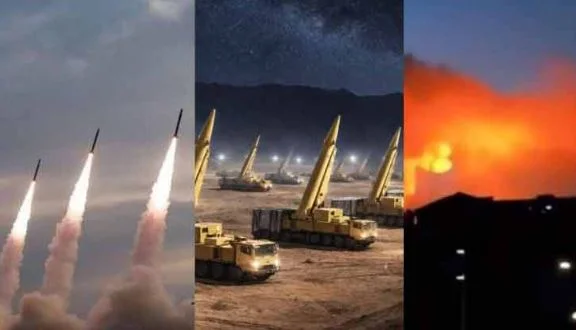
The military confrontation between the United States and Iran has escalated once again, with Russian and Iranian media reporting that Tehran launched ballistic missiles at US military targets in the region after American forces targeted Iranian oil tankers.
The latest attacks have heightened tensions across the Middle East and raised fresh concerns that the conflict could expand into a wider regional war.
US Base in Jordan Targeted
According to Iranian state media, Iran’s Islamic Revolutionary Guard Corps (IRGC) targeted the US military base at Al-Azraq in Jordan with ballistic missiles.
Iranian sources claimed that dozens of missiles were fired at American military facilities and that several explosions were heard during the attack.
Jordan’s military, however, said its air-defence systems intercepted 18 of the 20 ballistic missiles launched from Iran. The remaining two missiles landed in uninhabited areas, according to Jordanian authorities.
No casualties were reported in the attack.
Iranian Media Claims Retaliatory Operation
Iranian media described the missile strikes as a direct response to recent US military action.
The IRGC said the attack on the US military base followed strikes by American forces against Iranian commercial and oil vessels.
Iranian sources also claimed that some US naval warships in the region were targeted by missiles and suffered damage. However, those claims have not been independently verified, and US officials have not provided detailed confirmation of the alleged damage.
US Says Five Iranian Oil Tankers Destroyed
Earlier, US Central Command announced that American forces had destroyed five Iranian crude oil tankers.
According to the US military, the action followed two attempts by Iranian forces over a two-day period to target an American warship with ballistic missiles.
US Central Command said the American warships remained unharmed and no US personnel were injured.
US forces subsequently targeted Iranian oil tankers near the Gulf of Oman and Iran’s Khark Island.
Crews Ordered to Leave Ships
US Central Command said crews aboard the targeted oil tankers were instructed to abandon the vessels before the attacks were carried out.
The ships were then targeted and disabled, according to US officials.
The vessels identified by American authorities included Kivik, Charminar, Horizon 1, Riesco and Derya. Four were located in the Gulf of Oman, while another was near Khark Island.
Iran Issues Strong Warning
Iranian leaders had previously warned that US military installations across the region would become targets if American forces attacked Iranian oil tankers.
Ali Abdollahi, chief of staff of Iran’s armed forces, had told Iranian state television that US military bases in the region would be targeted if Iranian oil tankers came under attack.
The latest missile strikes are being viewed as a possible implementation of that warning.
Warnings Issued to Kuwait and Bahrain
The IRGC has also reportedly warned crews aboard oil tankers at ports in Kuwait and Bahrain to evacuate immediately.
Iranian authorities warned that tankers located at ports linked to or hosting US personnel could also become targets in future attacks.
The IRGC urged crews to leave ports and anchored vessels, warning that the ships could be targeted.
Pressure Mounts Around Strait of Hormuz
The latest escalation has also increased risks around the Strait of Hormuz, one of the world’s most important routes for oil transportation.
Rising tensions between Washington and Tehran have already affected global energy markets, with crude oil prices recording a significant increase.
Reports said Brent crude approached $100 a barrel as investors became increasingly concerned that a wider conflict could severely disrupt oil shipments from the Gulf to international markets.
Risk of a Wider War
The latest exchanges between Iran and the United States have pushed the conflict into an increasingly dangerous phase.
Washington is stepping up pressure on Iranian oil exports and maritime routes, while Tehran is threatening American military bases and naval assets across the region.
Analysts warn that if the attacks continue and US military installations or energy infrastructure in Gulf countries become directly involved, the conflict could extend far beyond the United States and Iran.
Such an escalation could create a major security crisis across the Middle East while posing a serious threat to global energy supplies and oil markets.