Date: October 17, 2026
The True Post (Web News) —The Canadian government is taking a tougher stance against Stelco’s U.S.-based parent company, Cleveland-Cliffs, over planned job cuts at the steelmaker’s operations in Ontario. The dispute has raised questions about foreign investment, workers’ rights and Canada’s ability to protect strategically important industries amid growing trade tensions with the United States.
Industry Minister Mélanie Joly has confirmed that Ottawa is examining its legal options under the Investment Canada Act, including possible court action and measures that could compel the company to sell Canadian assets. On October 16, Reuters reported that the federal government was also considering the possibility of nationalising Stelco, although no final decision on such a move has been announced. <Link url=”https://www.reuters.com/business/canada-exploring-stelco-nationalization-industry-minister-says-2026-10-16/” title=”Reuters report on the government’s options”/>.
The dispute is about more than the future of one steel producer. It has become a test of how Canada balances the benefits of foreign investment against commitments to preserve domestic employment and industrial capacity.
Why the Stelco Dispute Matters
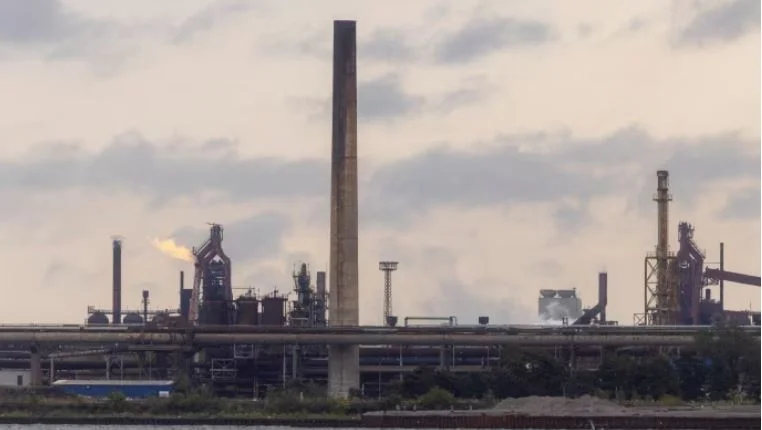
Stelco is a major steelmaker based in Hamilton, Ontario. Its U.S. parent company, Cleveland-Cliffs, acquired the Canadian company in a transaction valued at approximately C$2.5 billion in 2024.
The federal government approved the acquisition subject to binding commitments under the Investment Canada Act. These included maintaining Stelco’s headquarters and day-to-day operations in Hamilton, preserving at least the existing number of unionised employees and retaining the vast majority of non-unionised employees at the time the transaction was announced. The commitments also covered collective bargaining agreements, employee benefits, pensions and investment in the company’s operations.
The current dispute follows plans to cut up to 500 jobs at Stelco’s Hamilton and Lake Erie facilities. The proposed reductions are linked to operational changes and a strategy to focus on more profitable steel products amid difficult market conditions.
The federal government argues that changes in business strategy or market conditions do not automatically release a foreign investor from legally binding commitments made when its acquisition was approved.
Cleveland-Cliffs, meanwhile, has pointed to tariffs, weak demand and wider market pressures as reasons for restructuring its operations. The disagreement centres on whether the planned job cuts are consistent with the obligations the company accepted as part of the takeover.
Government Reviews Legal Options Under Investment Canada Act
Ottawa is examining the enforcement mechanisms available under the Investment Canada Act to determine whether Cleveland-Cliffs has complied with its commitments.
Joly has warned that the government could pursue legal action if the company fails to demonstrate how it intends to meet those obligations. Potential consequences discussed publicly include financial penalties and court action that could lead to a forced sale of Canadian assets.
The legislation provides a framework for reviewing foreign investments and ensuring that significant acquisitions deliver benefits to Canada. In Stelco’s case, the government’s approval was conditional on a package of specific undertakings intended to protect Canadian economic interests and workers.
The central legal question is whether the proposed employment reductions breach those commitments and, if so, what remedies are available to the government.
Nationalisation—the transfer of a privately owned business into public ownership—has also entered the debate. However, considering nationalisation is not the same as deciding to proceed with it. Any such move would raise significant questions about legal authority, financial costs, operational responsibility and the future management of the steelmaker.
The government must also consider the potential consequences for investor confidence. Strong enforcement of binding commitments could reinforce the credibility of Canada’s investment-review process, while uncertainty surrounding government intervention could influence how some investors assess future acquisitions.
U.S. Trade Tensions Add to Industry Pressures
The Stelco dispute is unfolding against the backdrop of strained trade relations between Canada and the United States.
Steel production is closely connected to cross-border supply chains, and tariffs can affect prices, demand, production decisions and employment. When access to export markets becomes more difficult, manufacturers may face pressure to adjust production or concentrate on products offering stronger returns.
Cleveland-Cliffs has cited tariffs and market conditions in defending its restructuring plans. The Canadian government, however, maintains that commercial pressures do not automatically override the employment commitments attached to the 2024 acquisition.
The wider Canadian steel industry has also been adjusting to trade restrictions and changing demand. Reuters reported on October 16 that some Canadian steelmakers have increased their focus on domestic customers as they respond to difficulties in the U.S. market.
For Prime Minister Mark Carney’s government, the challenge is to support domestic industrial capacity while maintaining a predictable environment for investment and international trade.
Encouraging foreign investment can bring capital, technology and access to global markets. However, the Stelco case highlights the importance of ensuring that investors honour the conditions attached to government approval.
What the Dispute Means for Workers and Hamilton
The potential loss of up to 500 jobs has consequences extending beyond the workers directly affected.
Steelmaking supports a wider network of suppliers, transport companies, contractors and local businesses. Employment reductions at a major industrial facility can therefore affect household incomes and economic activity throughout the surrounding community.
Hamilton has a long industrial history, and steel production remains an important part of its economic identity. Any significant reduction in operations could create uncertainty for workers and businesses that depend on the industry.
The government must weigh several considerations: protecting workers, enforcing legal commitments, sustaining production and avoiding measures that could undermine the company’s long-term viability.
If the proposed cuts proceed, affected employees and their families could face financial pressure. On the other hand, the consequences of any government intervention would depend on the measures adopted, their legal basis and their effect on the company’s operations.
The outcome will also matter to other businesses whose investments in Canada are subject to legally binding undertakings.
A Test of Canada’s Industrial Policy
The Stelco controversy raises a broader question about the limits and responsibilities of foreign ownership in strategically important industries.
Can the federal government enforce employment and investment commitments without unnecessarily damaging the investment climate? And what happens when a company argues that market conditions require changes that appear inconsistent with obligations accepted during an acquisition?
The answers will depend on the terms of the original commitments, the company’s response and the legal options available to Ottawa.
For now, the federal government is reviewing its next steps rather than announcing a completed takeover or a final legal outcome. Nationalisation remains a possibility under discussion, not a confirmed policy decision.
The coming developments could have implications for workers, investors and Canada’s approach to industrial policy. Ultimately, the Stelco dispute is about determining how the country can protect employment and domestic production while maintaining a workable balance between government oversight and private enterprise.