The True Post (Web News) | MUHAMMAD AMANULLAH | October 17, 2026
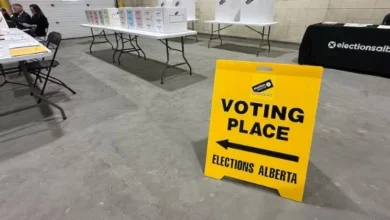
ALBERTA, CANADA — Canada is facing a significant political challenge as tensions between the federal government and provincial interests continue to raise questions about national unity, economic priorities, and the future of the country’s federal system. The Alberta referendum scheduled for October 19, 2026, has emerged as an important political test, not only for Canada’s unity but also for Prime Minister Mark Carney’s leadership and political strategy.
Alberta plays a central role in Canada’s energy industry. Its oil reserves and natural resources make it one of the country’s most economically significant provinces. However, concerns have persisted for years among some Albertans that federal policies on energy, environmental regulation, and resource development do not adequately reflect the province’s economic interests.
The separatist movement has used these grievances as a central argument in its campaign for greater provincial autonomy and potential independence.
What Does the Referendum Actually Mean?
An important distinction must be made when discussing the proposed referendum: the vote is not necessarily a final decision to separate Alberta from Canada immediately. Rather, the question concerns whether the province should pursue a legal process toward separation and a binding referendum on independence, or remain part of Canada.
Even if separatists secure a victory, Alberta would not automatically become an independent country. Any move toward separation would involve complex constitutional, legal, and political procedures.
Negotiations with the federal government, constitutional requirements, the rights of residents, and the treaty rights of Indigenous peoples would all be significant considerations. These challenges could make the process lengthy and politically complicated.
Consequently, the referendum’s importance extends beyond its immediate outcome. It could determine whether Alberta’s separatist movement gains further momentum or whether provincial politics shift back toward economic negotiations and administrative reforms within Canada.
Mark Carney Faces a Test of National Unity
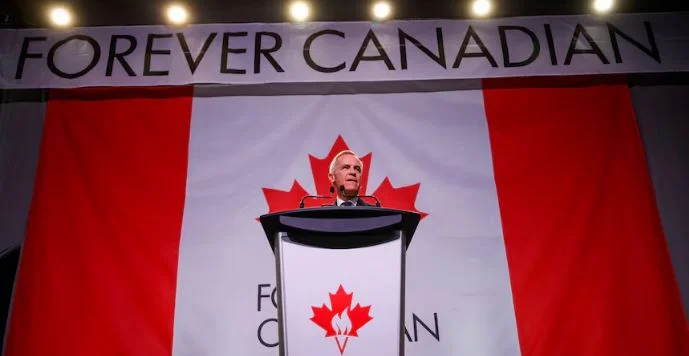
Prime Minister Mark Carney has opposed Alberta’s separation and emphasized the importance of preserving Canada’s national unity. His government faces two major challenges: addressing Alberta’s longstanding grievances while protecting the country’s territorial integrity.
The issue is particularly sensitive because the federal government must respond not only to separatist supporters but also to Canadians who believe that the benefits of national economic policies are not distributed fairly among the provinces.
Trade tensions with the United States and strong statements by President Donald Trump regarding Canada have added another layer of uncertainty. In this environment, Alberta’s separatist debate creates additional political pressure for Ottawa.
For Carney, the challenge will be to demonstrate that the federal system can accommodate regional economic interests without undermining the unity of the country.
Addressing Provincial Grievances Is the Key
Alberta’s separatist movement cannot be understood solely as an emotional or political campaign. Its support is linked to concerns about control over natural resources, federal taxation, energy infrastructure, environmental regulations, and provincial autonomy.
If the federal government can offer credible solutions to these concerns, it may reduce support for separation and strengthen Alberta’s relationship with Ottawa.
However, if residents continue to believe that their economic interests are being overlooked, the independence debate could persist regardless of the referendum’s outcome.
This makes constructive dialogue particularly important. Rather than relying on political confrontation, the Carney government may need to prioritize negotiations, economic cooperation, and a more effective balance between federal authority and provincial priorities.
US Pressure and Canada’s Economic Future
Relations with the United States are another important factor affecting Canada’s national unity. The two countries maintain extensive trade ties, but disagreements over tariffs, industrial protection, and energy trade can have significant economic consequences.
Supporters of Alberta’s independence frequently point to the province’s natural resources and economic potential as reasons for greater autonomy. However, becoming an independent country would raise difficult questions about international trade, border management, currency arrangements, public debt, energy transportation, and the division of federal assets.
There would be no guarantee of quick or straightforward solutions to these issues.
An independent Alberta would also need to establish its future relationship with Canada and address the legal and economic implications of separation. These considerations highlight the complexity of translating demands for greater autonomy into a workable independent state.
For Canada, a more sustainable approach would be to strengthen cooperation among provinces and ensure that regional economic interests are addressed effectively within the existing federal framework.
The Bigger Question: What Happens After the Referendum?
Alberta’s referendum represents a major political challenge for Mark Carney, but its broader significance will not be determined by the vote alone. The central question is whether the federal government can address provincial grievances while maintaining national unity.
Even if voters choose to keep Alberta within Canada, Ottawa will still need to take the province’s concerns seriously. A failure to address those concerns could allow the separatist movement to regain momentum in the future.
Conversely, meaningful negotiations and practical policy reforms could help rebuild trust between Alberta and the federal government.
Ultimately, the referendum could serve as both a warning and an opportunity for Canada. It highlights the need for a federal system that respects provincial interests, supports economic cooperation, and maintains a shared national vision.
For Prime Minister Mark Carney, the real test will be whether his government can turn this political challenge into an opportunity to strengthen Canada’s unity and reinforce confidence in the country’s federal system.