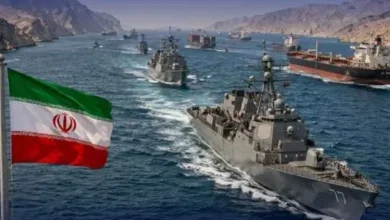
The United States destroyed five Iranian oil tankers in the Gulf of Oman on Tuesday, in the sharpest escalation yet of a war with Iran that has now lasted more than six months. Iran answered within hours, firing missiles at American troops stationed at an air base in Jordan and claiming attacks on shipping near the Strait of Hormuz.
United States Central Command said the strikes were a direct response to two attempts by Iran’s Islamic Revolutionary Guard Corps to hit an American warship with ballistic missiles over the past two days. The warship evaded both attacks, the command said.
Four of the tankers, the M/T Kaviz, M/T Charminar, M/T Horizon 1 and M/T Riesco, were destroyed in the Gulf of Oman. A fifth vessel, the M/T Derya, was hit near Kharg Island, Iran’s main crude oil export terminal in the Persian Gulf. Central Command said American forces told the crews of all five vessels to abandon ship before the strikes, and it later released video it said showed the Riesco sinking. The Revolutionary Guard confirmed that five tankers had been targeted.
The strikes bring the total to eight Iranian crude tankers hit by American forces since Saturday, as Washington steps up a naval blockade aimed at cutting off Tehran’s oil revenue. The United States had already destroyed three tankers on September 5, one of which sank.
Iran strikes back in Jordan
Iran’s response came quickly. The Revolutionary Guard said it targeted American vessels and oil tankers, along with 10 ships trying to pass through the Strait of Hormuz with American help. There was no independent confirmation of what was hit in those attacks.
Iran also fired missiles at American troops at the Al Azraq air base in Jordan. Jordan said it intercepted all but two of the 20 missiles fired overnight. It reported no deaths, and made no mention of injuries.
Iran also released images of an underwater American naval drone it said it had captured, a sign that Tehran remains defiant despite months of sustained American military pressure.
Oil prices climb above 100 dollars a barrel
The fighting pushed Brent crude oil prices above 100 dollars a barrel in early trading on Wednesday, as markets worried about the safety of shipping through one of the world’s most important oil routes.
The war began more than six months ago, and the latest exchange has raised fresh questions about the future of the American military presence in the region. Gulf Arab states that host American forces have watched the fighting spread to their own territory, and some are broadening their defence ties with other countries while they wait for Washington to set out a clear path forward.