Muhammad Amanullah — September 15, 2026
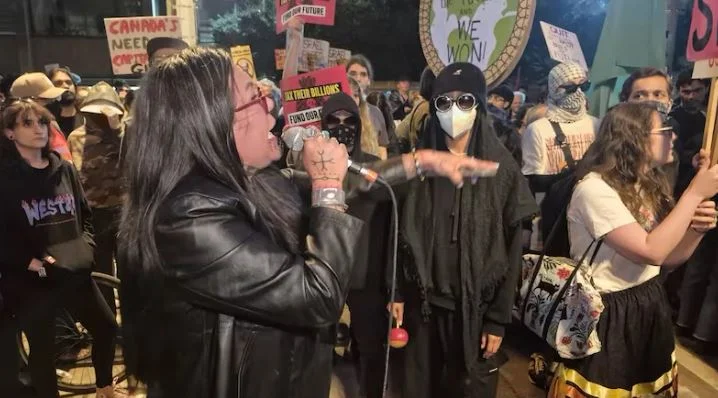
More than 1,000 protesters took to the streets of Toronto on Monday to demonstrate against the investment summit being hosted by Canadian Prime Minister Mark Carney.
The protesters expressed strong concerns over the government’s efforts to attract foreign investment and its policies concerning Canada’s natural resources, public services and national assets.
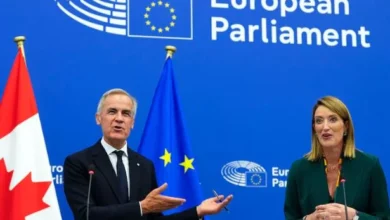
The Canada Investment Summit is being held in Toronto on Monday and Tuesday, with Prime Minister Mark Carney serving as host.
$1 Trillion Investment Target
Prime Minister Carney has invited more than 100 major investors from around the world to the summit. The government aims to attract approximately $1 trillion in investment to Canada over the next five years.
The investment is expected to be directed toward around 167 projects across the country.
Carney’s government is presenting Canada as a safe, stable and reliable investment destination amid global economic uncertainty. Protesters, however, argue that increased foreign investment does not necessarily guarantee direct benefits for ordinary Canadians.
‘We Need Investment in People’
Rachel Small, an organizer with World Beyond War, said Canadians are struggling with rising rents and increasing everyday expenses.
She argued that the government should be investing more in education, public transit and healthcare, while Prime Minister Carney is moving in the opposite direction.
Small also alleged that the government is presenting public resources to investors without providing any guarantee that ordinary Canadians will benefit.
‘Our Future Is Not for Sale’
The demonstration brought together representatives of labour unions, Indigenous communities, environmental activists, housing advocates and climate campaigners.
Protesters organized the demonstration under the theme “The Many Versus the Money.” They argued that the investment summit represents an attempt to place Canada’s public resources before major investors.
Demonstrators chanted slogans, played drums and carried signs calling for greater investment in people, healthcare, the environment and essential public services.
March to the Art Gallery
Protesters initially gathered at Nathan Phillips Square in downtown Toronto before marching toward the Art Gallery of Ontario, where the opening ceremony of the investment summit was taking place.
The opening event was closed to the general public and media.
The number of protesters increased during the march, prompting police to establish barriers to prevent demonstrators from moving farther toward the event.
Around 200 to 300 police officers were deployed around the Art Gallery of Ontario to prevent protesters from crossing the barriers.
Concerns Over Artificial Intelligence and War
Hailey Skon, a representative of the Common Horizon group, said protesters were not opposed to investment itself but were questioning the government’s investment priorities.
According to Skon, young activists want good jobs and a future they can afford to live in, but they are concerned about increasing investment in artificial intelligence, the military sector and fossil fuels.
She said protesters want to see Canada become a global leader in renewable energy and healthcare.
Objections to US Companies
Tom Dedman, a teacher who travelled from Ottawa to join the demonstration, also criticized Prime Minister Carney’s decision to invite senior executives from US companies to the summit.
He said inviting American corporate leaders to Canada during a trade war with the United States was concerning.
Protesters fear that the approach could increase the influence of foreign companies over Canada’s public services and national assets.
Indigenous Communities Raise Concerns
Kakeka Thunder Sky, a member of Poplar River First Nation, travelled from Winnipeg to Toronto to participate in the protest.
She said she was concerned about efforts to speed up environmental assessments and government policies involving First Nations lands.
According to Thunder Sky, Indigenous lands and resources should not be used to generate profits for foreign investors.
Namoks, a hereditary chief of the Wet’suwet’en Nation, also emphasized national sovereignty and environmental protection, saying that everyone must work together to protect the planet.
Government Defends Investment Strategy
Meanwhile, federal Industry Minister Mélanie Joly rejected accusations that the government was selling Canada to foreign interests.
She said the government would never compromise national security and that protecting Canadian interests remained one of its fundamental responsibilities.
Joly argued that Canada does not have enough domestic capital to develop all of its businesses and major infrastructure projects on its own. Like other countries, she said, Canada needs to attract foreign investment.
‘Good Deals Expected’
The federal industry minister said the summit could result in good deals and memorandums of understanding, potentially creating opportunities for additional investment in the future.
She said the effects of the summit could begin to become visible over the next three months to one year.
The Carney government is therefore presenting the goal of attracting $1 trillion in investment as a major opportunity for Canada’s economy. Protest groups, however, argue that economic growth must directly benefit ordinary Canadians and that the country’s resources and public services should not be handed over to foreign investors solely for profit.