Muhammad Amanullah
Date: October 14, 2026
The True Post (Web News) —
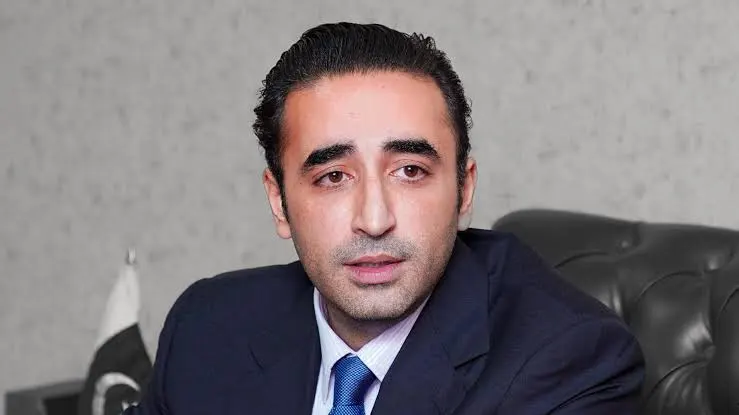
Pakistan Peoples Party (PPP) Chairman Bilawal Bhutto-Zardari has accused Pakistan Tehreek-e-Insaf (PTI) of creating the political and constitutional circumstances that led the federal government to impose an emergency in Khyber Pakhtunkhwa (KP). He described the situation as a “political suicide attack” by PTI on its own provincial government.
Addressing the National Assembly on Wednesday, Bilawal argued that the party’s provincial leadership had contributed significantly to the crisis. Parliament was debating the federal government’s decision to impose emergency measures and governor’s rule in KP, with the Centre citing what it described as the provincial government’s failure to cooperate adequately in the fight against terrorism.
The session’s regular question-hour proceedings were suspended to allow lawmakers to debate the emergency proclamation. Minister for Parliamentary Affairs Tariq Fazal Chaudhry presented the motion, while Law Minister Azam Nazeer Tarar opened the discussion.
The opposition benches were initially calm, with no protest taking place as proceedings began.
Bilawal Calls for Dialogue Despite Emergency Decision
Bilawal began his address by referring to the constitutional provisions governing an emergency and governor’s rule in the province. He said the federal government had attempted to engage the opposition before reaching the decision.
According to the PPP chairman, responsible opposition leaders understood that PTI’s own conduct had helped create the circumstances surrounding the crisis, even if they were unwilling to acknowledge this publicly.
He maintained that the party’s leadership, particularly its provincial representatives, could not distance itself from the political, constitutional and legal developments that preceded the federal action.
Bilawal also acknowledged that an emergency was an exceptionally serious step. He argued that the government should have exhausted opportunities for negotiations and attempted to address federal concerns about the provincial administration’s cooperation against terrorism before invoking what he described as a constitutional “atomic bomb”.
The PPP leader warned that restricting the political space available to one party could ultimately affect the entire political system.
He said the consequences could extend to other political parties, workers and ordinary citizens, stressing that responsibility for the current situation could not be placed on a single side.
Bilawal referred to alleged statements by KP Chief Minister Sohail Afridi suggesting that his government would not conduct counterterrorism operations in the manner preferred by the federal government.
He questioned whether such a position had left President Asif Ali Zardari with a reasonable basis to reject the emergency proclamation, despite the president’s association with the passage of the 18th Constitutional Amendment.
According to Bilawal, the actions and statements attributed to PTI had weakened the political and legal arguments against imposing emergency measures.
Nevertheless, he urged the federal government to offer the opposition another opportunity for negotiations.
Bilawal described emergency rule as a temporary arrangement rather than a permanent solution. He said that although the security operation might become more effective, eliminating terrorism would require a broader national effort involving political parties, institutions and society as a whole.
October 3 Negotiations Collapsed
Bilawal also discussed negotiations held on October 3 between a joint delegation representing the government and PPP and members of the opposition.
He said he had received a late-night message indicating that the discussions were progressing successfully.
According to his account, PTI had shown willingness to identify areas of Khyber Pakhtunkhwa experiencing a rise in terrorism as terrorist-affected areas. The two sides were also reportedly close to agreeing on a formal arrangement under which the federal and provincial governments would work together against militant violence.
However, the negotiations ultimately broke down.
The failure of the talks has become a central point of disagreement between the government and opposition, with both sides offering different explanations for why an agreement could not be finalised.
Bilawal also referred to Pakistan’s wider security challenges, describing the current environment as more complicated than in previous years.
He said India had not moved past the political consequences of the May 2025 conflict. Referring to Indian Prime Minister Narendra Modi’s remarks that Operation Sindoor remained ongoing, Bilawal alleged that India continued to support terrorist activity inside Pakistan.
He cited the Tehreek-i-Taliban Pakistan (TTP) and separatist militant organisations as examples of groups allegedly involved in violence. These statements reflected Pakistan’s position on cross-border militancy, rather than independently established findings presented during the parliamentary debate.
The former foreign minister also raised concerns about international interference in Pakistan’s domestic affairs, referring to Islamabad’s role in mediating during the US-Iran conflict. He alleged that forces opposed to Pakistan’s diplomatic initiative could seek to influence its internal politics.
Concluding his address, Bilawal called for agreement on fundamental national issues and encouraged opposition lawmakers to begin discussions within parliament.
National Assembly Speaker Ayaz Sadiq recalled that the October 3 negotiations had taken place in a cordial atmosphere. He praised both sides for making substantial efforts to reach an agreement and said the same committee arrangements could be used if talks resumed.
The speaker also acknowledged that some issues were beyond the immediate control of the negotiating parties.
Law Minister Says Security Situation Threatened National Security
Law Minister Azam Nazeer Tarar defended the emergency proclamation, arguing that the deterioration in security conditions in Khyber Pakhtunkhwa had reached a level that threatened national security.
He explained that Article 232 of the Constitution requires parliamentary approval of an emergency proclamation after it is issued.
Tarar said the federal cabinet had reviewed material concerning terrorism in the province during its October 11 meeting. Following that review, he said, the cabinet advised Prime Minister Shehbaz Sharif to recommend the emergency measure.
The minister rejected comparisons with the emergency imposed by former military ruler General Pervez Musharraf on October 12, 1999, arguing that the circumstances were different.
He pointed to internal disturbances and cross-border infiltration, claiming that the security situation had deteriorated significantly since Sohail Afridi’s government took office in KP on October 15, 2025.
Tarar said the province had experienced a substantial increase in terrorist incidents, particularly in the period following 2021, and attributed part of the deterioration to the provincial government’s approach.
He suggested that diplomatic and political considerations might also have contributed to the situation, but did not provide further details during the remarks quoted in the report.
The law minister presented figures indicating that 2,911 terrorist incidents had occurred in KP between 2021 and 2024. He said the number increased to 3,787 incidents between October 15, 2025, and October 9, 2026.
The figures were presented by the minister during the parliamentary debate. They were not independently verified within the account of the proceedings.
Tarar also criticised the KP chief minister over what he described as insufficient attention to the deaths of police officers and security personnel. He accused the provincial leadership of prioritising political activities and travel over the security situation.
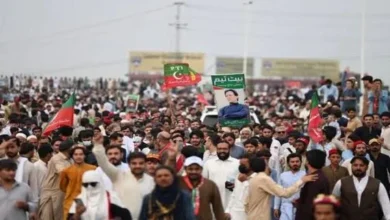
He referred to PTI’s plans for a protest march towards Islamabad, saying the party had also spoken of taking control of the federal capital.
The minister thanked the National Assembly speaker for facilitating dialogue between the federal government and the opposition. He alleged that PTI had repeatedly sought changes to a draft agreement before eventually withdrawing from the process.
Tarar further criticised the opposition’s demands concerning imprisoned PTI founder Imran Khan, including requests for his release and treatment at a private hospital. He argued that certain forms of relief could only be granted through the courts.
He described the events surrounding the crisis as a damaging episode in the country’s democratic history.
Tarar added that a special administrative mechanism had been introduced for 12 districts of Khyber Pakhtunkhwa as part of the emergency-related arrangements.
Achakzai Challenges the Government’s Mandate
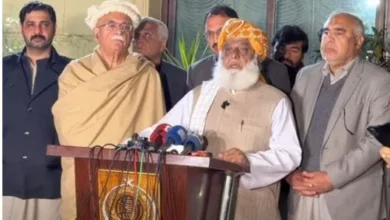
Opposition Leader Mehmood Khan Achakzai challenged the government’s explanation for imposing emergency measures.
He criticised Tarar’s argument that the provincial administration had failed to address terrorism and questioned the legitimacy of the ruling coalition formed after the February 2024 general election.
Achakzai said the opposition would be prepared to concede the argument if the minister could swear that the government had won the election fairly.
He alleged that the current governing coalition had been formed unlawfully, disputing the political legitimacy of the administration now defending the emergency decision.
His remarks highlighted the wider political divide surrounding the issue, with the government focusing on security concerns and the opposition questioning the legitimacy and motives behind the federal action.
Khawaja Asif Revisits PTI’s Past Security Policies
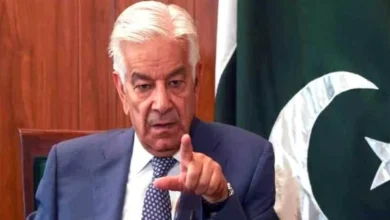
Defence Minister Khawaja Asif used his address to criticise PTI’s record during its time in federal government.
He referred to former prime minister Imran Khan’s previous proposal to resettle members of the TTP in Pakistan. Asif said PTI had attempted to persuade the opposition at the time that bringing the militants back could benefit the country.
The defence minister also recalled the 2019 episode involving the capture of an Indian pilot by Pakistan. He criticised the response of the government then led by Imran Khan, referring to what he portrayed as reluctance to escalate the confrontation with India.
Asif argued that political leaders should examine their own past decisions before accusing others of inconsistency.
He also referred to Imran Khan’s previous praise for former army chief General Qamar Javed Bajwa, saying contradictions between political statements and actions were damaging the country.
The minister recounted his own experience of imprisonment during PTI’s tenure. He said then-opposition leader Shehbaz Sharif had secretly brought him a blanket to help him cope with cold conditions in jail.
Asif said he had eaten prison food and alleged that officials ordered the removal of a geyser after it was installed.
He contrasted his experience with the protests organised by PTI, arguing that his side had not responded by holding demonstrations at Islamabad’s D-Chowk or staging political actions involving graves.
Asif insisted that demands for equal treatment must be accompanied by a record that justifies them. He argued that PTI could not claim political fairness while ignoring the actions taken during its own period in power.
He also recalled his imprisonment in Attock jail, describing the cell in which he had been held, and reaffirmed his loyalty to his party and former prime minister Nawaz Sharif.
Turning to the present security situation, Asif alleged that Chief Minister Sohail Afridi received instructions from an individual based in Afghanistan. He also referred to a statement by the TTP condemning the emergency and the deployment of troops in certain areas.
The defence minister questioned the relationship between PTI and the militant group, using the statement to challenge the opposition’s position. His remarks were allegations made during a political debate and were not accompanied in the report by independent proof of coordination.
Asif also disputed PTI’s claim that its leaders had been unable to meet Imran Khan, who is being held at Adiala jail. He maintained that meetings took place but that many were not publicly announced or formally recorded.
MQM-P Calls on PTI to Condemn Terrorism
Farooq Sattar, representing Muttahida Qaumi Movement-Pakistan (MQM-P), expressed support for the prime minister’s decision.
Sattar acknowledged that imposing an emergency was a difficult step but argued that the government had reached a point where it had no viable alternative.
He said his party trusted the prime minister’s experience, political judgment and capabilities, adding that it believed the decision had been taken in the national interest.
Sattar accused PTI of taking an untenable position and argued that the opposition had not presented convincing grounds for describing the emergency as unjustified or politically motivated.
He said the underlying problem was the political mindset surrounding the fight against terrorism. Referring to past statements attributed to Imran Khan, Sattar argued that PTI had questioned whether Pakistan’s war against terrorism was its own responsibility.
The MQM-P lawmaker also asked whether the KP government had published reports identifying terrorist hideouts or extremist trends and whether it had pursued cases against suspected militants effectively.
He urged PTI to condemn terrorism openly and unequivocally.
Sattar warned that if an inquiry were established and allegations of political extremism or links to terrorism were proven, the party would face serious questions about its position.
His remarks added to the growing pressure on PTI during the debate, as government allies sought to connect the provincial administration’s policies with the deterioration in security.
Emergency Debate Exposes Deep Political Divisions
The National Assembly debate revealed sharp differences over the causes of rising militant violence, the performance of the Khyber Pakhtunkhwa government and the constitutional justification for emergency measures.
The federal government maintains that the security situation requires exceptional intervention and argues that the provincial administration has not cooperated sufficiently in counterterrorism efforts. PTI and opposition figures have challenged the government’s mandate and questioned the motives behind the decision.
Bilawal’s intervention combined criticism of PTI with a call for renewed negotiations, reflecting the possibility that political dialogue could continue even after the emergency proclamation.
The constitutional process will now be important in determining the future of the measures announced for the province. Parliament’s consideration of the proclamation, the legal requirements governing emergency rule and any further negotiations between the Centre and the opposition will shape the next stage.
At the same time, the security challenge remains central to the debate. The government’s figures on terrorist incidents, the opposition’s objections and allegations exchanged between political leaders will require careful scrutiny as the situation develops.
The immediate question is whether the political leadership can establish a workable agreement on counterterrorism while resolving the constitutional dispute. Without sustained cooperation, the emergency may address only part of a wider crisis involving security, governance and political trust.