OTTAWA — The dispute between Canada and the United States over tariffs has taken an unusual turn, with the name of Lake Ontario becoming another point of political tension between the two countries.
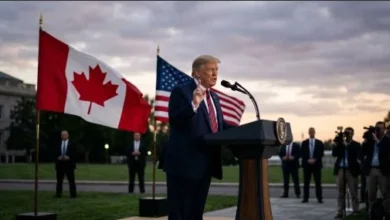
After U.S. President Donald Trump directed American federal agencies to use the name “Lake America” for Lake Ontario, Canadian political leaders responded with sarcasm rather than a strong diplomatic confrontation.
The reaction has added a symbolic dimension to already strained Canada-U.S. relations, which have been under pressure because of ongoing trade disputes and tariff measures.
Manitoba Premier Takes a Swipe at Trump
Manitoba Premier Wab Kinew mocked the U.S. president’s decision, comparing Trump to an aging rock band attempting to bring an old song back into popularity.
Kinew’s comments came after the Trump administration instructed U.S. federal agencies to use the new name for the lake.
The sarcastic response appeared to emphasize that changing an official name for U.S. government purposes would not easily change the lake’s long-established identity in Canada.
Lake Ontario has been known by that name in Canada for generations and remains an important geographical and economic feature shared by Canada and the United States.
Doug Ford Responds With a Large Billboard
Ontario Premier Doug Ford also responded to Trump’s decision in a highly visible way.
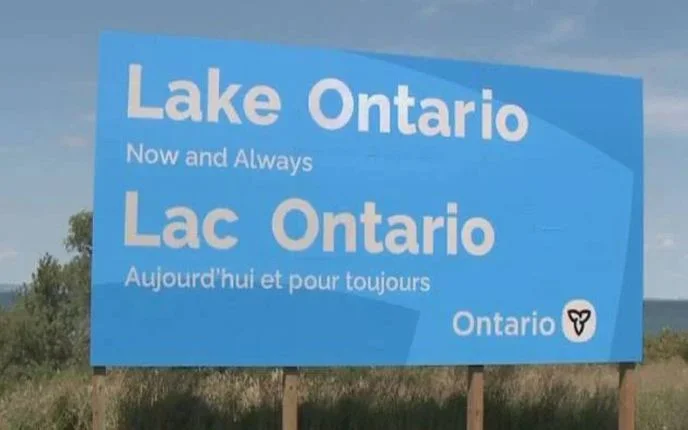
A large billboard was installed on the Canadian shore of Lake Ontario near Grimsby, Ontario. The billboard carries the message:
“Lake Ontario, Now and Forever.”
The same message was also displayed in French.
Ford posed for photographs beside the billboard and made it clear that Canadians would continue referring to the body of water as Lake Ontario regardless of the name used by the Trump administration.
The Ontario premier’s response was widely viewed as a symbolic political message defending the lake’s traditional name and identity.
Canada Turns the Name Dispute Into a Political Joke
The Lake Ontario controversy has emerged at a time when relations between Canada and the United States are already facing significant pressure.
Rather than responding with an aggressive diplomatic statement, several Canadian leaders have used humor and sarcasm to criticize the U.S. decision.
Ford’s billboard and Kinew’s comments reflect an attempt to make the issue a political and cultural statement rather than allowing it to develop into another major diplomatic confrontation.
The unusual response has also attracted public attention because Canada and the United States share one of the world’s most important economic and trade relationships.
Another Dispute During the Trade War
The controversy over Lake Ontario’s name comes as Canada and the United States continue to disagree over tariffs and trade policy.
The two countries have already been involved in negotiations over tariffs, with businesses on both sides of the border concerned about the impact of continued trade uncertainty.
Against this backdrop, the Lake Ontario naming dispute has become another visible example of the growing political tension between Ottawa and Washington.
Although the name issue is largely symbolic, it has generated considerable public and political attention in Canada.
Canada Insists on the Traditional Name
Canadian political leaders have made it clear that they do not intend to adopt the new name used by the U.S. administration.
The billboard installed by Ford carries a straightforward message that reflects Ontario’s position: Lake Ontario remains Lake Ontario.
The use of both English and French on the billboard also highlights the Canadian identity associated with the lake.
For Canadians, the name is connected to the region’s history, geography and cultural identity, making the proposed change more than a simple administrative decision.
Trade Dispute and “Name War” Collide
The Lake Ontario controversy demonstrates how the relationship between Canada and the United States has become increasingly tense beyond traditional trade disagreements.
Tariffs, economic negotiations and retaliatory measures have already created uncertainty for businesses and consumers. The dispute over the lake’s name has now added a symbolic and political element to the relationship.
Canadian leaders have chosen humor, sarcasm and public messaging to make their position clear.
For now, there are few signs that the broader trade dispute between the two countries is close to being fully resolved. As negotiations continue, the Lake Ontario naming controversy has become an unusual symbol of the wider tensions between Canada and the United States.