Muhammad Amanullah | August 15, 2026
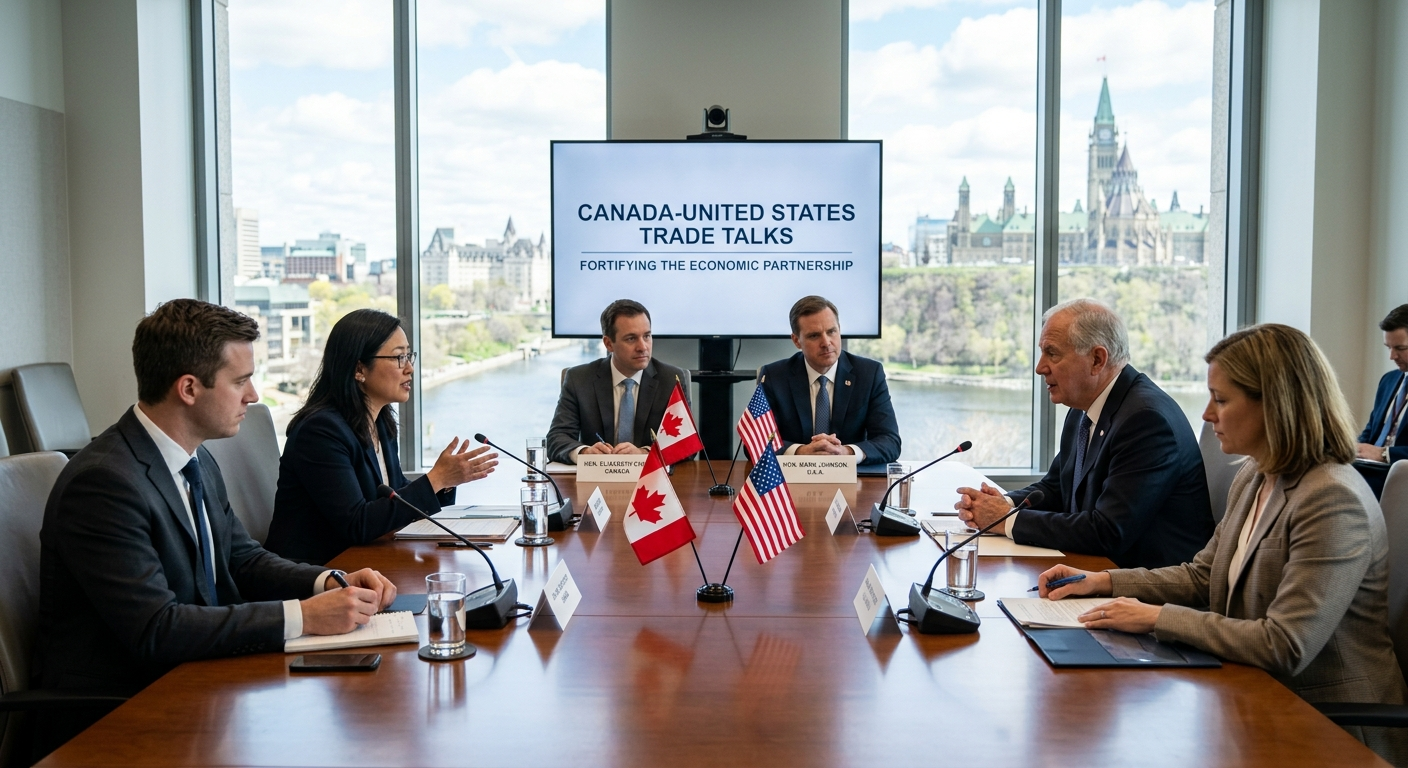
The True Post — Trade negotiations between Canada and the United States have entered a decisive stage, but major disagreements remain between the two countries. Canadian government sources say it is still unclear whether a deal can be reached before the U.S. deadline of August 19, with significant gaps remaining on several key issues.
Canada’s Federal Minister of Canada-U.S. Trade, Dominic LeBlanc, briefed provincial and territorial trade ministers on Friday about the latest developments. He also briefed members of the Prime Minister’s Advisory Council on Canada-U.S. Economic Relations.
Sources familiar with the negotiations say optimism on the Canadian side has begun to fade, while U.S. officials do not appear willing to make major changes to their latest proposal.
U.S. Proposes Lower Auto Tariffs
The latest U.S. proposal includes a reduction in the sectoral tariff on automobiles to 12.5 percent. However, Canada considers the proposed reduction insufficient and wants Washington to provide further tariff relief in return.
The disagreement has become one of the major obstacles in the negotiations, with Canada reluctant to accept a deal that does not provide sufficient relief for key Canadian industries.
Significant Gap Remains Between Both Sides
Quebec Economy Minister Bernard Drainville also took a cautious view of the negotiations, saying a significant gap remains between Canada and the United States.
According to Drainville, there has so far been no clear indication that U.S. President Donald Trump will delay the implementation of the threatened 50 percent tariff.
Former Conservative leader and member of the Prime Minister’s economic advisory committee Erin O’Toole also described the positions of the two countries as still being far apart.
O’Toole said negotiations are continuing and both sides remain interested in reaching an agreement, but there is still a long way to go. He suggested that the decisive phase could come during the final days or even the final hours of negotiations, when Washington makes its final position clear.
He also stressed that Canada should not accept an agreement that fails to adequately protect Canadian workers and their interests.
U.S. Alcohol Products Become Another Key Issue
American wine and other alcoholic products have also emerged as an important issue in the negotiations.
The Canadian government has instructed provinces to be prepared to return American wine to Canadian markets if a trade agreement is reached.
According to sources, the federal government has also asked provinces and territories to be prepared to remove certain retaliatory purchasing restrictions against U.S. companies if a deal is finalized.
Also Read: Canada Unites Against U.S. Tariff War as Mark Carney Delivers Major Message
President Donald Trump has criticized several Canadian measures, including provincial restrictions on American alcohol, limited access for U.S. farmers to Canada’s dairy market and sectoral tariffs on automobiles.
Dairy Protection Remains a Canadian Red Line
Protecting Canada’s dairy sector remains one of the most sensitive issues in the negotiations.
Quebec Premier Christine Fréchette has made it clear that the province will not accept concessions to Canada’s supply-management system that could harm the domestic dairy industry.
She said there is a great deal at stake in the current negotiations and described the protection of supply management as a red line for Quebec.
The United States has long complained that American farmers and dairy products do not have sufficient access to Canada’s dairy market.
Washington’s Position
U.S. Trade Representative Jamieson Greer said Friday that negotiations with Canada have been constructive, but Washington continues to push for Canada to withdraw its retaliatory measures.
Greer said the United States remains focused on implementing its trade policy, but Washington is prepared to pursue an agreement if a path can be found that meets U.S. interests.
August 19 Becomes Critical Deadline
The threat of an additional 50 percent tariff on hundreds of Canadian products starting August 19 has increased pressure on the negotiations.
Existing sectoral tariffs on steel, aluminum, automobiles and forest products also remain in place.
Canadian Prime Minister Mark Carney wants any new agreement to address not only the newly threatened tariffs but also the sectoral tariffs that are already in effect.
For Canadian officials, August 19 has now become a critical deadline. Industry representatives warn that if the 50 percent tariff comes into effect, political room for Canada to continue negotiations for an extended period could become increasingly limited.
Despite continued negotiations, a trade agreement between Canada and the United States remains uncertain, with the coming days expected to be crucial for the future of Canada-U.S. trade relations.