

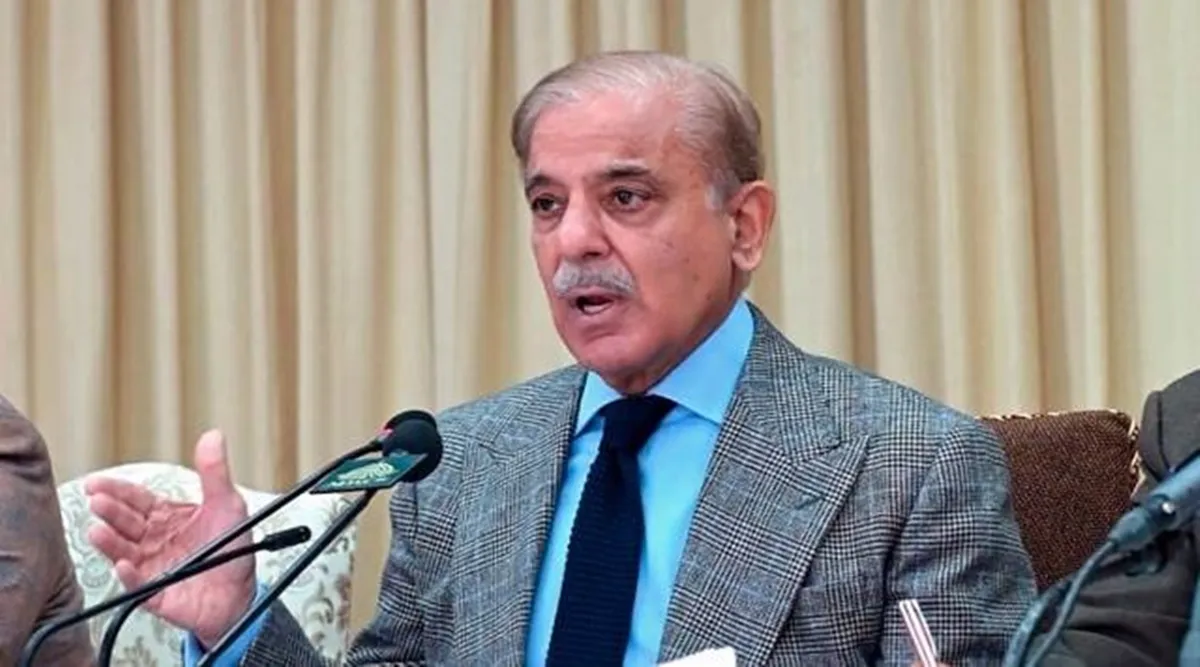
ISLAMABAD (The Ture Post) — Prime Minister Shehbaz Sharif has strongly condemned the recent missile attacks targeting Saudi Arabia, describing them as unacceptable and reaffirming Pakistan’s unwavering support for the Kingdom’s sovereignty, security, and territorial integrity.
In an official statement issued on Wednesday, the Prime Minister said that attacks against Saudi Arabia’s sovereignty and regional integrity pose a serious threat to peace and stability in the Middle East. He emphasized that Pakistan stands firmly with Saudi Arabia during this challenging period and remains committed to supporting its long-standing ally.
Shehbaz Sharif Expresses Solidarity with Saudi Arabia
Prime Minister Shehbaz Sharif said Pakistan fully supports the Kingdom’s efforts to safeguard its national security and protect its people from external threats.
He stressed that Pakistan and Saudi Arabia share deep historical, religious, and strategic ties, adding that Islamabad will continue to stand shoulder to shoulder with Riyadh in the face of security challenges.
The Prime Minister further stated that maintaining peace, stability, and mutual understanding across the region remains a priority for Pakistan’s foreign policy.
Pakistan Condemns Missile Attacks
Earlier, Pakistan also issued an official condemnation of the reported ballistic missile attacks launched by Yemen’s Houthi movement toward Saudi Arabia.
The government reiterated its complete support for Saudi Arabia’s sovereignty, territorial integrity, and right to defend itself against attacks targeting civilian areas and national infrastructure.
Officials described such attacks as a threat to regional security and called for efforts to prevent further escalation.
United Nations Security Council Discusses Yemen Crisis
The developments were also discussed during an emergency meeting of the United Nations Security Council, which focused on the deteriorating security situation in the Middle East, particularly the conflict in Yemen.
During the session, Pakistan’s Deputy Permanent Representative to the United Nations, Usman Jadoon, reaffirmed Islamabad’s strong support for Saudi Arabia’s security and territorial integrity.
He also reiterated Pakistan’s commitment to Yemen’s sovereignty, independence, unity, and territorial integrity, emphasizing that lasting peace can only be achieved through dialogue and diplomacy.
Pakistan Calls for Dialogue and Restraint
Addressing the Security Council, Usman Jadoon urged all parties to exercise restraint and avoid actions that could further destabilize the region.
He stressed that negotiations, diplomatic engagement, and confidence-building measures remain the most effective path toward resolving the Yemen conflict and reducing tensions across the Middle East.
Pakistan has consistently advocated peaceful solutions to regional disputes while supporting international efforts aimed at ending armed conflict.
Saudi Air Defenses Intercept Ballistic Missiles
According to Major General Turki Al-Maliki, spokesperson for the Saudi-led coalition operating in Yemen, Houthi forces launched ballistic missiles toward southern Saudi Arabia.
He said Saudi air defense systems successfully intercepted and destroyed all incoming missiles before they reached their intended targets, preventing casualties and damage.
Saudi authorities have not reported significant losses resulting from the attempted attacks.
Houthis Previously Issued Warning
The missile launches came after Yemen’s Houthi movement accused Saudi Arabia of carrying out an alleged airstrike on Sanaa International Airport.
Following those allegations, Houthi officials warned that Saudi Arabia would face consequences, raising concerns about renewed military escalation between the two sides.
The conflict in Yemen has continued for years, with repeated cross-border attacks contributing to instability across the region.
Regional Tensions Remain High
Security analysts say the latest exchange of attacks underscores the fragile security environment in the Middle East.
Continued hostilities between the Houthis and the Saudi-led coalition have prompted renewed international calls for de-escalation and a return to diplomatic negotiations.
Pakistan has maintained that regional peace can only be achieved through dialogue, respect for sovereignty, and peaceful conflict resolution.
As tensions continue, governments and international organizations are closely monitoring developments to prevent a broader escalation that could threaten regional security and global economic stability.
