Muhammad Amanullah | The True Post
Israel’s parliamentary election has produced a closely contested political landscape, with initial exit polls suggesting that Prime Minister Benjamin Netanyahu’s bloc and the opposition alliance associated with former military chief Gadi Eisenkot have both fallen short of a clear majority in the 120-seat Knesset.
The early projections indicate that neither side is assured of forming the next government without support from additional parties. Smaller political groups could therefore play a decisive role in coalition negotiations, depending on the final distribution of seats.
According to the election figures cited in the initial report, voter turnout exceeded 74 per cent, with more than 5.695 million Israelis casting their ballots. Election officials were reported to have said that final results could take up to 48 hours to emerge.
Exit polls from major Israeli television networks projected approximately 51 seats for each of the two main political blocs, while Arab parties were estimated to win a combined 18 seats. These figures remain preliminary estimates and should not be treated as confirmed election results.
Government Formation Requires 61 Seats
Israel’s parliament, known as the Knesset, has 120 seats. A government needs the support of at least 61 lawmakers to command a parliamentary majority.
Because no single party typically wins enough seats to govern independently, Israeli governments are generally formed through agreements between multiple parties.
If the initial exit-poll projections broadly reflect the final results, both Netanyahu’s bloc and the opposition alliance would need additional support to form a government.
Smaller parties could gain considerable influence during negotiations, particularly if neither major bloc can reach the required threshold. Their decisions on coalition participation or parliamentary support could determine which candidate has the best opportunity to form a government.
If the negotiations fail to produce a viable coalition, Israel could face a prolonged political stalemate. Fresh elections could become a possibility if efforts to establish a functioning government prove unsuccessful.
Gaza and Regional Conflicts Dominate the Election Debate
The election took place against the backdrop of the Hamas-led attacks of October 7, 2023, and the subsequent war in Gaza. Netanyahu faced criticism during the campaign over military operations in Gaza and Lebanon, tensions with Iran, security failures and corruption allegations, which he denies.
Voters were confronted with questions about national security, the consequences of regional conflicts, the government’s performance and the country’s future policy direction.
Netanyahu’s supporters have emphasised his leadership and security policies, arguing that Israel needs a strong government to confront threats from Iran and other regional adversaries.
His critics, however, have questioned the government’s decisions and its handling of security matters, particularly in the aftermath of the October 2023 attacks.
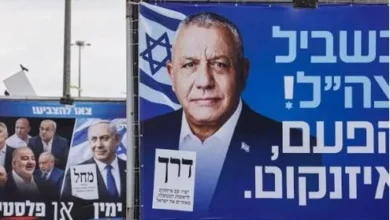
Former Israel Defense Forces chief of staff Gadi Eisenkot highlighted his military background during the campaign and criticised Netanyahu’s leadership. Security policy and the future direction of Israeli politics featured prominently in his political message.
Netanyahu Calls for a Strong Right-Wing Government
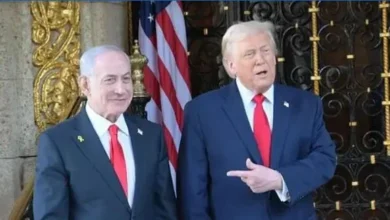
Netanyahu urged voters to support a strong right-wing government, presenting national security and the threat he says Iran poses to Israel as central campaign issues.
He argued that Israel requires firm leadership to address its security challenges and said he would continue efforts to protect the country against Iranian threats.
Related reading: Netanyahu’s Political Future at Stake as Israel Faces a Tight Election Contest
However, Netanyahu’s ability to remain in office will depend on the final parliamentary results and whether his political bloc can secure sufficient support from potential coalition partners.
Even if his Likud party emerges as the largest individual party, that would not automatically guarantee him another term as prime minister. The decisive factor will be whether he can assemble a coalition or otherwise secure the parliamentary backing needed to govern.
Eisenkot Criticises Netanyahu and Warns Against Another Election
Eisenkot urged Netanyahu not to use national security for political purposes, according to the supplied report.
He also argued that holding another election after strong voter participation would be a mistake, stressing that the public’s decision should be respected and translated into a functioning government.
His remarks came as the initial exit polls indicated that neither major political bloc had secured a clear majority.
Eisenkot’s prospects of forming a government would depend on the final seat distribution and whether opposition parties could agree on a workable coalition. The positions of smaller parties, including Arab-led political groups, could influence the negotiations, although their participation in a governing coalition would depend on the political circumstances and the parties’ own decisions.
Final Results and Coalition Negotiations Will Decide the Outcome
Attention is now focused on the official vote count, the distribution of parliamentary seats and negotiations over the formation of Israel’s next government.
If either political bloc secures the backing of at least 61 lawmakers, it could move towards forming a government. If neither can obtain sufficient support, negotiations could become prolonged and political uncertainty could continue.
The final outcome will depend not only on the number of seats won by each party but also on the willingness of potential coalition partners to cooperate.
For now, the initial exit polls suggest a close contest rather than a decisive victory for either Netanyahu or Eisenkot. The official results and subsequent negotiations will determine who can secure the parliamentary support needed to govern.