Muhammad Amanullah
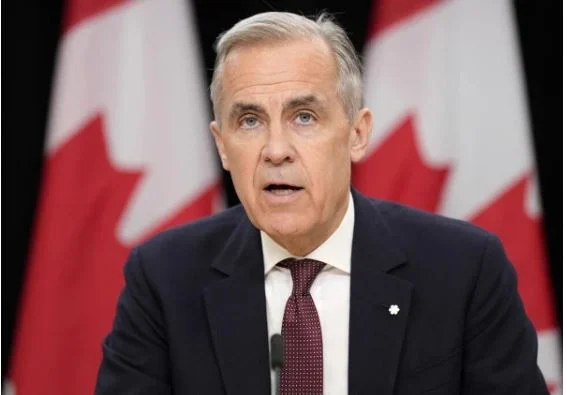
Date: September 22, 2026 The True Post (Web News) —Prime Minister Mark Carney has described the current parliamentary session as a potentially defining period for Canada, as his government moves ahead with major legislation aimed at accelerating infrastructure development, attracting investment and changing aspects of federal labour relations.
Speaking to Liberal MPs ahead of the opening of the fall sitting, Carney said Canada was entering a period requiring significant decisions and that the legislation introduced during the session could have effects extending well beyond the current government.
The fall sitting began on Sept. 21, with the government immediately introducing Bill C-39, the Building Canada Strong Act. (Canada)
A Defining Moment for Canada
Carney has framed the government’s legislative agenda around building Canada’s economic capacity at a time of trade uncertainty, changing global supply chains and continued economic pressure.
His government has been emphasizing faster infrastructure approvals, increased investment, expanded trade relationships and greater economic independence as Canada manages its relationship with the United States.
At the Canada Investment Summit earlier this month, Carney said his government was targeting $1 trillion in investment in Canada over the next five years, including investment in energy, transportation, data and defence. He also said Ottawa wanted to make major project approvals faster through a “one project, one review, one year” approach. (Canada PM)
Building Canada Strong Act
Bill C-39 is one of the first major pieces of legislation introduced by the government during the fall parliamentary session.
The bill is designed to make federal approval processes for major infrastructure and natural-resource projects faster and more predictable.
Under the proposed framework, federal reviews and decisions would generally be completed within one year after a project proponent submits a comprehensive application.
The government says the changes are intended to reduce delays, improve investment certainty and allow projects involving Canada’s energy and natural resources, transportation infrastructure and supply chains to move forward more quickly. (Canada)
The legislation would also allow the government to establish certain “regions of national interest,” where projects could receive a more coordinated federal review and potentially benefit from exemptions or adjustments under a range of federal laws. (Castanet)
Faster Approvals for Major Projects
The federal government has argued that some major projects can take many years to move through regulatory reviews and approvals.
Bill C-39 would attempt to reduce delays by coordinating different federal processes and conducting certain reviews simultaneously rather than sequentially.
The government says the objective is not to remove environmental requirements but to make the approval system more efficient while maintaining environmental standards and Indigenous consultation and accommodation rights.
Natural Resources Minister Tim Hodgson said the government wants federal departments to be accountable for meeting the proposed one-year timeline. (Reuters)
Environmental and Indigenous Rights
The proposed changes have also generated debate over environmental oversight.
The federal government says the legislation will maintain Canada’s environmental standards and uphold Indigenous rights.
Ottawa has said consultation with Indigenous Peoples will continue, although the process is expected to be conducted more efficiently.
The government’s position is that faster decisions do not necessarily mean lower standards, while critics have raised concerns about whether accelerating approvals could reduce scrutiny of major projects. These concerns are part of the parliamentary and public debate surrounding the bill. (Canada)
Changes to Federal Labour Rules
Bill C-39 also proposes changes to the Canada Labour Code, particularly the rules governing federal intervention in major strikes and lockouts.
The legislation would retain the government’s existing power under Section 107 of the Labour Code but introduce additional conditions and a new mediation process before that power could be used.
Under the proposed system, a special mediator would work with the parties for 21 days and provide a report before the labour minister could intervene. The minister would also have to consider the potential impact of the dispute on the national interest. (Reuters)
The federal government says the changes are intended to create greater transparency and establish a higher threshold for government intervention.
Labour leaders, however, have expressed concerns that the proposed legislation could still affect workers’ ability to strike and bargain collectively. (CityNews Toronto)
Opposition Raises Cost-of-Living Concerns
The opening of Parliament also saw the opposition focus heavily on the cost of living.
Conservative Leader Pierre Poilievre has called for further measures to address housing costs, fuel prices and the cost of groceries.
The government has pointed to measures it says have already reduced costs or improved affordability, including tax changes and measures affecting first-time homebuyers and the GST credit.
The debate over affordability is expected to remain an important part of parliamentary proceedings as the government advances its economic legislation.
Trade Tensions and Economic Uncertainty
The government’s legislative agenda comes as Canada continues to deal with trade tensions with the United States.
Carney has argued that Canada cannot control decisions made by other countries but can strengthen its own economic capacity.
His government has therefore emphasized diversifying Canada’s trading relationships, developing new markets and reducing vulnerabilities created by heavy dependence on a single trading partner.
At the Canada Investment Summit, Carney said Canada was seeking to build a more resilient and diversified economy while accelerating investment in infrastructure, energy and other strategic sectors. (Canada PM)
More Legislation Expected
Bill C-39 is not expected to be the only major measure debated during the fall sitting.
The government is also expected to advance legislation and policy initiatives involving investment, infrastructure, trade, transportation and other economic issues.
The government’s second federal budget is also expected during the fall and would provide another major test of its economic agenda.
The parliamentary session will therefore involve both legislative debates and negotiations with opposition parties, provinces, Indigenous groups, labour organizations, businesses and environmental organizations.
A Busy Political Calendar
The federal parliamentary agenda is unfolding alongside several important events in Canada’s political calendar.
Quebec is scheduled to hold a provincial election on Oct. 5, while Alberta is scheduled to hold its referendum on Oct. 19.
Canada and the European Union are also scheduled to hold a leaders’ summit in Montreal on Oct. 29, at a time when Ottawa is seeking closer economic and strategic ties with European partners.
Other parliamentary and constitutional issues are also expected to remain under discussion during the session.
A Major Test for the Carney Government
The fall parliamentary session will put several of the Carney government’s central economic priorities before Parliament.
Bill C-39 seeks to accelerate major project approvals while changing the framework for federal intervention in labour disputes.
The government’s stated objective is to build infrastructure faster, attract investment and strengthen Canada’s economic position while maintaining environmental standards and Indigenous rights.
The legislation will now face parliamentary scrutiny, debate and potential amendments.
How the government responds to concerns from opposition parties, labour organizations, environmental groups, Indigenous communities and other stakeholders will shape the parliamentary debate over the bill and the broader economic agenda for the fall session. (Canada)