The True Post (Web News)Due to Pakistan’s successful diplomatic efforts, U.S. President Donald Trump has announced an extension of the ceasefire with Iran, while also deciding to maintain the blockade of the Strait of Hormuz, according to his statements.
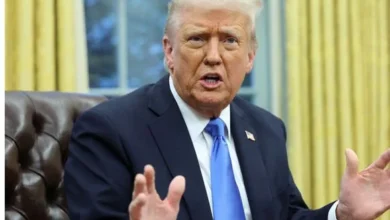
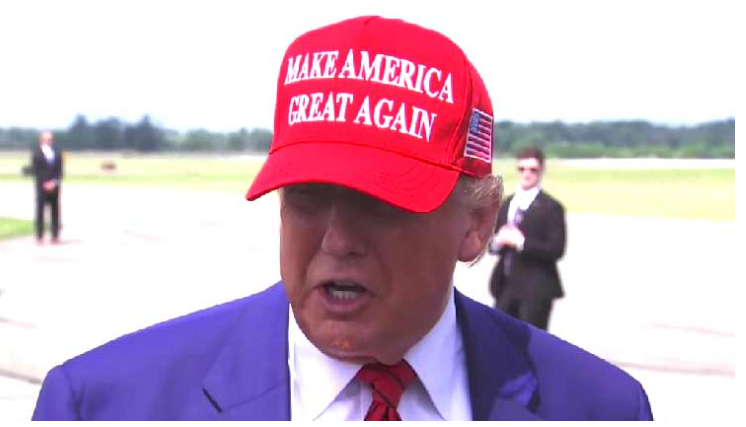
In a post on the social media platform Truth Social, President Trump said that at the request of Pakistan’s Prime Minister Shehbaz Sharif and Field Marshal Asim Munir, planned military action against Iran has been temporarily postponed. He stated that this pause is intended to allow Iranian leadership and representatives to present a unified proposal.
Trump added that the ceasefire extension will remain in place until Iran submits a proposal and negotiations reach a conclusion. He further claimed that U.S. forces have been instructed to continue enforcing pressure measures and remain fully prepared for any developments.
In his remarks, Trump also alleged that Iran’s government is facing internal divisions. He further claimed that the United States has effectively taken control of the Strait of Hormuz, a critical global oil shipping route.
According to Trump, Iran does not actually want the Strait of Hormuz closed, as it relies heavily on it for revenue, reportedly earning around $500 million per day from the waterway. He added that Iran’s public stance on closure is merely for political image purposes, while privately it seeks continued access.
Trump warned that if the Strait of Hormuz is reopened, there would be no basis for any agreement with Iran, and he made highly escalatory remarks regarding potential consequences.
Meanwhile, the White House confirmed that U.S. Vice President JD Vance will not be visiting Pakistan for talks today. Earlier reports had suggested that the visit was postponed due to Iran not responding, although U.S. officials indicated it could be rescheduled at any time.
On the Iranian side, officials stated that no final decision has been made regarding sending a delegation to Islamabad for negotiations. Iranian Foreign Ministry spokesperson Esmaeil Baghaei said Iran will decide on participation only if talks are deemed productive.
This situation highlights ongoing uncertainty in regional diplomacy, with ceasefire arrangements, negotiations, and geopolitical tensions all remaining in a fragile state.