Muhammad Amanullah
Date: September 24, 2026 The True Post (Web News) —Health care emerged as one of the main areas of disagreement as the leaders of Quebec’s five major political parties faced off in the third and final televised debate of the provincial election campaign on Wednesday night.
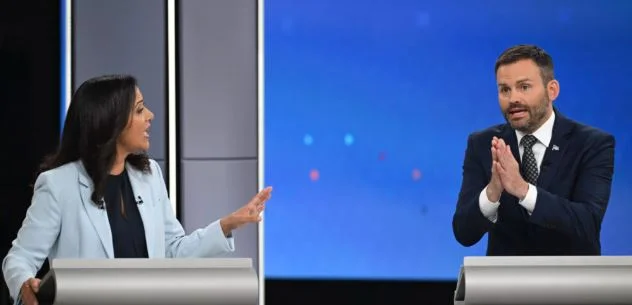
The two-hour debate, hosted by Radio-Canada, brought together Coalition Avenir Québec (CAQ) Leader Christine Fréchette, Quebec Liberal Party Leader Charles Milliard, Parti Québécois Leader Paul St-Pierre Plamondon, Québec solidaire spokesperson Ruba Ghazal and Conservative Party of Quebec Leader Éric Duhaime.
The discussion covered five major themes, including the future of Quebec, economic insecurity, public finances, child care and health care. The provincial election is scheduled for October 5. (CityNews Montreal)
Health Care Becomes Major Debate Battleground
The health-care discussion focused heavily on emergency-room waiting times, access to family doctors, the role of the private sector and the future of Santé Québec.
Liberal Leader Charles Milliard criticised the CAQ government over its previous commitments on health care, particularly the promise to reduce emergency-room waiting times.
Milliard pointed to waiting times reported at several hospitals, including more than seven hours at CHUM, nearly eight hours in Sherbrooke and more than eight hours in Hull.
He argued that Quebecers continue to face difficulties accessing timely care despite previous government commitments. (TVA Nouvelles)
Milliard has also proposed expanding access to telehealth services so Quebecers could consult health professionals without necessarily having to obtain a traditional appointment in advance.
Parti Québécois Challenges CAQ Record
Parti Québécois Leader Paul St-Pierre Plamondon also criticised the CAQ’s record in health care.
He questioned the value of repeating promises that, in his view, had not produced the expected results.
The PQ has proposed expanding public CLSCs to provide care for less serious medical needs. The party says strengthening these services could help reduce pressure on hospital emergency departments and improve access to care.
St-Pierre Plamondon also opposed expanding the role of private health-care providers, arguing that private clinics could draw personnel away from the public system.
Conservatives Support Mixed Health-Care Model
Conservative Party of Quebec Leader Éric Duhaime argued that Quebec needs more family doctors and shorter waiting times.
He said health-care problems have persisted through successive governments and should not be attributed exclusively to the CAQ.
Duhaime has supported a mixed-practice model in which public and private health-care providers would operate within the system. He has pointed to countries such as France and Germany as examples of systems where public and private elements coexist.
During the debate, Duhaime and Fréchette both defended greater use of private health-care services in certain circumstances. (TVA Nouvelles)
CAQ Defends Its Health-Care Record
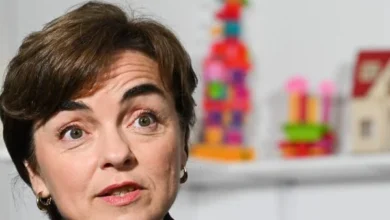
CAQ Leader Christine Fréchette acknowledged that there is still work to be done in Quebec’s health-care system but defended measures introduced by her government.
Fréchette highlighted an increase in the number of surgeries and measures aimed at connecting Quebecers with family doctors and health-care teams.
She also indicated openness to using private providers in certain circumstances.
Under the approach discussed by the CAQ, patients who have been waiting for surgery for an extended period could potentially receive treatment in the private sector without additional cost to them.
Fréchette also defended the creation of Santé Québec, arguing that the agency has already contributed to improvements in the health network. (TVA Nouvelles)
Québec Solidaire Opposes Greater Reliance on Private Sector
Québec solidaire spokesperson Ruba Ghazal opposed expanding private health care as a solution to Quebec’s waiting-time problems.
Ghazal argued that private clinics would still need doctors, nurses and other health professionals, potentially drawing workers from the public system.
Her position was that expanding private health care could weaken the public system rather than increase the overall number of health professionals available to Quebecers.
The disagreement over private health care became one of the more contentious exchanges of the evening. (TVA Nouvelles)
Debate Over Santé Québec
The future of Santé Québec was another major point of disagreement.
The Parti Québécois and Conservative Party have called for the agency to be abolished, while Fréchette defended its creation.
During the debate, Fréchette argued that changing the structure of the health system again would consume time and resources that could instead be directed towards patient care.
St-Pierre Plamondon, meanwhile, argued that another layer of bureaucracy should be removed from the system. (TVA Nouvelles)
U.S. Trade Conflict Also Discussed
The debate also turned to Quebec’s response to the continuing trade tensions with the United States.
Duhaime criticised Fréchette over what he described as an insufficient response to the trade conflict involving U.S. President Donald Trump.
St-Pierre Plamondon also questioned the CAQ government’s decision not to pursue dollar-for-dollar retaliatory tariffs against American products.
Fréchette defended her government’s approach and disputed claims that Quebec was suffering the level of job losses suggested by her opponents.
Milliard responded that his campaign had heard different concerns from business owners he had met.
Final Debate Before October 5 Vote
The Radio-Canada debate was the final opportunity for the five major party leaders to confront one another on the same stage before Quebecers vote on October 5, 2026.
All three major televised debates during this campaign were conducted in French. There was no English-language leaders’ debate this year. (CityNews Montreal)
The final debate focused not only on health care but also on Quebec’s future, economic pressures, public finances and child care, giving voters a final opportunity to hear the leaders’ positions before election day.
With the campaign entering its final days, health care remained one of the central issues dividing the parties, particularly over emergency-room waits, access to family doctors, the role of private providers and the future of Santé Québec.