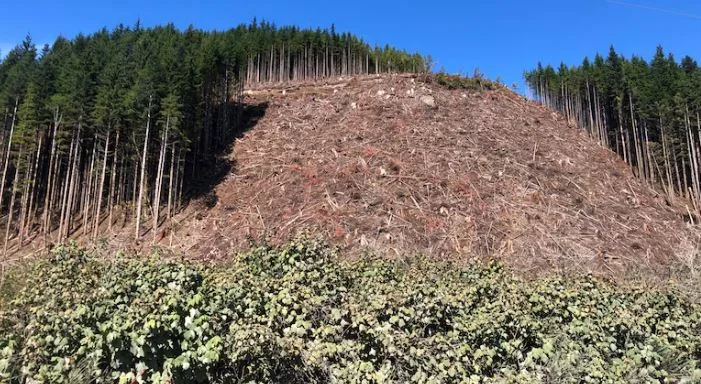
The True Post (Web News) — The ongoing trade tensions between Canada and the United States have placed Canada’s forestry industry, particularly British Columbia’s lumber sector, under growing pressure. More than 20 lumber mills in British Columbia have reportedly closed permanently or indefinitely over the past three years, putting thousands of jobs at risk.
Industry experts say U.S. tariffs are adding to the pressure on the sector, which is already facing several structural challenges, including declining timber availability, rising production costs, weaker demand and changing market conditions.
British Columbia’s Forestry Industry Under Pressure
British Columbia is one of Canada’s most important forestry regions, with a significant portion of its lumber production destined for the U.S. market.
The province’s heavy dependence on the American market means that changes in U.S. trade policy can have a direct impact on sawmills, workers and communities that depend on forestry-related economic activity.
According to recent industry reports, more than 20 mills in British Columbia have closed since 2023, while thousands of forestry-related jobs have also disappeared.
U.S. Tariffs Add to Industry Challenges
Canadian softwood lumber has been subject to U.S. anti-dumping and countervailing duties for years.
The latest increases in trade duties have added further pressure on Canadian producers, particularly those that rely heavily on exports to the United States.
Higher tariffs increase the cost of Canadian lumber entering the U.S. market, making it more difficult for Canadian producers to compete with domestic suppliers.
The additional costs can also affect American companies and consumers because lumber is widely used in residential construction, renovations and other building projects.
Canada and the U.S. Have a Long-Running Lumber Dispute
The dispute over Canadian softwood lumber is not new. Canada and the United States have been involved in trade disagreements over lumber for more than four decades.
At the centre of the dispute is the way timber is made available to companies in Canada.
A large majority of Canada’s forest land is publicly owned. Provincial governments allow companies to harvest timber from Crown land in exchange for fees known as stumpage fees.
The U.S. lumber industry has repeatedly argued that Canada’s system provides Canadian producers with an unfair advantage because the fees can be lower than what American companies pay for timber on privately owned land.
Canada has consistently rejected the argument that its forestry system amounts to an unfair subsidy.
The Crisis Goes Beyond Tariffs
Although U.S. tariffs are an important factor, experts say the current problems facing Canada’s forestry sector cannot be blamed entirely on trade policy.
The industry has also been dealing with declining timber supplies, higher operating costs, weaker housing demand and changing economic conditions.
British Columbia has additionally faced serious challenges from wildfires, insects and diseases that have affected the province’s forest resources.
These factors have made it increasingly difficult for some mills to obtain enough economically viable timber to maintain production.
Mill Closures Affect Entire Communities
The closure of a lumber mill can have consequences far beyond the workers directly employed by the facility.
Many smaller communities in British Columbia depend heavily on forestry for employment, transportation, local businesses and tax revenues.
When a major mill closes, restaurants, retailers, contractors, trucking companies and other local businesses can also experience a decline in economic activity.
For communities that have relied on forestry for generations, the loss of a major mill can therefore become a significant economic and social challenge.
American Construction Industry Could Also Feel the Impact
The United States is not completely protected from the consequences of higher tariffs on Canadian lumber.
Canadian wood plays an important role in the U.S. construction market. If Canadian imports become more expensive or supplies decline, American builders may face higher material costs.
Those higher costs can eventually be passed on to consumers through more expensive homes, renovations and construction projects.
This creates a complicated situation in which tariffs designed to protect domestic producers can also increase costs for industries that depend on imported Canadian lumber.
Canada Looks for New Markets
The trade dispute has renewed calls for Canada to reduce its dependence on the U.S. market.
Canadian forestry companies and policymakers are increasingly looking at opportunities in Europe, Asia and other international markets.
Diversifying export destinations could reduce the industry’s vulnerability to future American trade restrictions.
Experts also say Canada could benefit from producing more value-added wood products instead of relying primarily on raw lumber exports.
Government Support for the Forestry Sector
Canadian governments have been considering financial support and other measures to help companies and workers affected by the trade dispute.
British Columbia has also been working with the federal government and industry representatives to address the challenges facing forestry communities.
However, industry representatives argue that short-term financial assistance alone will not solve the sector’s deeper problems.
They say Canada also needs long-term policies addressing timber supply, investment, market access, productivity and workforce stability.
A Four-Decade Trade Dispute Enters Another Difficult Phase
The latest tariff dispute is once again putting the softwood lumber sector at the centre of Canada-U.S. trade tensions.
For decades, both countries have imposed duties, launched trade challenges and negotiated temporary arrangements without reaching a permanent solution to the underlying dispute.
The latest escalation demonstrates how vulnerable Canada’s forestry sector remains to changes in American trade policy.
What Comes Next for Canada’s Forestry Industry?
British Columbia’s forestry industry is now facing several challenges at the same time.
U.S. tariffs have increased uncertainty, while declining timber availability, rising costs, wildfires, weak demand and mill closures are putting additional pressure on producers.
More than 20 mill closures over the past three years highlight the seriousness of the situation.
For Canada, the long-term solution will likely require more than simply negotiating lower tariffs. The country will need to strengthen its forestry sector, improve access to timber, expand international markets and encourage investment in higher-value wood products.
For the United States, meanwhile, maintaining access to reasonably priced Canadian lumber remains important for the construction sector.
The future of the industry may therefore depend on whether Ottawa and Washington can find a more stable solution to their long-running softwood lumber dispute.
For now, the closure of mills across British Columbia is a clear warning that the latest trade conflict is placing additional strain on an industry already facing major structural challenges.