Muhammad Amanullah
Date: September 19, 2026 The True Post (Web News) —The number of American service members who have died amid the ongoing war with Iran may be higher than the figure publicly reported by the Pentagon, according to a report by The Washington Post citing six US officials familiar with the Defense Department’s internal casualty records.
Five of the officials told The Post that at least 22 US military personnel have died since the conflict began, which is four more than the 18 fatalities listed in the Pentagon’s public Defense Casualty Analysis System (DCAS).
A sixth US official put the number at 23 service members killed since February 28, when the United States and Israel launched the military campaign against Iran. However, the official said that not all of the additional deaths were directly caused by combat. Some involved US personnel who were in the Middle East during the ongoing hostilities. (The Washington Post)
Difference in Reported Death Toll
The discrepancy has raised questions about the accounting of US military casualties during the conflict.
As of Friday, the Pentagon’s public DCAS database listed 18 US military fatalities, including deaths resulting from both hostile and non-hostile actions since the beginning of the Iran conflict.
By comparison, five officials cited by The Washington Post said the actual number of military fatalities was at least 22.
The report said details surrounding the additional deaths, including the identities of the service members and the circumstances, dates and locations of their deaths, remained unclear. Officials familiar with the higher figure expressed frustration that the additional fatalities were not reflected in the Pentagon’s public casualty database. (The Washington Post)
Another Official Says Toll Could Be 23
The Washington Post also reported that a sixth US official believed 23 service members had died since the start of the war.
That figure has not been independently confirmed through the Pentagon’s public casualty system. The report also noted that some of the deaths counted by the official were not necessarily direct combat fatalities but involved American personnel who were in the Middle East amid continuing hostilities. (The Washington Post)
As a result, the figures should be understood as differing accounts of the casualty toll rather than as a final, officially confirmed total.
Three US Contractors Also Reported Dead
The Washington Post report also said that three US contractors based in the region had died since combat operations began.
Military contractors who provide various services in support of US forces are generally tracked separately from military personnel in official casualty reporting. Their deaths therefore do not form part of the Pentagon’s publicly listed military fatality figure of 18.
The report did not indicate that the three contractor deaths were included in the military figures of 22 or 23. (The Washington Post)
Pentagon Did Not Address the Discrepancy
According to The Washington Post, the Pentagon declined to answer questions about the difference between the figures provided by the officials and the number displayed in its public casualty database.
The public database remained at 18 military fatalities as of Friday, while the newspaper’s reporting pointed to at least four additional deaths.
The lack of an immediate public explanation has added to questions about how military fatalities are being recorded during the conflict. (The Washington Post)
Defense Secretary Rejects the Report
The reported discrepancy has also prompted a direct response from US Defense Secretary Pete Hegseth.
Hegseth rejected the Washington Post’s report, describing it in a social media post as a “complete LIE.” Reuters also reported that the Pentagon declined to address the newspaper’s specific questions about the casualty figures. (Al-Monitor)
The conflicting accounts mean that the higher figures reported by The Washington Post have not been officially confirmed by the Pentagon.
Why Accurate Casualty Figures Matter
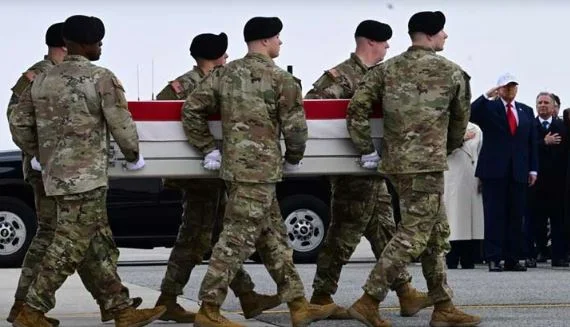
Accurate reporting of military fatalities is important not only for public transparency but also for the families of service members.
The Washington Post reported that whenever a US service member dies, the military conducts a line-of-duty investigation to establish whether the death occurred while the individual was performing official duties. Such determinations can affect survivor benefits available to the family. (The Washington Post)
The issue has therefore attracted attention beyond the immediate question of how many American troops have died.
More Than 820 US Troops Reported Wounded
The Pentagon’s public casualty database also indicated that more than 820 US service members had been wounded in action since the conflict began.
Many of those injuries were reportedly linked to Iranian missile and drone attacks against US bases and military facilities across the Middle East. (The Washington Post)
The conflict has also placed pressure on US military resources, damaged American bases in the region and affected global energy markets.
Final Death Toll Remains Unclear
Based on the information currently available, the Pentagon’s public database lists 18 US military fatalities, while The Washington Post, citing five US officials, reported at least 22. Another official cited by the newspaper put the figure at 23.
The three reported US contractor deaths are separate from those military figures.
Until the Pentagon provides further clarification or updates its public casualty records, the exact number of American military personnel who have died during the Iran war remains disputed.
The differing figures highlight the importance of transparent and consistent casualty reporting during an ongoing conflict, particularly when the reported numbers have implications for public understanding, military accountability and the families of those who died.