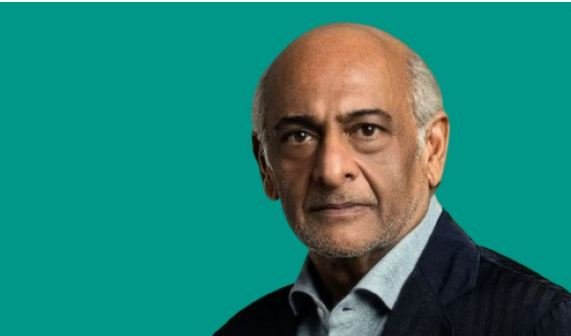
The True Post(Web News) Murtaza Ali Lakhani is a Pakistani-born global businessman who has been active in the oil and energy sector.
He was born in Karachi, Pakistan in 1962, but later grew up and was educated in the UK and Canada. He is well-known internationally in oil trading, energy markets and commodities business.
Early career:
He started his career in commodities trading (such as rice, cotton, wheat), after which he moved to oil trading. In the 1980s‑90s, he worked with a global commodity trader, where he gained significant experience.
Mercantile & Maritime Group
He founded his own company Mercantile & Maritime Group, which is active in the energy and oil business on a global scale, and also has offices in London and Singapore.
World-renowned
Lakhani also played a key role in the oil exports of the Kurdistan Region of Iraq, and also established business partnerships with the Russian energy company Rosneft. So he is not only a businessman but also has a strong position in the global energy trade.
Why were the sanctions imposed?
The UK and the European Union (EU) imposed sanctions on Lakhani on 18-19 December 2025. The aim is to increase economic pressure on Russia, particularly in the context of the war in Ukraine. The British government maintains that Lakhani and his associated companies maintain deep financial and commercial links with Russia’s oil and energy sector, and are subject to sanctions on suspicion of participating in the Russian oil trade despite European sanctions.
Why sanctions against Russia?
Russia launched a full-scale invasion of Ukraine in February 2022, after which Western countries imposed tough sanctions on the Russian government, companies, and related individuals in an effort to reduce Moscow’s financial capacity and war resources.
Did Lakhani violate the sanctions?
The British government says that Lakhani’s companies played an active role in oil trade and exports from Russia, which benefited Moscow financially. The European Union also suspects him of violating European law.
Lakhani’s response
Lakhani and his company have called the allegations unjustified and politically motivated, and have said they will pursue legal avenues to challenge the sanctions.
Impact and consequences of sanctions
Under UK and EU sanctions, Lakhani or the companies he controls can have their assets in the UK/Europe frozen, meaning they cannot use or sell those assets. Banking networks and financial institutions can block business transactions with Lakhani and his companies, which could affect their global financial relationships. Sanctions on a global businessman not only affect their **global reputation** but also negatively impact future investment and business opportunities.
Global context and background
Since Russia’s invasion of Ukraine, the Western world has taken a wide range of measures – including targeting state institutions, international companies, and some private individuals who are supporting the Russian economy.
Sanctions on Russian Energy
Western countries have imposed sanctions on Russian oil companies such as Rosneft and Lukoil, and now businessmen like Lakhani have become part of these measures to increase pressure on Russian oil exports. The impact of sanctions on Pakistani-origin
businessmen
like Lakhani could also increase in public and official discussions regarding Pakistan’s **global business leaders**, especially as the global demand for both business and ethics increases.
— What are the real facts?
Murtaza Ali Lakhani is a world-renowned oil trader who has done business in the UK, Canada and other countries. The UK and the European Union have imposed sanctions because they believe that Lakhani’s activities support the Russian energy sector, which Western countries are already imposing sanctions on. Lakhani has denied the allegations** and said that the sanctions are political in nature. The sanctions are part of a rapidly changing environment in global politics and energy markets, especially in the context of the Ukraine war.
The decision by the UK and the EU to impose sanctions on Canadian-Pakistani oil tycoon Murtaza Ali Lakhani for allegedly aiding Russia is a major global news story that is noteworthy due to its financial and political implications. The move not only reflects a tough crackdown on a single businessman, but also a clear policy of Western countries against Russian economic activities globally. Murtaza Ali Lakhani is a well-known Canadian-Pakistani businessman who has long invested in the oil and gas sector. His companies, particularly Mercantile and Maritime, are known for their activities in the global market. British authorities have alleged that Lakhani directly or indirectly benefited financially from various companies in the Russian oil sector, which have been hit by Western sanctions following Russia’s invasion of Ukraine.
This move is an indication that Western countries are now bringing not only states but also private individuals and businesses under the purview of global sanctions. The aim is not only to exert financial pressure but also to limit the involvement of such individuals and companies in global financial networks. The case of Murtaza Ali Lakhani draws attention to how global political turmoil can affect private investors and international businesses. These sanctions against Murtaza Ali Lakhani are also significant because he has also been associated with British political circles. As a former Tory donor, his political influence and financial support demonstrate his involvement in parties and political projects. In this context, the imposition of sanctions on him by the UK is a clear message that the transparency of those involved in global politics and their moral responsibility in international relations cannot be ignored.
The European Union’s imposition of sanctions on Lakhani is a sign that the Western bloc is taking serious steps to unite and exert economic pressure on Russia. These sanctions also highlight the fact that major players in the business world can no longer remain aloof from global politics and international conflicts. Involvement in any attempt to influence the political or economic policy of any country or bloc can now lead to legal and financial consequences. Economically, sanctions on Lakhani could directly affect the global transactions of his companies. These sanctions could prevent banking networks, financial institutions, and other international companies from doing business with Lakhani. This would not only limit their financial activities but could also affect their reputation in the global market. The aim of such measures is not only to affect the financial status of the individual, but also to establish ethical and legal standards in the global economy.
Lakhani’s political affiliation as a former Tory donor also makes the issue sensitive. The relationship between political funding and business is always a topic of global debate. Lakhani’s case illustrates how the spheres of influence of politics and business are intertwined on a global scale, and the unethical or controversial activities of any individual or entity can not only cause legal problems but also raise questions about political influence. Moreover, after Russia’s invasion of Ukraine, Western sanctions are no longer limited to the Russian government or state institutions, but have expanded to include private individuals and companies. This is a new global trend aimed at limiting war efforts through economic and political pressure. Sanctions on global investors like Murtaza Ali Lakhani are a clear message that Western countries will no longer ignore individuals who violate international law.
This move is also important for Pakistan. Since Lakhani is a Pakistani-born businessman, sanctions on him are likely to cause controversy in Pakistan’s business and political circles. It also sheds light on the transparency of Pakistan’s business community and its role in international relations globally. It is a lesson for Pakistani businessmen that it is imperative to establish transparent and legal business relations globally, as any controversial action can directly impact their global relations and financial reputation. Furthermore, this incident also sends an important message in the global investment landscape. It is a clear signal to investors and businessmen that the consequences of getting involved in global politics and engaging in activities against any country or bloc can be severe. Transparency, adherence to legal restrictions and adherence to ethical standards are imperative in today’s global business environment, as any unethical or controversial action can result in a loss of global reputation and financial access.
In conclusion, the sanctions imposed by the UK and the EU on Murtaza Ali Lakhani are an important political and economic message at the global level. These sanctions are not only against an individual but are also an attempt to strengthen legal and ethical principles at the global level. The lesson from this incident is that those involved in global investment and business must be careful about their relationships, transparency and legal obligations. It is clear that in today’s global scenario, the world of business and politics are not separate, and the impact of any controversial action can be felt at the global level. The case of Murtaza Ali Lakhani reflects the fact that global sanctions have the potential to restrict not only states but also the business and political relations of individuals. This is why the importance of transparency, legal compliance and ethical standards has increased more than ever in today’s era.
 Ishtiq Ahmed Send an email December 27, 2025